
155-Mile Nevada Power Line Upgrade | Ryan Rose
Related Stories
Boulder City Data Center Halted
Monument Hills: 6,000 Homes Coming
Valley Mayors on Housing and Water
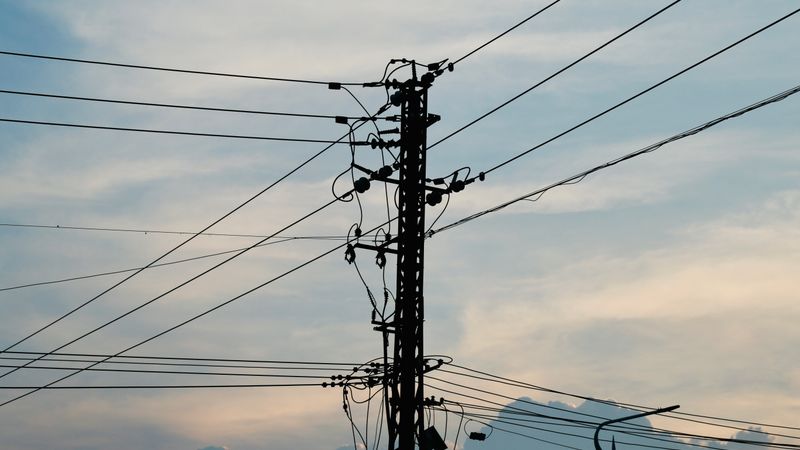
Crews broke ground September 7 on a project that will rebuild 155 miles of high-voltage power lines across Clark and Nye counties and add up to 1 gigawatt of transmission capacity to Southern Nevada. The developer is GridLiance West, a subsidiary of NextEra Energy Transmission, and the work is called the Core Upgrades Project.
The groundbreaking took place at Jean Airport, south of Las Vegas along Interstate 15. Governor Joe Lombardo attended the ceremony. Construction is scheduled to finish in late 2027, with the upgraded system in service by 2028.
This is not a story about a power bill. It is a story about whether Southern Nevada can physically deliver electricity to the places where new homes and new employers want to go. Grid capacity has quietly become the gating factor on growth in this region, and 1 gigawatt of added headroom is a real answer to that problem.
What Happened
GridLiance West held a groundbreaking ceremony on September 7, 2026 at Jean Airport to start construction on the Core Upgrades Project. GridLiance West is owned by NextEra Energy Transmission, one of the largest transmission developers in the United States.
The project rebuilds 155 miles of existing transmission lines. Those lines carry power at 230 kilovolts and 500 kilovolts, which are the two highest voltage classes on the regional grid. The work also upgrades substations along the route. Substations are the facilities that step voltage up and down and route power onto different lines, so upgrading them matters as much as the wire itself.
The stated result is up to 1 gigawatt of additional transmission capacity. A gigawatt is a very large number in electricity terms. It is the scale of a large power plant, and it is the kind of capacity increase that gets measured against the demand of an entire growing metro area rather than a single neighborhood.
The route crosses Clark County and Nye County. The Bureau of Land Management approved the project in June 2026 across roughly 4,900 acres of federal land. That federal approval step is why the timeline stretched out the way it did. Most of Southern Nevada outside the developed valley is federal land, so almost any linear infrastructure project here needs BLM sign-off before a shovel moves.
It helps to understand what a rebuild actually means here, because the word makes it sound like maintenance. Rebuilding a 230 kilovolt or 500 kilovolt line usually means replacing structures, upgrading conductors, and reconfiguring how the line ties into the rest of the system so it can carry more current safely. The corridor stays roughly where it was. The capability of what sits inside that corridor goes up substantially. That is why an existing route can deliver a gigawatt of new headroom without carving a brand-new path across the desert.
The two-county footprint is also worth noting. Clark County is where the people and the demand are. Nye County to the north and west is where a lot of the open land and generation potential sits. Lines that connect those two areas are the plumbing that lets remote generation serve valley households, and they are the reason a project with a groundbreaking near Jean matters to a homeowner in Henderson or North Las Vegas.
Construction is scheduled to be complete in late 2027, and the upgraded system is expected to be in service by 2028. No public dollar cost and no public job count have been published for the Core Upgrades Project, and this article will not estimate either one. [NOT VERIFIED: total project cost] [NOT VERIFIED: construction and permanent job count]

Why It Matters to Las Vegas Residents
Most people never think about transmission until the lights go out. But if you are shopping for a home in a new subdivision on the edge of the valley, transmission capacity is one of the invisible things standing between that dirt and your closing date. Builders cannot deliver homes to buyers without power, and utilities cannot deliver power without lines and substations that can carry it.
Southern Nevada has two forces pulling on the same grid at the same time. One is housing. The valley keeps pushing outward and upward, with new master planned communities and thousands of entitled lots waiting on land, water, and utilities. The other is data centers. Data centers use enormous amounts of electricity around the clock, and Nevada has become an attractive place to build them. When both of those demands hit a grid that was sized for an earlier Las Vegas, something has to give.
That is what makes this project matter to ordinary homeowners. Grid capacity determines which growth areas can actually get power and when. It affects the pace of new construction, and the pace of new construction affects how much competition existing homes face when they hit the market. Everything in housing is connected to supply, and supply out here is now partly an electricity question.
Reliability is the other piece. A rebuilt 230 kilovolt and 500 kilovolt backbone is generally a more reliable backbone. Southern Nevada summers put brutal stress on the grid, and every August the region runs close to peak. Adding capacity and modernizing substations gives the system more room to absorb a hot day, a plant outage, or an unexpected surge without shedding load.
There is a rate conversation here too, and it deserves an honest treatment. Transmission investment is generally recovered through rates over long periods, which means projects like this can put upward pressure on transmission charges. The counterweight is that adequate capacity reduces congestion costs and lets the region access cheaper generation. Nobody has published a customer bill impact for this project, so anyone telling you it will raise or lower your bill by a specific amount is guessing. [NOT VERIFIED: customer rate impact]
Employers care about this too, and that circles back to housing. Companies looking at Southern Nevada for a plant, a distribution hub, or a technology facility ask about power availability early in the site selection process. If the answer is that they would have to wait years for capacity, they go somewhere else, and Clark County loses the payroll. Capacity that comes online in 2028 is capacity a site selector can plan around today, which makes the region a more credible pitch right now, not just in two years.
And for anyone who has watched a neighboring project get halted or delayed over power and land questions, this is the flip side of that same coin. The region is not short on ambition or short on demand. It is short on the physical systems that let ambition turn into buildings. Every mile of this rebuild is one less excuse for why something could not get built.
Background and History
Nevada's grid has been under pressure for years, and the reasons are not mysterious. The state has added population steadily, brought large solar generation online in the desert south and west of Las Vegas, and started attracting data center and industrial load. Solar in particular creates a transmission problem, because the sun shines where nobody lives and the power has to travel to where people do.
GridLiance West is a transmission-only company. It does not sell power to households. It builds and operates the lines that move power between generators, utilities, and load centers. NextEra Energy Transmission acquired the GridLiance businesses to expand that footprint, and Southern Nevada is one of its core service areas.
The federal land approval is a big part of this story. The Bureau of Land Management signed off in June 2026 for a route crossing about 4,900 acres of federal land. Federal review for a linear project involves environmental analysis, cultural resource surveys, and consultation, and it routinely takes years. That process is the same bottleneck that shapes how Las Vegas gets more land for housing, which is why you keep seeing the same theme come up in Southern Nevada growth stories.
Jean Airport, where the groundbreaking happened, sits south of the valley along I-15 toward Primm. It is an unglamorous spot, and that is the point. The corridor between Las Vegas and the California line has become a hub for solar generation, and it is exactly the kind of place where new transmission has to run in order to connect desert generation to valley demand.
There is a political history layered on top of the engineering. Governor Joe Lombardo attending the groundbreaking is not just a photo opportunity. State leadership across both parties has spent years arguing that Nevada's growth ceiling is set by land, water, and power rather than by demand. Transmission has been one of the few items in that list where the state can point to concrete progress, which is why an infrastructure ceremony at a small airport south of the valley drew the governor.
It also fits a wider Western pattern. Utilities and transmission developers across the interior West have been rebuilding aging backbone lines rather than only adding new ones, because permitting a brand-new corridor across federal land takes far longer than upgrading a corridor that already exists. The Core Upgrades Project is a textbook example of that strategy, and it is why the BLM approval covered about 4,900 acres rather than a much larger new footprint.

What Happens Next
The construction window runs from now through late 2027. Expect visible activity along the route in Clark and Nye counties, including access road work, tower staging, foundation work, and eventually line stringing. Projects like this move in segments, so you may see crews in one area for months and then nothing for a while as work shifts down the corridor.
The in-service target is 2028. That is the date that actually matters for anyone tracking growth capacity. Steel in the ground does nothing for the grid until the line is energized and the substations are commissioned. Between now and then, the capacity picture stays roughly where it is today.
The thing to watch in the meantime is how utilities, developers, and regulators allocate the capacity that is coming. Data centers, industrial users, and residential developers are all in line for the same headroom. Decisions made at the Public Utilities Commission of Nevada and in local government about who connects and when will shape how much of that 1 gigawatt ends up serving housing versus large industrial load. Those proceedings are public.
Also watch for follow-on projects. Transmission tends to come in waves, because one upgraded corridor exposes the next constraint down the line. If Southern Nevada demand keeps climbing at the current pace, the Core Upgrades Project will not be the last groundbreaking of this kind in the region.
For homebuyers specifically, the practical checkpoint is late 2027 into 2028. If you are watching a community on the outer edge of the valley that has been slow to release phases, that window is when the utility constraint eases. It does not guarantee that a specific builder moves faster, but it removes one of the common reasons they cannot.
Ryan's Take
Nobody calls me about power lines. People call me about why the new build community they liked has a delivery date a year out, or why a builder paused a phase, or why a certain corner of the valley is not developing even though the land looks ready. A surprising number of those answers trace back to utilities and infrastructure rather than to demand.
So I read this project as good news for housing supply, with the important caveat that the benefit arrives in 2028, not this fall. Between now and then, Las Vegas is still a market where land, water, and power all limit how fast new homes can come online. That is the real reason prices here have held up better than the national headlines suggest, and it is why I keep telling buyers that the local supply story matters more than whatever the national numbers say in any given month. If you want to understand where Las Vegas builds next, follow the infrastructure, not the marketing.
I would also push back gently on treating data centers as the villain in this story. They are a real competitor for capacity and they deserve scrutiny at the local level, but they also bring tax base and construction work, and they are part of why a transmission developer sees enough demand here to invest at this scale in the first place. The useful question is not whether they should exist. It is whether Clark County negotiates hard enough on what the community gets in return, and whether housing keeps its place in line for the capacity that is coming.

What You Can Do
If you live or drive near the corridor between the Las Vegas Valley and Jean, expect construction traffic and occasional lane restrictions on access routes over the next year and a half. Plan around it the way you would any long-running road project, and give crews room on rural two-lane stretches where equipment is moving.
If you care about how the added capacity gets used, the Public Utilities Commission of Nevada holds public dockets on transmission, interconnection, and rates, and its filings are available online. Local governments also take up data center and large industrial applications at public meetings, and those are the venues where residents can actually be heard on whether new capacity goes to housing, employers, or server farms.
If you are buying new construction in an outlying part of Clark County, ask your builder directly about utility timing for your phase. Not just the model home timeline, your phase. Power, water, and road acceptance are the three things that most often push a closing date, and a builder representative can usually tell you where those stand if you ask a specific question instead of a general one.
And if you are simply trying to figure out what all this means for the value of the home you already own, the short version is that infrastructure investment in a growing region is a long-term positive. It just moves slowly enough that it will never be the reason to buy or sell in any given month.
Have questions about how this affects your home or neighborhood? Reach out to Ryan Rose or text/call 702-747-5921 anytime.

Sources
Las Vegas Sun, Work to begin on Southern Nevada transmission project, September 7, 2026
Categories
- All Blogs (4792)
- Absentee Owner (1)
- Affordability (3)
- ALIANTE (53)
- Anthem (32)
- Ascension (49)
- Assumable Loan (1)
- Astra (47)
- BLACK MOUNTAIN (55)
- Buyers (20)
- Cadence (17)
- Calico Ridge (50)
- Canyon Fairways (50)
- CANYONS OF SUMMERLIN (50)
- CENTENNIAL HILLS (81)
- Comparisons (47)
- CROSSINGS IN SUMMERLIN (47)
- DESERT SHORES (47)
- Divorce (3)
- Downsizing (13)
- EAGLE HILLS (46)
- Empty Nester (1)
- Enterprise (1)
- EXPIRED LISTINGS (13)
- First Time Homebuyer (4)
- Green Valley (139)
- Henderson (81)
- HORIZONS EDGE (50)
- Housing Market Trends (98)
- Informative (102)
- Inspirada (58)
- Lake Las Vegas (2)
- Lakes Las Vegas (3)
- Las Vegas Real Estate (183)
- Local News (842)
- Luxury (1)
- MacDonald Highlands (88)
- MacDonald Ranch (100)
- Madeira Canyon (93)
- MESQUITE NV (103)
- MOUNTAIN TRAILS (44)
- Mountains Edge (70)
- Naked City (35)
- New Construction (131)
- New Construction Las Vegas (20)
- North Las Vegas (24)
- Northgate (23)
- PALISADES SUMMERLIN (38)
- Probate (25)
- Providence (2)
- Quail Ridge (35)
- QUEENSRIDGE (56)
- Red Rock (1)
- RED ROCK COUNTRY CLUB (60)
- Relocating to Summerlin (204)
- Relocation (44)
- Retired (1)
- Retirement (1)
- Reverence (15)
- RHODES RANCH (64)
- Ridgebrook (40)
- Sellers (210)
- Seven Hills (83)
- Silverado Ranch (1)
- Silverstone Ranch (39)
- SKYE CANYON (100)
- SKYE CANYONE (4)
- Southern Highlands (94)
- Southwest (19)
- SPANISH TRAILS (55)
- SPRING VALLEY (70)
- Summerlin (103)
- Sun City Summerlin (3)
- The Arbors (36)
- The Cliffs (42)
- THE HILLS (45)
- THE PASEOS (52)
- The Pueblos (24)
- THE PUEBLOS OF SUMMERLIN (40)
- THE RIDGES (58)
- THE VISTAS OF SUMMERLIN (45)
- The Willows (59)
- Thoughts on Home Tour (2)
- TOURNAMENT HILLS (47)
- Veterans (3)
- WHITNEY RANCH (55)
- Workers Advantage Program (100)
Recent Posts






GET MORE INFORMATION