
Boulder City Data Center Halted | Ryan Rose
Related Stories
Monument Hills: 6,000 Homes Coming
North Las Vegas Sells 16 Acres
$40M Rec Center for Southwest LV
A Department of the Interior administrative judge has issued a stay that blocks construction of the Townsite Solar II data center on federal land near Boulder City. That means the project cannot move dirt while the appeal against it plays out.
This is a big deal for Southern Nevada. Data centers have been landing all over the Southwest with very little to slow them down, and this one just got stopped by a paperwork question that most people never think about. The short version is that the judge found a solar farm and a data center are not substantially the same thing when it comes to permitting, according to reporting from NVBEX that credits The Nevada Independent.
If you live in Boulder City, Henderson, or anywhere in the southeast part of the valley, this ruling touches you. It affects what gets built near your neighborhood, how much power the region has to buy, and who gets a say before the concrete pours.
What Happened
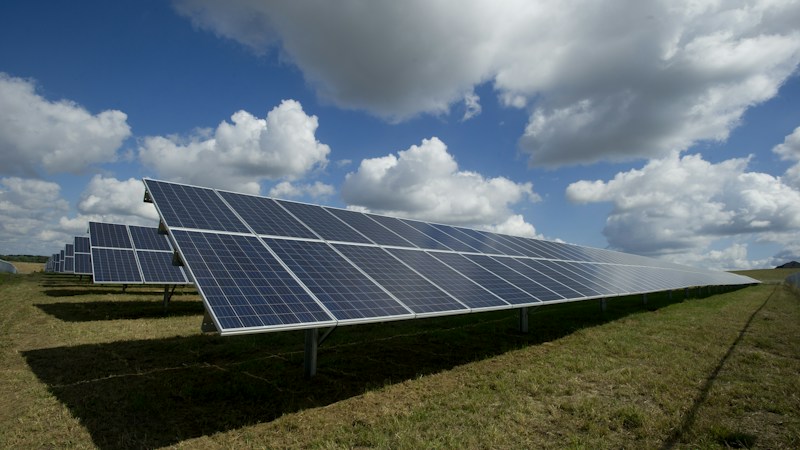
The Townsite Solar II project is backed by Skylar Capital Management. The plan called for a 167 megawatt data center paired with 70 megawatts of battery storage. That is a serious amount of power for one site, and it is the number that got people paying attention.
The project did not start on federal land. It was first proposed on an 88.5 acre site inside Boulder City limits. That version ran into trouble fast. The Boulder City Planning Commission recommended denial, and the project was withdrawn before it could go further through the city process.
After the withdrawal, the project was refiled on Bureau of Land Management ground near the city instead. The land in question already had a 2023 solar farm approval attached to it, and that earlier approval had already cleared environmental review. In plain terms, the site already had a green light for one kind of project, and the new proposal was tied to that existing clearance.
That is the piece the appeal went after. Boulder City, the Sierra Club, and the Center for Biological Diversity all appealed. Their argument, as reported, was that a data center is a fundamentally different use of the land than a solar farm, so it should not be allowed to ride on a solar farm's environmental review.
The administrative judge agreed enough to hit pause. The ruling found that a solar farm and a data center are not substantially the same for permitting purposes, and the stay stops construction while the case continues. This is not a final decision on whether the data center can ever be built. It is a hold on the work while the legal question gets sorted out.
It is worth being precise here, because this is active litigation. A stay is a pause, not a permanent no. Nobody involved has said how this ends, and I am not going to guess. What we know right now is that the shovels are down and the appeal is live.
A few terms are worth defining, because they get thrown around loosely. An administrative judge inside the Department of the Interior is not a federal district court judge. These judges handle disputes over decisions made by agencies like the Bureau of Land Management, and their rulings apply to the agency process rather than to criminal or civil law generally. That is a narrower lane, but it is the lane that decides whether a project on public land can proceed.
The 70 megawatts of battery storage in the proposal is also worth understanding. Battery storage lets a facility pull power when it is cheap or plentiful and use it later. In a solar-heavy region like Southern Nevada, storage is how you smooth out the gap between sunny afternoons and evening demand. It is a normal part of modern energy projects, and it is part of why the site made sense to the applicant on paper.
Why It Matters to Las Vegas Residents
Start with power. A 167 megawatt facility is not a warehouse with some computers in it. It is an industrial-scale electricity customer. Every large data center that connects to the Southern Nevada grid changes the math on how much generation and transmission this region needs and how fast it needs it.
When demand climbs faster than supply, everyone who plugs something into a wall feels it eventually. That is the fear a lot of residents have voiced about the data center wave, and it is why these projects draw crowds to meetings that used to be empty. Whether or not you like data centers, the power question is a household question.
Then there is water, which is always the Southern Nevada question. Cooling large computing facilities takes resources, and in a place where water policy shapes everything from lawn rules to new home approvals, residents notice when a big industrial user shows up. The specific water plan for this project has not been laid out in the reporting I have, so I am not going to put a number on it. But it is a live concern in the community conversation.
The third piece is land. Boulder City is not like the rest of Clark County. It has a growth control ordinance and a long history of choosing slow and small over big and fast. When a project gets turned away inside city limits and then reappears on federal land nearby, residents feel like the rules got sidestepped. The appeal is essentially the city saying that the process matters.
For homeowners in the southeast valley, this also touches property values in a real way. Nobody knows exactly how a large industrial facility near a small town affects nearby home prices, and I am not going to pretend there is a clean study on it. What I do know from working with buyers is that people ask about what is going up next door before they write an offer. A project of this scale becomes part of every listing conversation in the area.
There is a jobs and tax side to this too, and it deserves a fair hearing. Large facilities like this generate construction work, property tax revenue, and a smaller number of permanent technical jobs once they are running. Supporters of data center development in Nevada point to that revenue as a reason to welcome these projects. Critics point out that the permanent headcount is usually modest compared to the power draw. Both things can be true at once, and reasonable neighbors land on different sides of it.

Background and History
Boulder City has been fighting about this project for a while now. This ruling is the newest chapter, not the whole book. The original federal approval and the appeal that followed were both covered earlier, and this judge's stay is the development that changes the picture.
The pattern here is one Nevada has seen a lot lately. Federal land surrounds most of Clark County, which means the Bureau of Land Management is one of the biggest landowners in the region. Projects that struggle to win local approval sometimes have a federal path available, and federal decisions run on a different track than city council votes.
That difference is exactly what the appellants challenged. A 2023 approval for a solar farm came with an environmental review built around solar panels: how they sit on the land, what they do to habitat, how much they disturb during construction. A data center brings different equipment, different power draw, different cooling needs, and a different footprint over time. The appeal argued those are not interchangeable, and the judge's finding lines up with that argument.
Boulder City itself has one of the more unusual land stories in the state. The city grew up around the construction of Hoover Dam and has never behaved like a typical Las Vegas suburb. Its residents have voted repeatedly to keep growth slow. When people there push back on a large project, it is not a new impulse. It is the whole identity of the town.
The Sierra Club and the Center for Biological Diversity add a second layer to the fight. These are national conservation groups with long records of challenging development on public land in the Southwest. Their involvement means this case is not only about one town's preferences. It is about how federal land approvals get reused, which has implications far beyond Clark County.
It also helps to remember why data centers keep aiming at Southern Nevada in the first place. The region has cheap land, a lot of sun, a growing transmission network, and a tax structure companies like. Add the enormous computing demand created by artificial intelligence over the past few years, and you get a steady stream of proposals looking for large flat parcels near power. Clark County has exactly that, which is why this is not the last project of its kind you will read about.
What Happens Next
The stay holds construction while the appeal moves forward. Administrative appeals inside the Department of the Interior do not run on a public calendar the way a city council agenda does, so there is no published date to circle right now. Watch for filings and for any further ruling from the administrative judge.
There are a few paths from here, and I want to be careful because none of them is a prediction. The project could be re-reviewed under a process built specifically for a data center rather than a solar farm. The stay could be challenged. The applicant could revise the proposal, or look at a different site entirely. Any of those is possible, and the parties involved have not signaled which way this goes.
The bigger thing to watch is whether this reasoning shows up in other cases. If the finding that a solar farm and a data center are not substantially the same holds up, it becomes a reference point for every future proposal that tries to attach a new industrial use to an older environmental clearance. That is why this small ruling on one site outside Boulder City is getting attention well beyond Boulder City.
Another thing to watch is how utilities and state regulators respond to the broader load question. Large power customers get negotiated over in public proceedings, and those proceedings shape rates for everyone else. If you want an early read on where the data center conversation in Nevada is headed, the energy dockets often tell you before the land use fights do.
Locally, keep an eye on Boulder City council meetings and on any statements from the city about its position in the appeal. Cities that put money and staff time into a federal appeal usually keep the public updated as it moves.
Ryan's Take
Here is what stands out to me as somebody who watches Clark County land use for a living. Data centers have been moving through Southern Nevada with a lot of momentum, and the usual local tools for slowing a project down do not work well when the land is federal. This ruling shows there is still a check in the system, even if it is a technical one.
I also think the details of how this project traveled are worth noticing. A proposal gets a recommendation for denial inside city limits, gets withdrawn, and then reappears on federal ground next door attached to an older approval. Whatever you think about data centers, that sequence is why people show up angry to meetings. Trust in the process matters as much as the outcome.
For buyers and sellers in the southeast valley, my honest read is that nothing about your home value changed this week. A stay is a pause. What did change is that the question of what gets built out there is still open, and open questions are worth tracking if you own property nearby or plan to buy there. If you are house hunting in Boulder City or Henderson right now, ask about pending projects near any address you like. It is a normal question and any good agent should be digging into it for you.

What You Can Do
If you want a say in how this plays out, the most direct route is local. Boulder City council meetings are open to the public, and the city posts agendas ahead of time on its official website. Public comment periods are where residents get on the record, and city officials do pay attention to how many people show up on a given item.
You can also follow the Bureau of Land Management's Southern Nevada District notices. Federal projects on public land come with public comment windows, environmental documents, and posted decisions. Those windows are easy to miss because they are not advertised the way a local hearing is, so it pays to check periodically if you care about a specific parcel.
For anyone buying or selling near a proposed project, do the homework before you sign anything. Look up what is entitled or pending on nearby parcels, ask your agent to check county and city records, and read the environmental documents if a federal project is involved. This information is public. It just takes somebody willing to go find it.
If you already own in Boulder City or on the Henderson side near the boundary, it is also worth talking to your neighbors about what you actually want out there. Communities that show up with a clear position early tend to have more influence than communities that react after a decision lands. That is true whether you are for the project, against it, or somewhere in the middle and mostly want a straight answer on power and water.
And if you simply want to stay informed without attending meetings, sign up for city newsletters and follow local outlets that cover land use consistently. The data center conversation in Nevada is not going away, and the details in these rulings are where the real story lives.
Have questions about how this affects your home or neighborhood? Reach out to Ryan Rose or text/call 702-747-5921 anytime.
Sources
Categories
- All Blogs (4792)
- Absentee Owner (1)
- Affordability (3)
- ALIANTE (53)
- Anthem (32)
- Ascension (49)
- Assumable Loan (1)
- Astra (47)
- BLACK MOUNTAIN (55)
- Buyers (20)
- Cadence (17)
- Calico Ridge (50)
- Canyon Fairways (50)
- CANYONS OF SUMMERLIN (50)
- CENTENNIAL HILLS (81)
- Comparisons (47)
- CROSSINGS IN SUMMERLIN (47)
- DESERT SHORES (47)
- Divorce (3)
- Downsizing (13)
- EAGLE HILLS (46)
- Empty Nester (1)
- Enterprise (1)
- EXPIRED LISTINGS (13)
- First Time Homebuyer (4)
- Green Valley (139)
- Henderson (81)
- HORIZONS EDGE (50)
- Housing Market Trends (98)
- Informative (102)
- Inspirada (58)
- Lake Las Vegas (2)
- Lakes Las Vegas (3)
- Las Vegas Real Estate (183)
- Local News (842)
- Luxury (1)
- MacDonald Highlands (88)
- MacDonald Ranch (100)
- Madeira Canyon (93)
- MESQUITE NV (103)
- MOUNTAIN TRAILS (44)
- Mountains Edge (70)
- Naked City (35)
- New Construction (131)
- New Construction Las Vegas (20)
- North Las Vegas (24)
- Northgate (23)
- PALISADES SUMMERLIN (38)
- Probate (25)
- Providence (2)
- Quail Ridge (35)
- QUEENSRIDGE (56)
- Red Rock (1)
- RED ROCK COUNTRY CLUB (60)
- Relocating to Summerlin (204)
- Relocation (44)
- Retired (1)
- Retirement (1)
- Reverence (15)
- RHODES RANCH (64)
- Ridgebrook (40)
- Sellers (210)
- Seven Hills (83)
- Silverado Ranch (1)
- Silverstone Ranch (39)
- SKYE CANYON (100)
- SKYE CANYONE (4)
- Southern Highlands (94)
- Southwest (19)
- SPANISH TRAILS (55)
- SPRING VALLEY (70)
- Summerlin (103)
- Sun City Summerlin (3)
- The Arbors (36)
- The Cliffs (42)
- THE HILLS (45)
- THE PASEOS (52)
- The Pueblos (24)
- THE PUEBLOS OF SUMMERLIN (40)
- THE RIDGES (58)
- THE VISTAS OF SUMMERLIN (45)
- The Willows (59)
- Thoughts on Home Tour (2)
- TOURNAMENT HILLS (47)
- Veterans (3)
- WHITNEY RANCH (55)
- Workers Advantage Program (100)
Recent Posts





GET MORE INFORMATION