
VGK Rookies Return With Two Injuries | Ryan Rose
Related Stories
Five Questions Before VGK Camp
The Vegas Golden Knights rookie squad came back from the Rookie Faceoff in San Jose with a split record and two forwards who did not finish their games. Trevor Connelly, the prospect most likely to crack the NHL roster out of training camp, was boarded in the first game and never took another shift. Ben Hemmerling left the second game in the first period after an open ice hit and did not return.
That is the headline for Las Vegas hockey fans right now. The rookies went 1 and 1, losing a shutout to the Utah Mammoth and winning a shootout over the Colorado Avalanche. But the score lines are not what people in Summerlin and Henderson are talking about. They are talking about two young forwards and what their health means with training camp opening this week.
What Happened in San Jose
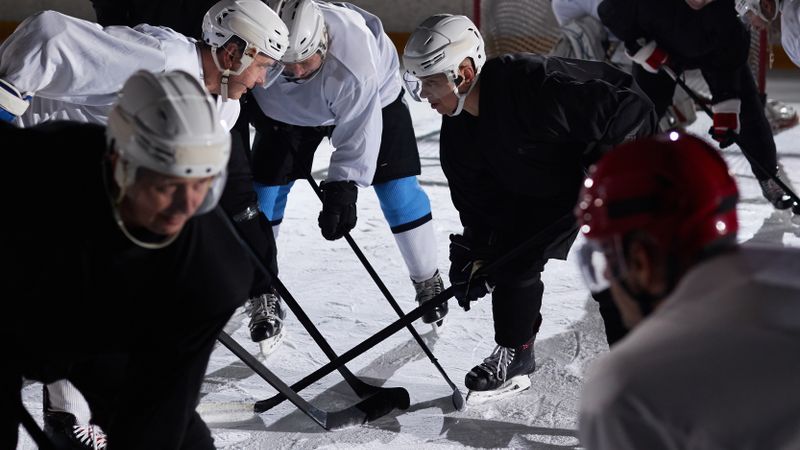
The Golden Knights sent a rookie group to San Jose for the Rookie Faceoff, the short preseason tournament where NHL clubs put their prospects on the ice against each other before real training camp starts. Vegas played two games. They lost the first one to the Utah Mammoth by shutout. They won the second one against the Colorado Avalanche in a shootout.
The trouble started in game one. Trevor Connelly was boarded by Gabe Smith, a fourth-round pick in the Utah organization. Connelly made it back to the bench after the hit. He did not take another shift in that game. He also did not dress for the Sunday game against Colorado.
Then it happened again. Ben Hemmerling left the Colorado game in the first period after taking an open ice hit from Gustav Stjernberg. Hemmerling did not return to the game. Mathieu Cataford fought Stjernberg right after the hit, which is the kind of response teammates make when they think a hit crossed a line.
Not everything out of San Jose was bad news. Trent Swick, a sixth-round pick and a 6-foot-7 forward, put up two goals and an assist on Sunday. That is a big performance from a player picked late, and it is exactly what a rookie tournament is supposed to produce. A prospect nobody was watching walks in and makes everyone learn his name.
It is worth slowing down on the sequence in game one, because the detail people keep repeating is the part that tells you the most. Connelly did not leave the ice and vanish down the tunnel. He came back to the bench. Then he sat there. A player who returns to the bench and then takes zero shifts is a player the staff decided not to risk, and that decision got made in real time, in a game that does not count.
The Hemmerling sequence played out differently. He went off in the first period after the Stjernberg hit and that was the end of his night. Cataford answering with a fight immediately afterward is the part that turned it into a story rather than a line in a box score. Rookie tournaments do not usually generate that kind of reaction, and the fact that it did tells you how the Vegas bench read the hit.
Swick's Sunday, meanwhile, is the reason teams keep running these tournaments in the first place. Two goals and an assist from a sixth-round pick is the kind of line that gets a player extra reps at camp. At 6-foot-7 he is impossible to miss on the ice, and size plus production is a combination that buys a prospect time.
Here is what has not been said, and it matters. The Golden Knights have not released a diagnosis, a severity level, or a return timeline for either Connelly or Hemmerling. What we know is what was reported: Connelly took no more shifts and did not dress the next day, and Hemmerling left in the first period and did not return. Anything past that is guessing, and guessing about a young player's health is not something worth doing. We will know more when the team says more.
Why It Matters to Las Vegas Residents
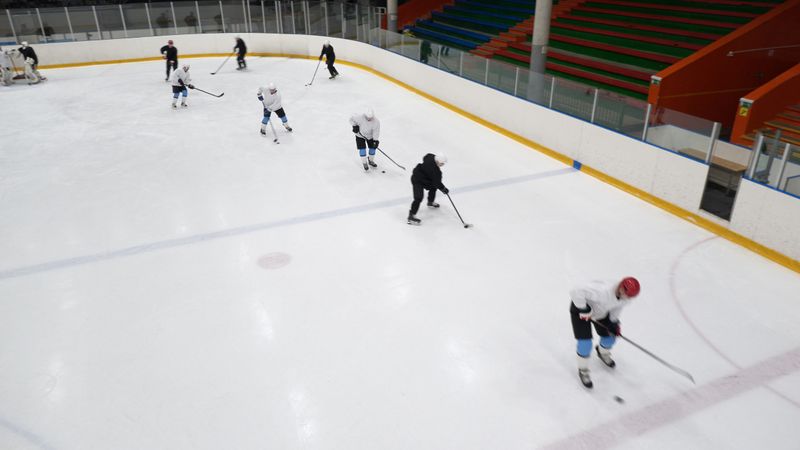
If you live in the Las Vegas valley, hockey is not a side interest anymore. It is a local industry and a local identity. The Vegas Golden Knights practice at City National Arena in Summerlin. Fans drive there on weekday mornings to watch open practices. Kids who grew up here now play the sport because the team exists and because the rinks got built.
So a rookie tournament in San Jose is not a distant story. The players in that tournament are the ones who will be skating at City National Arena this week. Some of them will end up on the ice at T-Mobile Arena. Some will play for the Henderson Silver Knights at Lifeguard Arena in downtown Henderson. These are people your neighbors will see up close.
Trevor Connelly is the specific name that matters most. He is widely viewed as the prospect closest to an NHL job, which makes his health the biggest local hockey question of the moment. A prospect who is ready to play changes the shape of a roster. A prospect who is hurt going into camp has a harder time proving anything, because camp is short and the reps go fast.
There is a practical side too. Season ticket holders plan around opening night. Families budget for a handful of games. Youth hockey parents watch which prospects stick, because the players who stay in town run clinics, show up at rinks, and give kids somebody to point at. When a young forward gets hurt in September, it ripples out into all of that in small ways.
And for anyone who cares about the neighborhoods around these rinks, hockey is now part of the daily rhythm. Summerlin traffic on a practice morning looks different. Downtown Henderson on a Silver Knights night looks different. The sport has been folded into how this valley moves.
Think about what a roster decision actually does to a household here. A prospect who makes the NHL club rents or buys near the practice facility in Summerlin. A prospect who goes to the affiliate looks at Henderson instead. Multiply that across a full camp and you get a small but real housing pattern that repeats every September and every March. Agents in this valley notice it. So do landlords near both rinks.
Fans feel it in a simpler way. When a young player sticks, the jersey shows up in the stands and the kid wearing it starts asking for skates. That is how a sport puts down roots in a city that never had it. The pipeline is not an abstraction here. It is the reason there is a learn to skate class with a waitlist.

Background and History
The Rookie Faceoff is a preseason tradition. Several NHL clubs in the western half of the league send their prospects to one host city for a few games. It is not scouted the way the regular season is scouted, and the results do not count for anything. What it does is give coaches a live look at young players against other young players before the veterans arrive.
For Vegas, the road to this year's tournament started earlier in September. The Golden Knights named a 23-player rookie camp roster and held their first practice on September 11 at City National Arena in Summerlin. That practice group is the pipeline. It is draft picks, recent signings, and players working their way up through the organization.
City National Arena has been the anchor of that pipeline since the franchise started. It is the team's practice facility in Summerlin, and it doubles as a community rink. That mix is unusual and it is a big part of why hockey took hold here so fast. A kid can skate on the same sheet where the pros practice.
Down in Henderson, Lifeguard Arena serves the same role for the Henderson Silver Knights, the American Hockey League affiliate. Most prospects who do not make the NHL roster out of camp end up playing there. That means a player like Trent Swick or Mathieu Cataford could be a name Henderson families see all winter, not a name that disappears after September.
It is also worth remembering how recently none of this existed. The Golden Knights are a young franchise by league standards, and the valley went from zero professional hockey to an NHL club, an AHL affiliate, a dedicated practice facility, and a growing set of community rinks in a very compressed stretch of time. Most cities built that over generations. Las Vegas built it fast.
That speed is why the prospect pipeline gets so much attention here. In an older hockey market, a rookie tournament is background noise. In Las Vegas, people are still learning the names, and every draft pick who shows up is a new character in a story the city started telling less than a decade ago.
The Rookie Faceoff has produced this exact storyline before, in Vegas and everywhere else. Rookie games are physical. The players are trying to get noticed, and getting noticed sometimes means throwing a big hit. That is how you get a fourth-round pick boarding a top prospect and a fight breaking out one period into the next game.

What Happens Next
Training camp opens this week. That is the near-term timeline that matters. The rookies who played in San Jose now join the full group, and the roster picture starts to firm up quickly. Camp is where a prospect either makes a case or gets sent down.
The first thing to watch is whether Trevor Connelly practices. If he is on the ice in a normal jersey taking regular reps, that answers most of the question by itself. If he is held out, or skating on his own, the team will likely say something about it. The same goes for Ben Hemmerling. Practice participation is the honest indicator, and it is visible to anyone at City National Arena.
Beyond health, camp will sort out who goes where. Some prospects will stay with the Golden Knights. Most will report to the Henderson Silver Knights. A few will head back to junior or to their overseas clubs. Trent Swick's Sunday performance gives him something to build on, and 6-foot-7 forwards who can score tend to get long looks.
There is one more thing worth watching, and it has nothing to do with injuries. Camp is short, and short camps favor players who arrive ready. Every day a prospect misses is a day somebody else takes his reps. That is the quiet cost of a September injury, and it is usually bigger than the injury itself.
The preseason schedule follows camp, and then opening night at T-Mobile Arena. By then the injury questions from a September rookie tournament will either be forgotten or they will have turned into something bigger. For now, the honest answer is that we are waiting on the team.
Ryan's Take
I have lived and worked in this valley long enough to remember when hockey here was a punchline. Nobody thought it would work in the desert. Now I show homes to families who moved to Summerlin partly because of the rinks, and I have sat in Henderson living rooms where the Silver Knights schedule is on the fridge. That is a real change in how this city sees itself.
That is why a story about two rookies is worth writing up. Not because a rookie tournament decides anything, but because it tells you how invested this town has gotten. Ten years ago nobody in Las Vegas knew what the Rookie Faceoff was. Today people are texting each other about whether Trevor Connelly took a shift.
From a housing standpoint, I think the hockey infrastructure is underrated as a neighborhood amenity. Buyers with kids ask about parks, schools, and pools. In Summerlin and Henderson, ice time is now on that list. It is not the reason anybody buys a home, but it is one of the small things that makes a neighborhood feel like it has something going on. Those small things add up.
I will also say this plainly. I am not going to guess at how hurt these two players are, and I would encourage you not to either. A hit along the boards and an open ice hit are scary to watch, and the internet fills the silence fast. The team has the information. The rest of us have a video clip and an opinion. Wait for the real update, then react to that.

What You Can Do
If you want to follow this story yourself, the simplest move is to go watch. City National Arena in Summerlin regularly opens practices to the public, and training camp is the busiest stretch of the year there. Check the team's schedule before you drive over, because practice times move around and public access is not guaranteed on every day.
If you want to see these prospects play real games without paying NHL prices, the Henderson Silver Knights at Lifeguard Arena are the answer. Lifeguard Arena sits in downtown Henderson, and it is a smaller building with a much easier ticket. A lot of the players from that San Jose rookie group will end up on that ice this season.
For families with kids who want to try the sport, both City National Arena and Lifeguard Arena run community skating and youth programs. If you have a kid who has been asking to play, this is the time of year when leagues and clinics fill up. Call the rink directly and ask what is open.
It also helps to know the geography. City National Arena is in Summerlin on the west side of the valley. Lifeguard Arena is in downtown Henderson on the southeast side. T-Mobile Arena is on the Strip. Those three buildings are far apart, so plan your drive time, especially on a weeknight when the 215 and the 15 are both busy.
And if you just want accurate updates on Connelly and Hemmerling, go to the team's own announcements first. Injury news travels fast and gets exaggerated faster. The team will say what it is going to say, and that is the version worth repeating to your friends.
Have questions about how this affects your home or neighborhood? Reach out to Ryan Rose or text/call 702-747-5921 anytime.
Sources
SinBin.vegas, "Takeaways From VGK Rookie Games In San Jose," September 14, 2026.
Categories
- All Blogs (4337)
- Absentee Owner (4)
- Affordability (3)
- ALIANTE (53)
- Anthem (33)
- Ascension (50)
- Assumable Loan (1)
- Astra (50)
- BLACK MOUNTAIN (55)
- Buyers (22)
- Cadence (17)
- Calico Ridge (50)
- CANYONS OF SUMMERLIN (55)
- CENTENNIAL HILLS (81)
- Comparisons (46)
- CROSSINGS IN SUMMERLIN (55)
- DESERT SHORES (47)
- Divorce (3)
- Downsizing (13)
- EAGLE HILLS (55)
- Empty Nester (1)
- Enterprise (1)
- EXPIRED LISTINGS (134)
- First Time Homebuyer (4)
- Green Valley (137)
- Henderson (82)
- HORIZONS EDGE (50)
- Housing Market Trends (99)
- Informative (112)
- Inspirada (56)
- Lake Las Vegas (2)
- Lakes Las Vegas (3)
- Local News (469)
- Luxury (1)
- MacDonald Highlands (88)
- MacDonald Ranch (70)
- Madeira Canyon (91)
- MESQUITE NV (103)
- MOUNTAIN TRAILS (50)
- Mountains Edge (67)
- Naked City (35)
- New Construction (119)
- North Las Vegas (24)
- Northgate (23)
- PALISADES SUMMERLIN (50)
- Probate (28)
- Providence (2)
- Quail Ridge (35)
- QUEENSRIDGE (56)
- Red Rock (1)
- RED ROCK COUNTRY CLUB (60)
- Relocating to Summerlin (207)
- Relocation (45)
- Retired (1)
- Retirement (1)
- Reverence (1)
- RHODES RANCH (63)
- Ridgebrook (40)
- Sellers (253)
- Seven Hills (65)
- Silverado Ranch (1)
- Silverstone Ranch (39)
- SKYE CANYON (100)
- SKYE CANYONE (4)
- Southern Highlands (94)
- Southwest (19)
- SPANISH TRAILS (55)
- SPRING VALLEY (70)
- Summerlin (100)
- Sun City Summerlin (3)
- The Arbors (35)
- The Cliffs (49)
- THE HILLS (55)
- THE PASEOS (55)
- The Pueblos (27)
- THE PUEBLOS OF SUMMERLIN (42)
- THE RIDGES (65)
- THE VISTAS OF SUMMERLIN (48)
- The Willows (54)
- Thoughts on Home Tour (2)
- TOURNAMENT HILLS (50)
- Veterans (3)
- WHITNEY RANCH (52)
- Workers Advantage Program (100)
Recent Posts






GET MORE INFORMATION