
Las Vegas Breaks Ground on Fire Training Center | Ryan Rose
Related Stories
Las Vegas Medical District 8-Story Tower
Henderson $1 Billion Budget and 14 New Officers
Clark County Mariachi Park in East Las Vegas
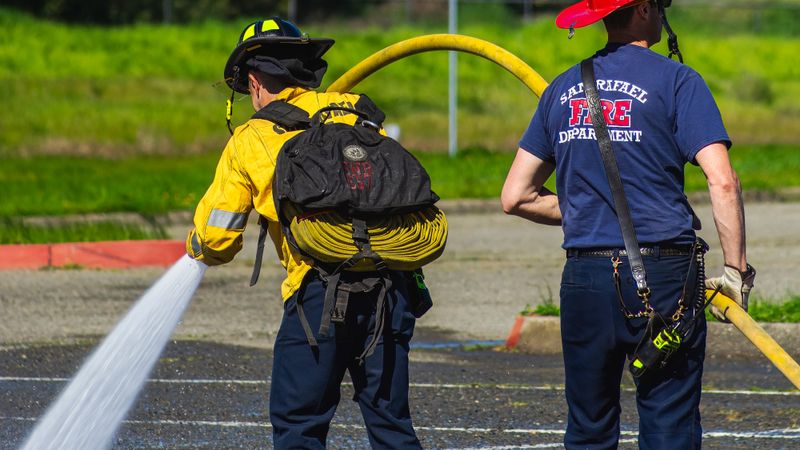
Las Vegas just started building a new place to train its firefighters. Mayor Shelley Berkley and Mayor Pro Tem Olivia Diaz broke ground on the new Las Vegas Fire and Rescue Training Center at 633 N. Mojave Road on Wednesday, September 9. The project is estimated at $8.4 million and is paid for with city capital improvement funds.
This is the kind of project that almost never makes the front page. There is no ribbon on a casino and no new restaurant opening. But if you live in Las Vegas, this one touches you in a very direct way. The people who show up when your kitchen catches fire have to practice somewhere first, and this is where they will practice.
Phase one of the build installs the major utilities and prepares the site. It also includes concrete and asphalt areas built to replicate urban streets, an activity track, fitness and drill areas, and covered apparatus bays. Core Construction is the contractor. The city expects substantial completion of phase one by July 14, 2027.
What Happened at 633 N. Mojave Road
On Wednesday, September 9, city leaders put shovels in the dirt at 633 N. Mojave Road. Mayor Shelley Berkley and Mayor Pro Tem Olivia Diaz led the groundbreaking for the new Las Vegas Fire and Rescue Training Center. The city announced the event the day before, on September 8.
The headline number is $8.4 million. That is the estimated cost of the project, and the money comes from city capital improvement funds. Capital improvement dollars are the pot a city sets aside for buildings, roads, parks, and equipment rather than day to day payroll. It is a separate bucket from the general operating budget.
Core Construction is the contractor on the job. The work is split into phases, and phase one is the part that just started. Phase one covers the unglamorous but necessary groundwork. Crews will install the major utilities and prepare the site so the rest of the campus has something to sit on.
Phase one is not only dirt work, though. It also includes several pieces that firefighters will actually use. The plans call for concrete and asphalt areas built to replicate urban streets. That means crews can practice the way a real call looks, with curbs, lanes, and hard surfaces, instead of running drills in an open field. Phase one also includes an activity track, fitness and drill areas, and covered apparatus bays for the trucks.
The timeline is the one place where the city's own notice gives two numbers that do not line up neatly. It lists substantial completion of phase one by July 14, 2027, and it also describes a projected 16-month build. A September 2026 start with a July 2027 finish is closer to ten months. How the city reconciles those two figures is [NOT VERIFIED]. The July 14, 2027 date is the one the city states as substantial completion for phase one, so that is the date to watch.
What comes after phase one, and what the later phases will cost, is also [NOT VERIFIED]. The city has not published a full phase two scope or price alongside the groundbreaking announcement. For now, the confirmed piece is phase one and the $8.4 million estimate attached to the project.

Why It Matters to Las Vegas Residents
Here is the plain version. Firefighters get better at the calls they practice. A department that trains on realistic props runs a better scene when the call is real. That is the whole argument for a facility like this, and it is a good one.
Think about what Las Vegas Fire and Rescue actually responds to inside city limits. Single family homes in older east side neighborhoods. Apartment buildings. Strip mall retail with shared walls and roll up doors. Storage units. Commercial kitchens. Cars on surface streets. A training campus with concrete and asphalt laid out like real streets lets crews rehearse those exact situations instead of approximating them.
The covered apparatus bays matter more than they sound like they do. Las Vegas summers are brutal, and shaded, covered space is the difference between a drill you can run in July and a drill you have to cancel. Same with the activity track and the fitness and drill areas. Firefighting is physical work, and a department that can condition its people on site loses fewer hours to injury.
For homeowners, there is a quieter connection too. Fire departments are rated, and the quality of a department's training and response affects insurance considerations in a general sense. I want to be careful here. Nobody has said this project will change any specific rating or any specific premium, and claiming that would be making something up. But a city investing in better training for its fire department is a city taking its response capability seriously, and that is a real thing for the people who live there.
There is also the neighborhood impact. The site sits in East Las Vegas, near Mojave Road. Construction means trucks, noise, and dust for a stretch of time. If you live within a few blocks, you will notice the work. On the other side of that inconvenience is a permanent public facility instead of a vacant parcel, and permanent public facilities tend to be stabilizing for the blocks around them.
Recruitment is another piece people miss. Fire departments across the country compete for the same pool of qualified applicants, and the training facility is one of the first things a recruit sees. A city that can put candidates through a modern campus with proper drill space is in a better position to hire and keep people than a city borrowing space or driving crews across the valley for basic training. Staffing is what actually determines how fast a truck gets to your house, and staffing starts with recruiting.
Then there is the simple matter of time. Every hour a crew spends traveling to a training site is an hour they are not available in their own district. A dedicated campus inside city limits cuts that travel down. That is not a dramatic benefit, but it compounds across a whole department across a whole year.
Background and History
Fire training facilities are one of the most common capital needs a growing city runs into, and they are one of the hardest to fund. They do not generate revenue. They are not a park that families use on weekends. They are a working campus for a few hundred employees. That makes them an easy project to defer year after year, which is exactly why cities end up building them long after the need shows up.
Las Vegas has grown enormously over the last several decades, and the housing stock and commercial stock have grown with it. The valley added master planned communities on every edge, filled in older neighborhoods, and layered in apartment density and mixed use construction. Each of those building types burns differently and requires different tactics. A department serving that mix needs training props that match the mix.
The phased approach the city is using here is standard practice for a project like this. You buy the site, run the utilities, pour the hard surfaces, and get the basic drill and fitness space online first. Then you add the more specialized props later as money becomes available. Building it in phases keeps the project moving rather than waiting years to fund all of it at once.
Funding it from capital improvement dollars is also the normal route. Capital improvement programs are how cities pay for fire stations, police substations, park buildings, and road projects. Those programs get reviewed and updated on a regular budget cycle, which means the public gets more than one chance to see what is in the pipeline and what is getting pushed back.
It is worth saying that the city and the county run separate fire departments here, which confuses a lot of new residents. Las Vegas Fire and Rescue serves the city of Las Vegas. Clark County Fire Department serves unincorporated areas and the Strip. Henderson and North Las Vegas each have their own. This facility is a city of Las Vegas project, paid for with city money, built for the city's own department. Whether other agencies would ever use the campus is [NOT VERIFIED].
That patchwork is a big part of why individual training campuses get built in the first place. Each agency has its own budget, its own staffing plan, and its own schedule. Sharing a single regional facility sounds efficient on paper and is much harder in practice once you try to line up shift rotations across four departments.


What Happens Next
The near term is site work. Expect utility trenching, grading, and heavy equipment at 633 N. Mojave Road. This is the slow part of any build. For months the site will look like dirt and pipe, and it will be hard to tell that anything is being accomplished. That is normal.
The date to circle is July 14, 2027. That is the city's stated target for substantial completion of phase one. Substantial completion is a construction term. It generally means the work is finished enough that the owner can use the facility for its intended purpose, even if punch list items remain. So the practical read is that Las Vegas Fire and Rescue should be able to start using the phase one improvements around that time.
After that, watch the city's capital improvement plan for phase two. That is where any future scope and future funding for the training center would show up. Capital improvement plans are public documents, and they are updated on the city's budget cycle. If additional training props are coming, they will appear there before they appear in a press release.
Also watch for schedule slippage. Almost every public construction project in a busy market runs into supply, labor, or permitting delays at some point. A shift in the July 2027 date would not mean anything is wrong. It would just mean the project is behaving like most projects do.
The other thing to watch is what the department does with the space once it opens. A training campus is only as good as the schedule that runs on it. Recruit academies, annual skills recertification, and specialty training all have to be built around the new props for the investment to pay off. That programming detail is [NOT VERIFIED] and will likely come later, closer to completion.
Ryan's Take
I pay attention to projects like this because public safety infrastructure is one of the least flashy and most durable signals about a part of town. Anyone can announce a mixed use tower. Very few of those get built. A city putting $8.4 million of its own capital dollars into a working facility on a specific parcel, with a contractor hired and a completion date attached, is a much harder commitment to walk back.
East Las Vegas gets talked about less than Summerlin or Henderson in real estate conversations, and I think that is a mistake. It has older, more affordable housing stock, real neighborhood character, and central access to the rest of the valley. When a city spends capital money there rather than on the newest edge of development, it tells you the older core is still part of the plan. That matters over a ten and twenty year hold, which is how most people actually own a home.
I will not pretend a fire training center moves comps on the next block. It does not. What it does is add one more permanent, staffed, publicly funded facility to a part of town, and those add up. Buyers rarely ask about fire training facilities. They absolutely ask about response times and whether a neighborhood feels looked after.
The $8.4 million figure is also worth keeping in perspective. In a valley where single projects routinely run into the hundreds of millions, this is a modest number. That is part of why I like it. Small, specific, funded projects that actually get built do more for a neighborhood than large announcements that never clear financing. I would rather see a city finish a $8.4 million facility on schedule than watch a $400 million concept sit on a rendering for six years.

What You Can Do
If you live near Mojave Road, plan around the construction. Utility work and grading mean truck traffic and occasional lane impacts on the streets feeding the site. Give yourself an extra few minutes during the morning and evening commute for the next stretch, and expect dust on windy days.
If you want to follow the money, look at the city of Las Vegas capital improvement plan. That document lists the projects the city intends to fund, the estimated cost of each, and the years the spending is scheduled. It is the single best place to see what is coming to your part of town before anyone breaks ground. City Council meetings are open to the public and agendas are posted in advance, so if a future phase of this project comes up for a vote, you can be in the room or watch it.
You can also just pay attention to your own fire station. Most Las Vegas stations are open to neighbors who want to stop by, and crews are usually happy to talk about what they run and where they train. It is a low effort way to understand the department that covers your address, and it makes the budget conversation feel a lot less abstract when a capital project like this one comes up for a vote.
If you are shopping for a home in East Las Vegas or anywhere else in the valley, ask about the public projects in the pipeline near the address, not just the schools and the HOA. Parks, fire facilities, road widenings, and utility upgrades all shape what a neighborhood feels like five years from now. That information is public, and it is worth ten minutes before you write an offer.
Have questions about how this affects your home or neighborhood? Reach out to Ryan Rose or text/call 702-747-5921 anytime.
Sources
City of Las Vegas, "City Of Las Vegas To Break Ground On Fire Training Center"
Categories
- All Blogs (4337)
- Absentee Owner (4)
- Affordability (3)
- ALIANTE (53)
- Anthem (33)
- Ascension (50)
- Assumable Loan (1)
- Astra (50)
- BLACK MOUNTAIN (55)
- Buyers (22)
- Cadence (17)
- Calico Ridge (50)
- CANYONS OF SUMMERLIN (55)
- CENTENNIAL HILLS (81)
- Comparisons (46)
- CROSSINGS IN SUMMERLIN (55)
- DESERT SHORES (47)
- Divorce (3)
- Downsizing (13)
- EAGLE HILLS (55)
- Empty Nester (1)
- Enterprise (1)
- EXPIRED LISTINGS (134)
- First Time Homebuyer (4)
- Green Valley (137)
- Henderson (82)
- HORIZONS EDGE (50)
- Housing Market Trends (99)
- Informative (112)
- Inspirada (56)
- Lake Las Vegas (2)
- Lakes Las Vegas (3)
- Local News (469)
- Luxury (1)
- MacDonald Highlands (88)
- MacDonald Ranch (70)
- Madeira Canyon (91)
- MESQUITE NV (103)
- MOUNTAIN TRAILS (50)
- Mountains Edge (67)
- Naked City (35)
- New Construction (119)
- North Las Vegas (24)
- Northgate (23)
- PALISADES SUMMERLIN (50)
- Probate (28)
- Providence (2)
- Quail Ridge (35)
- QUEENSRIDGE (56)
- Red Rock (1)
- RED ROCK COUNTRY CLUB (60)
- Relocating to Summerlin (207)
- Relocation (45)
- Retired (1)
- Retirement (1)
- Reverence (1)
- RHODES RANCH (63)
- Ridgebrook (40)
- Sellers (253)
- Seven Hills (65)
- Silverado Ranch (1)
- Silverstone Ranch (39)
- SKYE CANYON (100)
- SKYE CANYONE (4)
- Southern Highlands (94)
- Southwest (19)
- SPANISH TRAILS (55)
- SPRING VALLEY (70)
- Summerlin (100)
- Sun City Summerlin (3)
- The Arbors (35)
- The Cliffs (49)
- THE HILLS (55)
- THE PASEOS (55)
- The Pueblos (27)
- THE PUEBLOS OF SUMMERLIN (42)
- THE RIDGES (65)
- THE VISTAS OF SUMMERLIN (48)
- The Willows (54)
- Thoughts on Home Tour (2)
- TOURNAMENT HILLS (50)
- Veterans (3)
- WHITNEY RANCH (52)
- Workers Advantage Program (100)
Recent Posts






GET MORE INFORMATION