
New Southwest Las Vegas Industrial Project | Ryan Rose
Related Stories
Nevada Construction Jobs Rebound in July
North Las Vegas Apex Industrial Growth
A developer called IndiCap has bought about 3.89 net acres at the southwest corner of Russell Road and Edmond Street to build a 70,400-square-foot industrial building called Southwest Bay. NVBEX reported the deal on August 22, 2026. If you live in the southwest valley, this is the kind of small project that quietly shapes your commute, your job options, and what gets built on the last open corners near your neighborhood.
Southwest Bay is planned as a Class A infill industrial building, which is industry shorthand for a modern, high-quality building squeezed into an already developed part of town rather than out on the edge of the desert. Suites will start at roughly 17,600 square feet. The building will have 28-foot clear heights inside and both dock-high and grade-level loading. Site work is expected to start in April 2027, vertical construction in May 2027, and delivery in February 2028.
That timeline matters. This is not a project that changes anything next month. It is a marker of where the southwest valley is headed over the next two years, and of how little land is left to build this kind of space on.

What Happened
IndiCap acquired roughly 3.89 net acres at the southwest corner of Russell Road and Edmond Street in southwest Las Vegas. NVBEX, which covers Nevada business and development news, reported the purchase and the project plan on August 22, 2026. The site will become Southwest Bay, a single 70,400-square-foot industrial building.
The design is aimed at tenants who need somewhere between a garage bay and a giant distribution center. Suites start at about 17,600 square feet. That means the building can hold roughly four tenants at the minimum suite size, or fewer if a single company wants more room. In the industrial world this is called small-bay or multi-tenant space, and it is a very different product from the million-square-foot warehouses that get built out by the Apex district in North Las Vegas.
Two building specs tell you who this is for. The first is the 28-foot clear height. Clear height is the usable vertical space from the floor to the lowest hanging obstruction, like a sprinkler line or a beam. Twenty-eight feet lets a tenant stack racking four or five levels high. Older Las Vegas industrial buildings from the 1980s and 1990s often top out around 18 to 22 feet, so a modern 28-foot building holds significantly more inventory on the same footprint.
The second spec is the loading. Southwest Bay will have both dock-high and grade-level loading. Dock-high doors sit at trailer-bed height so a semi truck can back in and unload straight across. Grade-level doors sit at ground level so a van, a box truck, or a forklift can drive right in. A building with both can serve a distributor receiving pallet freight and a contractor loading a work truck at the same time. That flexibility is exactly what smaller local businesses look for.
The construction schedule runs long by design. Site work is expected to begin in April 2027, with vertical construction following in May 2027 and delivery in February 2028. Grading, utilities, drainage and permits all come before anything goes vertical, and in Clark County that front-end work is rarely quick. The purchase price for the land was not part of the reported details, so we are not going to guess at it.

It is also worth being clear about scale. At 70,400 square feet, Southwest Bay is a modest building by industrial standards. A single big-box distribution center out in the Apex district can run ten or fifteen times larger. What makes this project notable is not size, it is placement. Putting a modern building on a small corner inside an established part of the valley is harder, more expensive per square foot, and only makes sense when the location itself is worth the trouble.
Why It Matters to Las Vegas Residents
Most people never think about industrial buildings. But if you have ever hired a plumber, ordered a countertop, had a pool built, or waited on a part for your car, you have depended on one. Small-bay industrial space is where local contractors, suppliers, distributors and service companies actually operate. It is the back office and the warehouse for the businesses that keep a house running.
When that space gets scarce, the cost shows up in your invoice. A landscaping company that has to lease a yard twenty minutes farther from your neighborhood pays more in fuel, more in drive time, and more in wages for the crew sitting in that truck. Those costs get passed along. A building like Southwest Bay, placed inside an already built-out part of the valley instead of on the far edge, keeps those trips shorter for everyone.
There is a jobs angle too. Industrial buildings this size typically host a handful of small and mid-size employers rather than one big one. Those are dispatchers, warehouse staff, service techs, drivers, estimators and office workers. They are not headline-grabbing job announcements, but they are steady, they are local, and they tend to hire people who already live nearby. For a Mountain's Edge, Spring Valley or Enterprise household, that is a job you can drive to in fifteen minutes.
The other thing residents should notice is what this project says about land. Southwest Las Vegas has spent the last twenty years filling in with rooftops, schools, retail centers and now data centers. Infill industrial land is what is left in the gaps, and there is not much of it. Every corner like Russell and Edmond that gets developed is a corner that will not be developed again in your lifetime. If you own a home near an open parcel in the southwest valley, it is worth knowing that industrial is now a realistic outcome for that dirt, not just another subdivision.

Traffic is the fair question to ask, and the honest answer is that the impact should be modest. A building of this size with suites starting near 17,600 square feet is not going to generate the constant truck volume of a regional distribution hub. Expect delivery trucks, service vans, and employee vehicles spread across a workday rather than a steady stream of semis. Russell Road already carries commercial traffic, so the new trips will land on a road built for them instead of on residential streets.

Background and History
Southern Nevada's industrial market grew up in three waves. The first wave clustered near the Strip and the old rail corridor, serving casinos and downtown businesses with small, low-ceiling buildings. The second wave pushed north and west into North Las Vegas, where cheap flat land and freeway access made big distribution centers possible. The third wave, the one we are in now, is infill. Developers are going back into the built-out parts of the valley and hunting for leftover parcels of three to ten acres.
The southwest valley became a target for that third wave for a simple reason. It sits between the 215 Beltway, the airport, and the south Strip, which are three of the biggest demand generators in Clark County. A business serving resort properties, homebuilders, or the airport can reach all of them from Russell Road without ever getting on a congested stretch of the 15. That access premium is why a 3.89-acre corner is worth building on at all.
The Russell Road corridor itself has changed a lot. It runs east and west just south of the airport and just north of the newer residential growth in Enterprise and Mountain's Edge. Over the past decade the stretch west of the Beltway has taken on a mix of light industrial, commercial and service uses, filling in around the older parcels that used to sit vacant. The corridor is not a warehouse district in the way North Las Vegas is. It is more of a working spine for the southwest side of the valley.
The broader construction picture is also moving. NVBEX reported on August 25, 2026 that Nevada construction employment increased in July, reversing a dip reported for June 2026. The detailed figures behind that report are not public. But a developer committing to a 2027 construction start and a 2028 delivery is making a bet that crews, materials and financing will all be available on the other side of that timeline. That is a vote of confidence in Southern Nevada's building economy, made two years in advance.
There is one more piece of history worth knowing, and it is about how industrial buildings got taller. For most of Las Vegas history, industrial space was built for storage at a human scale, with ceilings low enough that a forklift and a few shelves covered it. Modern logistics changed that. Racking systems, faster inventory turns and the expectation of same-week delivery pushed developers toward taller buildings with deeper truck courts. A 28-foot clear height in 2026 is not a luxury spec, it is close to the minimum a serious tenant will consider on a new build.
That shift is part of why older Las Vegas industrial parks struggle to compete for the better tenants. A company that outgrows a 20-foot building from 1994 usually cannot fix the problem by renovating. It has to move. Southwest Bay is being built for exactly those companies, the ones that have outgrown older space but do not want to relocate their crews across the valley to do it.
What Happens Next
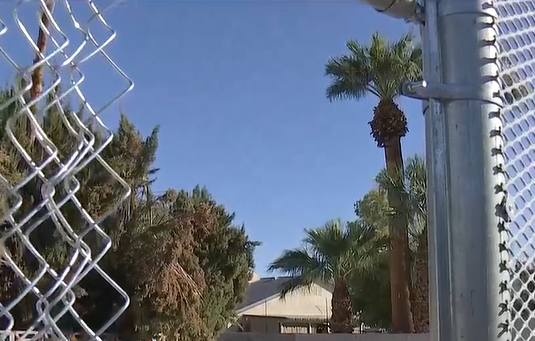
The immediate steps are the boring ones. Between now and April 2027, IndiCap will work through design, engineering, permitting and utility coordination with Clark County. Nothing visible happens on the corner during most of that stretch. If you drive past Russell and Edmond this fall, you will most likely see a fenced dirt lot and not much else.
Site work is expected to begin in April 2027. That is the phase neighbors actually notice: grading equipment, dust control watering, trucks hauling material, and the start of underground utility work. Vertical construction is expected to follow in May 2027, which is when tilt-up concrete panels typically go up and the building starts to take shape fast. Tilt-up construction is quick once it starts, which is why the gap between the vertical start and the February 2028 delivery is only about nine months.
The thing to watch after that is leasing. Class A infill buildings in supply-constrained submarkets often pre-lease, meaning tenants sign before the building is finished. If Southwest Bay announces tenants during 2027, that tells you demand for small-bay space in the southwest valley is as tight as developers believe. If it delivers empty in February 2028 and sits, that tells you the market softened. Either way, that leasing news will be a better read on the local business economy than most of the headline statistics.

Timelines like this one also slip. April 2027 and May 2027 are expected dates, not guarantees. Permit reviews run long, utility work uncovers surprises, and financing terms can change between an announcement and a groundbreaking. Treat February 2028 as a target rather than a promise, and do not be shocked if the real ribbon cutting lands a quarter or two later.
Ryan's Take
I pay attention to industrial deals like this one because they are an honest signal. Nobody builds a 70,400-square-foot building on a small infill corner as a publicity move. A developer only does that when the math says there are tenants who cannot find space nearby. Southwest Bay tells me the southwest valley's business base is still growing even while the residential market has cooled off this year.
For homeowners, my honest read is that this is a net positive with a short-term annoyance attached. The annoyance is the construction phase in 2027, with dust, noise and truck traffic. The positive is a modern, well-designed building instead of a vacant lot, plus local jobs and shorter service calls for the whole area. A clean Class A building with landscaped frontage is a far better neighbor than an unmaintained dirt parcel that collects trash and dumped furniture.
If you are buying in Enterprise, Mountain's Edge, Spring Valley or Southern Highlands right now, do what I tell every client to do before you write an offer. Look at the empty land within a half mile of the house and find out what it is zoned for. Not what you hope it becomes, what it is actually approved for. Industrial zoning near the Russell corridor is common, and a buyer who learns that after closing is a buyer who is unhappy in 2027.
What You Can Do
If you want to track this project, start with Clark County. Land use applications, permits and hearing agendas for unincorporated Clark County are posted publicly, and you can search by parcel or by address. That is where any zoning change, variance or design review for the Russell and Edmond corner would show up before construction starts.
If you run a business that needs space, do not wait for February 2028 to start looking. Small-bay suites in good locations often get committed well before delivery. Talk to a commercial broker who works the southwest submarket, get on the leasing list early, and understand what your operation actually needs in terms of clear height, power, office buildout, and whether a dock-high door matters to you or a grade-level door is enough. Those decisions are much cheaper to make before a building is designed around another tenant.
If you are a homeowner near the corridor, the practical move is simple. Check the zoning on nearby vacant parcels through Clark County's parcel search, sign up for notifications on projects in your area, and show up when a hearing affects your street. Public comment carries real weight on setbacks, landscaping, lighting and truck routing, which are the details that decide whether a project feels like a good neighbor or a bad one.
Have questions about how this affects your home or neighborhood? Reach out to Ryan Rose or text/call 702-747-5921 anytime.
Sources
NVBEX: Southwest Bay Industrial Project in Las Vegas, August 22, 2026
NVBEX: Nevada Construction Employment Increases in July, August 25, 2026
Categories
- All Blogs (4792)
- Absentee Owner (1)
- Affordability (3)
- ALIANTE (53)
- Anthem (32)
- Ascension (49)
- Assumable Loan (1)
- Astra (47)
- BLACK MOUNTAIN (55)
- Buyers (20)
- Cadence (17)
- Calico Ridge (50)
- Canyon Fairways (50)
- CANYONS OF SUMMERLIN (50)
- CENTENNIAL HILLS (81)
- Comparisons (47)
- CROSSINGS IN SUMMERLIN (47)
- DESERT SHORES (47)
- Divorce (3)
- Downsizing (13)
- EAGLE HILLS (46)
- Empty Nester (1)
- Enterprise (1)
- EXPIRED LISTINGS (13)
- First Time Homebuyer (4)
- Green Valley (139)
- Henderson (81)
- HORIZONS EDGE (50)
- Housing Market Trends (98)
- Informative (102)
- Inspirada (58)
- Lake Las Vegas (2)
- Lakes Las Vegas (3)
- Las Vegas Real Estate (183)
- Local News (842)
- Luxury (1)
- MacDonald Highlands (88)
- MacDonald Ranch (100)
- Madeira Canyon (93)
- MESQUITE NV (103)
- MOUNTAIN TRAILS (44)
- Mountains Edge (70)
- Naked City (35)
- New Construction (131)
- New Construction Las Vegas (20)
- North Las Vegas (24)
- Northgate (23)
- PALISADES SUMMERLIN (38)
- Probate (25)
- Providence (2)
- Quail Ridge (35)
- QUEENSRIDGE (56)
- Red Rock (1)
- RED ROCK COUNTRY CLUB (60)
- Relocating to Summerlin (204)
- Relocation (44)
- Retired (1)
- Retirement (1)
- Reverence (15)
- RHODES RANCH (64)
- Ridgebrook (40)
- Sellers (210)
- Seven Hills (83)
- Silverado Ranch (1)
- Silverstone Ranch (39)
- SKYE CANYON (100)
- SKYE CANYONE (4)
- Southern Highlands (94)
- Southwest (19)
- SPANISH TRAILS (55)
- SPRING VALLEY (70)
- Summerlin (103)
- Sun City Summerlin (3)
- The Arbors (36)
- The Cliffs (42)
- THE HILLS (45)
- THE PASEOS (52)
- The Pueblos (24)
- THE PUEBLOS OF SUMMERLIN (40)
- THE RIDGES (58)
- THE VISTAS OF SUMMERLIN (45)
- The Willows (59)
- Thoughts on Home Tour (2)
- TOURNAMENT HILLS (47)
- Veterans (3)
- WHITNEY RANCH (55)
- Workers Advantage Program (100)
Recent Posts





GET MORE INFORMATION