
CCSD School Police Will Not Rejoin the Flock License Plate Camera Network
Related Stories
CCSD Police Pause Use of the Flock License Plate Camera Network
CCSD Police Join a Statewide Pedestrian Safety Crackdown Oct. 10 to 31
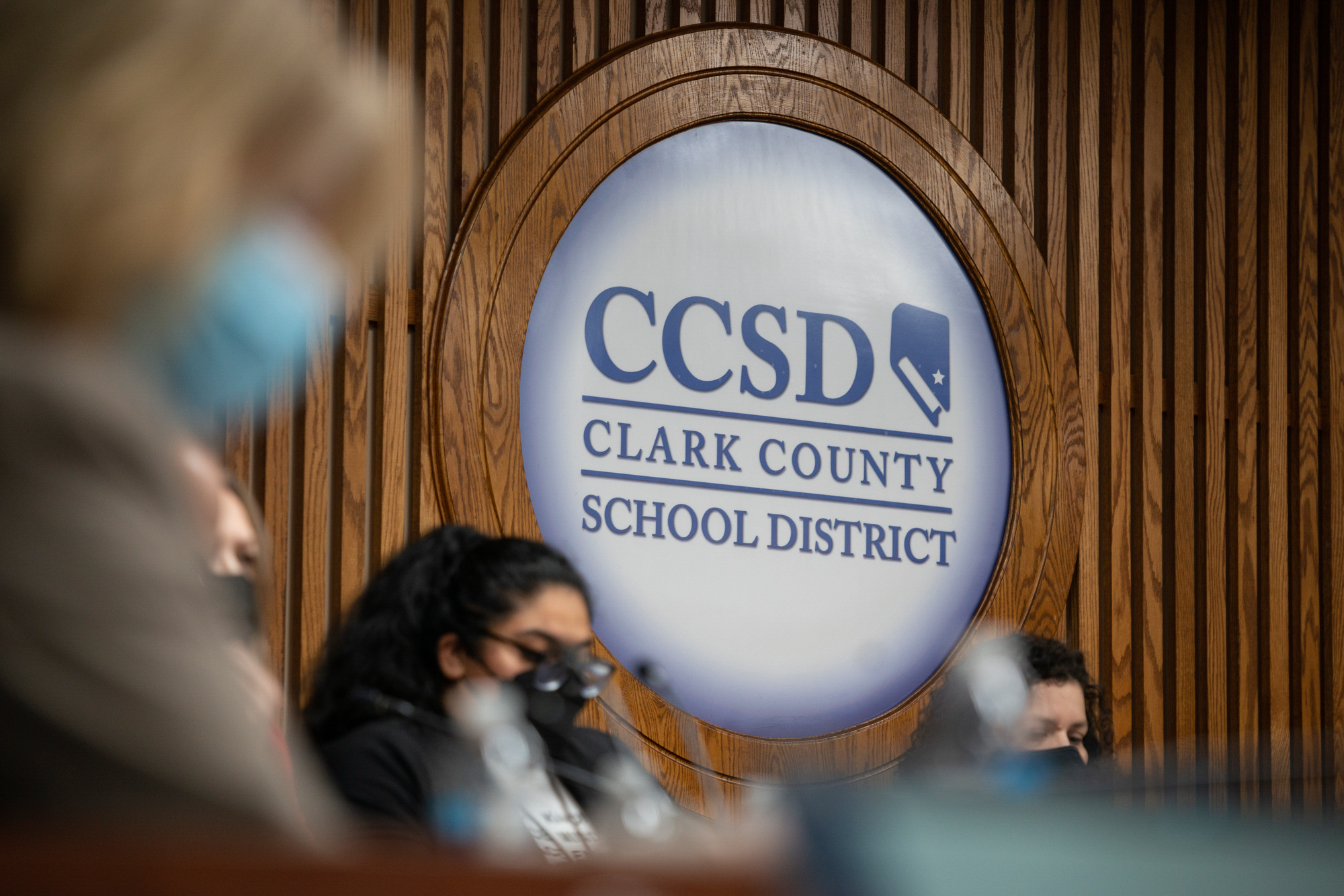
Clark County School District police will not sign a new agreement to search the valley's Flock license plate camera network. Police Chief Jeff Clark announced the decision on Monday, October 5, 2026, after a review that started when he paused the department's use of the cameras in August.
This closes a question that has been open since late summer: would school police go back to using a tool that can show where a car has been around the valley? For now, the answer is no. The district says any future change will go to the Board of School Trustees and the public first.
It is a short announcement, but it touches a lot of people. The cameras in question are not on school campuses. They sit on roads, at shopping centers, and near neighborhoods that every driver in Clark County passes through. Here is what the chief said, what it means, what is still unanswered, and what to watch next.

What Happened
On Monday, October 5, Chief Jeff Clark of the Clark County School District Police Department released a statement, which he also posted on X. It opened with one clear line: "Following a thorough review, the Clark County School District Police Department (CCSDPD) will not pursue a new Memorandum of Understanding (MOU) to access the Flock camera system."
A Memorandum of Understanding, or MOU, is a written agreement between agencies. It is the paperwork that let school police log in and search camera data owned by others. Without a new MOU, the department does not have a formal path back into the network.
The chief also made two other points. First, he said the school police department does not own or operate any Flock hardware. In the past, it reached the data through partner law enforcement agencies. Second, he said emergencies are a separate matter. "In any emergency involving imminent danger to our students, staff, or community, we will collaborate with our law enforcement partners and use all available tools to ensure their safety," Clark said, as reported by News 3 and FOX5.
He closed by saying that "any future updates regarding this technology will be shared with the Board of School Trustees and the public," according to The Nevada Independent. That is a notable promise. One of the biggest complaints over the summer was that the public learned about school police access to the cameras from news reports and records requests, not from the district.
The Las Vegas Review-Journal, KTNV, FOX5, News 3, and The Nevada Independent all reported the decision on October 5 and 6. The Nevada Independent asked a follow-up question: will the district keep using Flock data through Metro's police foundation, or through other agencies? The district declined to comment further, according to an update the outlet posted on October 6.

Why It Matters to Las Vegas Residents
Start with how most of us get around. Clark County is a driving county. Parents drive to drop-off, to work, to practice, and back again. Many high school students drive themselves. A license plate reader records the plate, the time, and the place each time a car passes. Put enough of those reads together, and you can build a rough map of where a car went during a day.
According to a February Nevada Independent report cited by KTNV, the Las Vegas Metropolitan Police Department operates about 200 Flock license plate reader cameras on city or county infrastructure. Other cameras in the network are owned by local agencies and businesses. A CCSD police memo described the school police role as "share-only" access. In plain terms, school police could search cameras they did not buy and do not maintain.
That is why this decision reaches beyond school families. Even if you have no kids in CCSD, your car passes those same cameras. The question was never only about what happens on a campus. It was about which agencies can search records of everyday driving, and under what rules.
There are two fair ways to look at the decision. Supporters of the cameras point to speed. When a child is missing or there is a threat against a school, a tool that can find a vehicle fast can matter. The chief's emergency language speaks to that. He is saying school police will still work with partner agencies and use available tools when kids are in real danger.
Critics point to limits. A school police department focused on students has a different job from a countywide police agency. Privacy groups, including the ACLU of Nevada, argued that this kind of search power for school police should be set by the elected board in public, not by internal memo. The decision not to sign a new MOU lines up with that concern, at least for now.
It also helps to be clear about what the decision does not do. It does not remove any cameras from Las Vegas roads, because school police never owned any. It does not change Metro's program or any city's program. It does not stop businesses or HOAs that own Flock cameras from using them. What it changes is narrow but real: the school district's own police force is not asking for a standing key to search that shared data.
For parents, the practical takeaway is simple. As of this announcement, CCSD police say they are not seeking routine access to the Flock network. In an emergency, they will lean on partner agencies. And any change is supposed to come before trustees first.
Background and History
Flock Safety is a private company that sells automated license plate reader cameras, often called ALPR. Police agencies, cities, businesses, and homeowner associations buy them. The cameras are usually on poles near roads or entrances. What turns single cameras into a network is sharing. An agency that owns cameras can let other agencies search them.
The scale is large. The Nevada Independent reported in August that Flock deploys more than 80,000 cameras nationwide and gives police access to a national database of vehicle information. The company also markets its cameras to schools, saying they can help with active shooter response and flag vehicles tied to non-custodial parents near campus. That pitch is part of why school districts around the country have faced the same question CCSD just answered.
Metro has used Flock cameras in the Las Vegas Valley since at least 2023, according to KTNV. The Nevada Independent reported in August that CCSD had a memorandum signed by the Las Vegas Metropolitan Police Foundation, showing school police access to the network since at least August 21, 2024. KTNV reported that CCSD police had used the cameras since August 2024 "to aid in the investigation of serious criminal events."
That access drew public attention in August 2026. A new procedural memo from the department laid out the rules. According to The Nevada Independent, only the Investigations Bureau could use the software. Searches had to be tied to a case number and approved by the bureau commander. Allowed uses included felonies, firearms, narcotics, and child endangerment cases. KTNV quoted the memo: "Access for any reason that does not relate to an assigned case number is prohibited." The Nevada Independent also cited a public tracking site, haveibeenflocked.com, showing CCSD made about 70 searches in 2025.
Soon after the reports, the district paused use of the cameras. A district spokesperson told KTNV that Chief Clark, newly appointed at the time, was "reviewing all CCSDPD procedures, including the use of FLOCK® System cameras." The district added that "CCSD will be fully transparent with the community about the use of Flock System cameras." We covered that first step in CCSD Police Pause Use of the Flock License Plate Camera Network.
In September, the story kept moving. Records reported by FOX5 and The Nevada Independent showed school police had looked into adding more cameras before the pause. The ACLU of Nevada then sent a letter to the Board of School Trustees. KTNV reported that the letter said it would be "reckless" to let school police decide on the technology without board oversight. Those developments are in our late-September post on the documents and the ACLU letter. The October 5 decision is the first final answer to come out of the chief's review.

What Happens Next
The headline is settled: no new MOU. But a few questions are still open, and they are worth watching.
The first is indirect access. The chief's statement says school police will work with partner agencies and "use all available tools" in an emergency involving imminent danger. That leaves room for a partner agency, such as Metro, to run a search during a crisis. The district has not spelled out what counts as imminent danger, who would make that call, or whether those requests would be logged and reported. When The Nevada Independent asked whether the district would keep using the technology through Metro's foundation, the district declined to comment further. Whether partner agencies could run searches for school police outside an emergency is [NOT VERIFIED].
The second is the board. The chief said future updates will go to the Board of School Trustees and the public. As of this writing, no trustees agenda item on Flock or license plate readers has been announced [NOT VERIFIED]. If the topic does come up, it would likely be the first time the elected board has discussed it in a public meeting. The ACLU's September letter asked for exactly that kind of public item before any future use.
The third is the bigger policy picture. Metro still runs its own Flock program, and the decision by school police does not change that. Rules for license plate readers across Nevada are a statewide question, and the Nevada Legislature next meets in regular session in 2027. Whether a bill on license plate readers is filed for that session is [NOT VERIFIED]. What CCSD did this month could still come up in that debate as one example of an agency stepping back.
There is also a practical question about how the department will handle serious cases without routine access. Before the pause, investigators could run a search tied to an assigned case on their own. Now, outside an emergency, any vehicle lead would likely have to go through a partner agency or through other investigative steps. How that works day to day, and whether it slows cases down, has not been described publicly [NOT VERIFIED]. That is a fair question for trustees to ask if the topic reaches a board meeting, and it is one both supporters and critics of the cameras would want answered.
So here is the short watch list. Watch for a trustees agenda that names Flock or license plate readers. Watch for any written CCSD police policy on emergency requests to partner agencies. And watch for statewide proposals heading into 2027.
Ryan's Take
I help people buy and sell homes across the valley, and school questions are part of almost every family's search. Most of the time that means test scores, boundaries, and drive times. But how a school district handles safety and privacy is part of the picture too. It tells you something about how the district runs.
I am not going to tell you whether license plate cameras are good or bad. Reasonable people land in different places, and both sides care about kids. What I think is worth pointing out is the process. Back in August, people learned about this through records requests and news stories. This time, the chief made a clear statement and promised that future changes will go to the trustees and the public. That is a healthier way to handle a sensitive tool, whatever the final policy ends up being. Clear, public rules make a district easier to trust, and that matters to families deciding where to put down roots. The open piece is the emergency carve-out, and I hope the district explains how that will work in writing.

What You Can Do
If you have a view on this, the Board of School Trustees is the right place to share it. Check the CCSD website for upcoming board meeting agendas and look for items about school police, Flock, or license plate readers. Board meetings include public comment, and you can also email the trustee who represents your area. A short, calm, specific comment tends to carry more weight than a long one.
If you want to understand the wider network, start with Metro. Metro runs its own Flock program, and its rules are separate from the school district's. Asking your local police agency how long plate data is kept and who can search it is a fair question for any resident.
Closer to home, many HOAs in the valley have cameras at gates and entrances. If yours does, ask your HOA board who can see the footage, how long it is kept, and whether it is shared with any police agency. A well-run HOA should be able to answer. And if you are shopping for a home, those are good questions to add to your list when you review HOA documents.
Finally, keep an eye on the 2027 Nevada legislative session. If lawmakers take up license plate reader rules, there will be hearings and chances for public comment. Your state senator and assembly member are the people to contact.
Have questions about how this affects your home or neighborhood? Reach out to Ryan Rose or text/call 702-747-5921 anytime.
Sources
FOX5 Vegas: CCSD police will not pursue Flock camera agreement (Justine Verastigue)
News 3 Las Vegas: CCSD police will not pursue new Flock camera access agreement (Sara Sullivan)
KTNV Channel 13: CCSD police will not seek new Flock camera access agreement, district says
Categories
- All Blogs (4979)
- Absentee Owner (4)
- Affordability (3)
- ALIANTE (53)
- Anthem (33)
- Ascension (50)
- Assumable Loan (1)
- Astra (50)
- BLACK MOUNTAIN (55)
- Buyers (22)
- Cadence (17)
- Calico Ridge (50)
- Canyon Fairways (50)
- CANYONS OF SUMMERLIN (55)
- CENTENNIAL HILLS (81)
- Comparisons (46)
- CROSSINGS IN SUMMERLIN (55)
- DESERT SHORES (47)
- Divorce (3)
- Downsizing (13)
- EAGLE HILLS (55)
- Empty Nester (1)
- Enterprise (1)
- EXPIRED LISTINGS (134)
- First Time Homebuyer (4)
- Green Valley (139)
- Henderson (82)
- HORIZONS EDGE (50)
- Housing Market Trends (100)
- Informative (112)
- Inspirada (58)
- Lake Las Vegas (2)
- Lakes Las Vegas (3)
- Las Vegas Real Estate (182)
- Local News (774)
- Luxury (1)
- MacDonald Highlands (88)
- MacDonald Ranch (100)
- Madeira Canyon (93)
- MESQUITE NV (103)
- MOUNTAIN TRAILS (50)
- Mountains Edge (79)
- Naked City (35)
- New Construction (131)
- North Las Vegas (24)
- Northgate (23)
- PALISADES SUMMERLIN (50)
- Probate (28)
- Providence (2)
- Quail Ridge (35)
- QUEENSRIDGE (56)
- Red Rock (1)
- RED ROCK COUNTRY CLUB (60)
- Relocating to Summerlin (207)
- Relocation (45)
- Retired (1)
- Retirement (1)
- Reverence (15)
- RHODES RANCH (64)
- Ridgebrook (40)
- Sellers (255)
- Seven Hills (83)
- Silverado Ranch (1)
- Silverstone Ranch (39)
- SKYE CANYON (100)
- SKYE CANYONE (4)
- Southern Highlands (94)
- Southwest (19)
- SPANISH TRAILS (55)
- SPRING VALLEY (70)
- Summerlin (104)
- Sun City Summerlin (3)
- The Arbors (37)
- The Cliffs (50)
- THE HILLS (55)
- THE PASEOS (55)
- The Pueblos (27)
- THE PUEBLOS OF SUMMERLIN (42)
- THE RIDGES (65)
- THE VISTAS OF SUMMERLIN (50)
- The Willows (60)
- Thoughts on Home Tour (2)
- TOURNAMENT HILLS (50)
- Veterans (3)
- WHITNEY RANCH (55)
- Workers Advantage Program (100)
Recent Posts








GET MORE INFORMATION