
Boulder City May Appeal AI Data Center | Ryan Rose
Related Stories
Boulder City Proposes a Utility Rate Hike of Up to 5% Per Year
Federal Colorado River Plan Cuts Nevada's Water Use
NDOT Begins a Yearlong Rainbow Boulevard Pavement Project
Boulder City is thinking about fighting a federal decision that cleared the way for a big AI data center, and the choice could cost the city about $2.3 million a year in revenue. The City Council is weighing an appeal of the Bureau of Land Management approval, and the fight comes down to one hard question: how much control does a small town really have over what gets built next to it?
This is the kind of story that touches everything people love about Boulder City. It touches water, it touches power, and it touches the small-town feel that keeps home values steady out there. If you own a home near Boulder City, or you are thinking about buying one, this decision matters more than it might look at first.
What Happened
The Boulder City Council is weighing an appeal of the federal approval for an AI data center, according to reporting from the Boulder City Review published on July 14, 2026. The approval came from the Bureau of Land Management, the federal agency that manages huge amounts of open land across Nevada. The land in question sits near Boulder City, and the BLM sign-off moved the project forward at the federal level.
Here is the part that stings for the city. Boulder City stands to lose about $2.3 million in annual revenue tied to the decision. That is a large number for a town this size. Boulder City runs lean, and $2.3 million a year is real money that helps pay for services, staff, and upkeep. Losing that stream would force hard choices in future budgets.
The core of the dispute is local control. When a federal agency approves a project on federal land, the small town next door does not always get the final say. Boulder City leaders want a bigger voice in what happens near their borders. An appeal is one of the few tools they have to slow the process down and push for better terms, or to stop the project outright.
Data centers are the hottest development fight in Southern Nevada right now. They use enormous amounts of electricity and, in many cases, large amounts of water for cooling. In the desert, both of those resources are precious. That is why a single data center approval can turn into a countywide argument about growth, resources, and who benefits. Boulder City is now at the center of that argument.
It helps to understand what an AI data center actually is. These are large warehouse-style buildings packed with computer servers that run artificial intelligence programs day and night. They never really shut off. The chips inside run hot, so the buildings need constant cooling, and that cooling often relies on water, electricity, or both. A single large campus can use as much power as a small city. That is why local governments across the country are suddenly paying such close attention to where these things get built.
For Boulder City, the timing makes the decision even harder. The town is a small operation with a small staff, and taking on a federal appeal is not a simple weekend project. It means legal work, staff hours, and a public process that stretches out over time. The council has to balance the cost of the fight against the value of the revenue and the principle of local control. None of those pieces line up neatly, which is exactly why the council is weighing its options instead of rushing to a vote.

Why It Matters to Las Vegas Residents
You might live in Henderson, Summerlin, or Green Valley and think a Boulder City data center is not your problem. It is. The resources these facilities use, mostly power and water, are shared across the whole region. When a large new user plugs into the grid or the water system, everyone else feels the pressure over time. That can show up in your utility bills and in future rate decisions.
Water is the biggest concern in the desert. The valley pulls about 90% of its water from the Colorado River, and a new federal plan is already cutting Nevada's share over the next two years. Add a thirsty data center to that mix and the math gets tighter. Every large new draw on power and water makes the long-term picture harder for families who already live here.
Power is the other half of the story. AI data centers run around the clock and pull a staggering amount of electricity. When demand climbs, utilities eventually pass the cost along. Boulder City residents already face a proposed utility rate hike of up to 5% per year, and big new industrial users only add to the strain on the system. What happens in Boulder City can ripple into rate talks across Clark County.
There is also the question of small-town character, which is a real dollar issue in real estate. People pay a premium to live in Boulder City because it feels quiet, controlled, and separate from the Strip. No gambling, no billboards, slow growth on purpose. If heavy industrial development starts creeping in next door, that feeling can change, and buyers notice. Character is not just a vibe out there. It is baked into home values.
Think about the everyday buyer who drives out to Boulder City on a weekend. They are usually looking for something the rest of the valley does not offer: space, quiet, and a slower pace. Retirees love it. Families who want distance from the noise love it. Those buyers are sensitive to change. If the story around town becomes industrial development and resource fights instead of lake views and historic charm, some of them will look elsewhere. That shift, even a small one, can soften demand and put pressure on prices over time.
The revenue side matters to residents too, and not in an abstract way. That $2.3 million helps fund the services that make daily life work, from road upkeep to parks to city staff. If the town loses that income, it has to make it up somewhere, and that usually means higher fees, higher rates, or cuts to services. Combine that with the utility rate hike already on the table and you can see why Boulder City homeowners feel like their wallets are in the middle of this fight.

Background and History
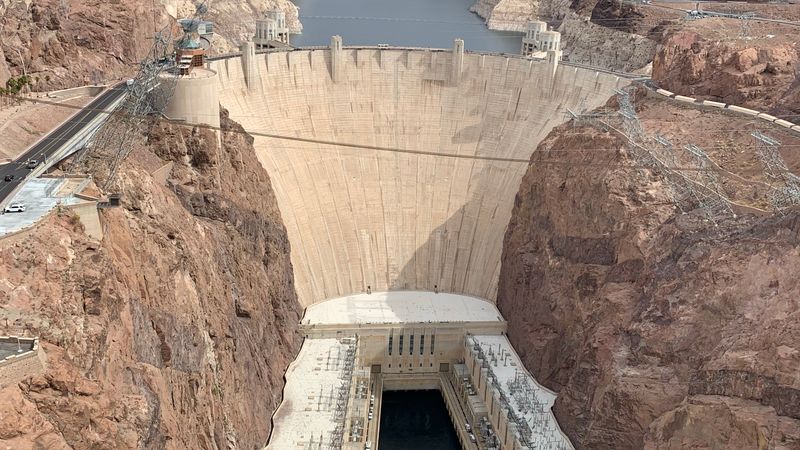
Boulder City has always done things differently. The town was built in the 1930s to house the workers who constructed Hoover Dam, and it grew up with a strict, planned identity. It is one of only two places in Nevada where gambling is banned. It has a growth ordinance that limits how many new homes can be built each year. That controlled-growth mindset is the whole reason the town feels the way it does.
Because Boulder City sits so close to Hoover Dam, it has a unique relationship with power. The city gets a share of low-cost hydroelectric power tied to the dam, and it has long earned money by leasing land and managing energy-related deals. Solar projects on the dry desert land east and south of town have been a revenue source for years. Data centers are the newest chapter in that same story of turning open federal land into income.
The $2.3 million at stake is part of that pattern. Boulder City has learned to squeeze revenue out of the land and power around it, which helps keep resident taxes and fees lower than they otherwise would be. So when a federal approval threatens to reroute that benefit, the council pays close attention. This is not just about one project. It is about who controls the value of the land near the town.
Data center fights are not new to Clark County, either. The county has already wrestled with new rules for these facilities as tech companies race to build AI computing sites across the Southwest. Cheap land, lots of sun for solar, and proximity to major power lines make Southern Nevada attractive to developers. The tension between that opportunity and the strain on water and power is the defining local development debate of 2026.
It also helps to know how the BLM fits in. The federal government owns most of the land in Nevada, roughly 80% of the state. That means when a developer wants a large open parcel out here, they often have to go through the BLM instead of a city or county. The BLM can lease or approve projects on that land, and the local town nearby does not automatically get veto power. That setup is at the heart of the Boulder City conflict. The town feels the impact of a project it did not fully approve.

What Happens Next
The immediate step is the council decision on whether to actually file the appeal. Weighing an appeal and filing one are two different things. The council has to decide if the cost and effort of fighting the BLM approval is worth it, especially when the city could lose that $2.3 million either way depending on how the appeal turns out. Expect public comment, staff analysis, and likely more than one meeting before a final call.
If the city moves ahead, an appeal of a federal land decision can take months. These processes are slow and technical. There would be legal filings, responses from the BLM, and possibly negotiations over terms. Residents who want a say should watch the City Council agenda closely, because the window to speak up at a public meeting can be short and easy to miss.
Watch for the details that come out along the way. How much water would the data center use? Where would its power come from? Would Boulder City get any revenue back through a new agreement, or lose the full amount? Those answers will shape whether this project ends up as a win, a loss, or a compromise for the town. Keep an eye on the Boulder City Review and the city's official meeting notices for updates.
There is a bigger regional storyline to track too. Nevada leaders are trying to attract tech investment and jobs, and data centers are a big part of that pitch. At the same time, the state just got hit with federal Colorado River water cuts, and utilities are under pressure. Boulder City's appeal could become a test case for how much say small towns get when state-level ambitions and federal decisions collide. If Boulder City wins concessions, other communities may push for the same. If it loses, developers may feel more confident building near towns that object.
Ryan's Take
As a local real estate expert, here is what I watch with a story like this. Boulder City home values rest on two things: limited supply from the growth ordinance, and that protected small-town feel. Anything that threatens the feel, like heavy industrial use nearby, is worth taking seriously. But so is the city's budget, because a healthy budget keeps services strong and taxes reasonable, and that also supports home values.
My honest read is that this is less about the data center itself and more about control and money. Boulder City wants a seat at the table and a fair share of the value. If the city can land a deal that protects water and power while keeping some revenue, that is the best outcome for homeowners. If the project gets forced through with no local benefit, that is the version that could chip away at what makes the town special. Either way, buyers and sellers out there should follow this closely, because the resolution will tell you a lot about how much say the town still has over its own future.

What You Can Do
If you live in or near Boulder City, the most powerful thing you can do is show up. Watch the City Council agenda on the city's website and attend the meeting when this item comes up. Public comment is your chance to tell elected officials how you feel about the data center, the water and power use, and the $2.3 million on the line. A packed room changes how councils vote.
You can also reach out to council members directly by email or phone before the meeting. Ask the questions that matter to you: How much water will this use? What happens to our utility rates? Will the city recover any of the lost revenue? Officials pay attention when residents ask specific, informed questions instead of general complaints.
Stay informed between meetings, too. Sign up for city agenda alerts, follow the Boulder City Review, and talk to neighbors about what they are hearing. A lot of the important detail on a project like this comes out in staff reports and public documents, not headlines. The residents who read those documents are the ones who end up shaping the outcome, because they can ask sharper questions and hold officials accountable.
And if you are thinking about buying or selling near Boulder City, factor this into your timing and your expectations. Big development decisions can move markets in small towns. I am happy to walk you through what this could mean for a specific home or neighborhood so you can make a smart, calm decision instead of guessing. I track these local stories closely because they are exactly the kind of thing that quietly moves values in a place like Boulder City, long before it shows up in the sale prices.
Have questions about how this affects your home or neighborhood? Reach out to Ryan Rose or text/call 702-747-5921 anytime.
Sources
Categories
- All Blogs (4337)
- Absentee Owner (4)
- Affordability (3)
- ALIANTE (53)
- Anthem (33)
- Ascension (50)
- Assumable Loan (1)
- Astra (50)
- BLACK MOUNTAIN (55)
- Buyers (22)
- Cadence (17)
- Calico Ridge (50)
- CANYONS OF SUMMERLIN (55)
- CENTENNIAL HILLS (81)
- Comparisons (46)
- CROSSINGS IN SUMMERLIN (55)
- DESERT SHORES (47)
- Divorce (3)
- Downsizing (13)
- EAGLE HILLS (55)
- Empty Nester (1)
- Enterprise (1)
- EXPIRED LISTINGS (134)
- First Time Homebuyer (4)
- Green Valley (137)
- Henderson (82)
- HORIZONS EDGE (50)
- Housing Market Trends (99)
- Informative (112)
- Inspirada (56)
- Lake Las Vegas (2)
- Lakes Las Vegas (3)
- Local News (469)
- Luxury (1)
- MacDonald Highlands (88)
- MacDonald Ranch (70)
- Madeira Canyon (91)
- MESQUITE NV (103)
- MOUNTAIN TRAILS (50)
- Mountains Edge (67)
- Naked City (35)
- New Construction (119)
- North Las Vegas (24)
- Northgate (23)
- PALISADES SUMMERLIN (50)
- Probate (28)
- Providence (2)
- Quail Ridge (35)
- QUEENSRIDGE (56)
- Red Rock (1)
- RED ROCK COUNTRY CLUB (60)
- Relocating to Summerlin (207)
- Relocation (45)
- Retired (1)
- Retirement (1)
- Reverence (1)
- RHODES RANCH (63)
- Ridgebrook (40)
- Sellers (253)
- Seven Hills (65)
- Silverado Ranch (1)
- Silverstone Ranch (39)
- SKYE CANYON (100)
- SKYE CANYONE (4)
- Southern Highlands (94)
- Southwest (19)
- SPANISH TRAILS (55)
- SPRING VALLEY (70)
- Summerlin (100)
- Sun City Summerlin (3)
- The Arbors (35)
- The Cliffs (49)
- THE HILLS (55)
- THE PASEOS (55)
- The Pueblos (27)
- THE PUEBLOS OF SUMMERLIN (42)
- THE RIDGES (65)
- THE VISTAS OF SUMMERLIN (48)
- The Willows (54)
- Thoughts on Home Tour (2)
- TOURNAMENT HILLS (50)
- Veterans (3)
- WHITNEY RANCH (52)
- Workers Advantage Program (100)
Recent Posts






GET MORE INFORMATION