
A's Las Vegas Ballpark on Schedule for 2028 | Ryan Rose

Something big happened on the Las Vegas Strip on June 1, 2026, and it had nothing to do with a casino opening or a headline concert. Construction crews lifted the first steel roof truss into place at the Oakland Athletics' new Las Vegas ballpark, a moment that marks a visible and tangible turning point in the stadium's construction timeline. At 200 tons, that single piece of steel is a statement. It says this project is real, it is rising, and it is on its way to opening on February 28, 2028.
For Las Vegas residents, this is more than a sports story. A major league baseball stadium on the Strip reshapes how people think about living, working, and investing in the neighborhoods around it. If you have been watching this project from a distance and wondering whether it would actually come together, the installation of the first roof truss is the clearest signal yet that the answer is yes.
What the Roof Truss Installation Means for the Project
In large-scale stadium construction, the roof structure is often the most technically complex and most closely watched phase of the build. The roof defines the building's silhouette, sets the stage for mechanical systems, and represents the kind of work that cannot be rushed or faked. When crews successfully set a 200-ton steel truss, it means the foundation and structural supports below it have already passed the tests required to carry that load.
The ballpark's roof structure is anchored by six buttresses placed around the perimeter of the building. These buttresses are the vertical elements that transfer the weight and lateral forces from the roof down into the ground. The first truss installed on June 1 represents the beginning of the process of connecting those buttresses into a unified overhead structure. Each subsequent truss will build on the last, and as the roof takes shape the building will start to look far more like a finished stadium.
What makes this milestone especially meaningful is the project status that came with it. The ballpark remains on budget and on schedule, with a targeted completion date of February 28, 2028. In the current construction environment, where material costs and labor availability have caused delays on projects across the country, maintaining schedule through a major structural milestone is a genuine achievement. It also signals that the project management team has planned well for the complexity of building on one of the most active and high-profile corridors in the world.

What the Ballpark Will Look Like When It Opens
The A's new home in Las Vegas has been designed as a destination-class stadium, built for the specific climate and character of the Strip. The roof structure is a core part of that design. Unlike many open-air ballparks, a stadium built for Las Vegas must account for summer temperatures that regularly exceed 110 degrees Fahrenheit. The roof and its relationship to the overall envelope of the building reflect an attempt to make the experience of attending a game comfortable and appealing even in the peak of summer.
The stadium site sits on what was the Tropicana hotel and casino property, a location that carries significant Strip history. The position of the ballpark along the southern end of the Strip means it will be visible from major corridors and easily accessible from both the resort district and the surrounding residential communities of the valley.
When the ballpark opens in time for the 2028 season, it will bring Major League Baseball to Nevada for the first time. That is not a small thing. Las Vegas will join a short list of American cities that host all four major professional sports leagues. The Raiders and the Golden Knights are already here. The A's will complete the picture.
The Story of the A's Move to Las Vegas
The Athletics spent more than a decade trying to resolve their stadium situation in Oakland. The team played in the Oakland Coliseum, a facility that opened in 1966 and had long outlived its usefulness as a modern sports venue. Negotiations over a new ballpark in Oakland stretched across multiple ownership groups, city administrations, and stadium concepts, never reaching a conclusion that satisfied all parties.
By the early 2020s it had become clear that a resolution in Oakland was not going to happen on any reasonable timeline. The A's began exploring relocation options, and Las Vegas emerged as the leading candidate. The combination of a growing population, a supportive business environment, a robust tourism economy, and strong public interest in professional sports made Nevada's largest city an appealing destination.
The official announcement of the move and the selection of the former Tropicana site came after extensive negotiations involving the team, state and local government, and private development partners. The involvement of the state of Nevada and Clark County in supporting the project reflected the broader economic case for bringing Major League Baseball to the region. A team, a ballpark, and the events that surround them generate economic activity across lodging, dining, entertainment, and real estate in ways that extend well beyond the stadium itself.
Construction began in earnest after the Tropicana was demolished, clearing the site for a project that would transform that corner of the Strip from a shuttered casino into a year-round sports and entertainment venue. The June 2026 roof truss installation represents roughly the midpoint of the construction timeline, with the February 2028 completion date still firmly in view.
Why the Former Tropicana Site Matters
The Tropicana Las Vegas opened in 1955 and was one of the earliest major hotel-casino properties on the Strip. It operated for nearly seven decades before closing, and its eventual demolition created one of the most significant available parcels of land on the entire Las Vegas Strip. The decision to build a baseball stadium there rather than another hotel or gaming property is a statement about the direction Las Vegas is moving.
The Strip has long been dominated by gaming and hospitality. Sports have gradually entered the picture, starting with the T-Mobile Arena and the arrival of the Golden Knights in 2017, continuing with Allegiant Stadium and the Raiders in 2020, and now advancing further with the A's ballpark. Each of these venues has added a different draw to the corridor, and each has created its own gravitational pull on foot traffic, spending, and nearby development.

The Tropicana site is close to the MGM Grand, New York-New York, and the intersection of Tropicana Avenue and Las Vegas Boulevard, one of the highest-traffic corners in the country. A ballpark at that location will draw game-day crowds of tens of thousands of people who will eat, drink, shop, and stay in the surrounding area. The ripple effects on nearby businesses, hotels, and real estate are real and measurable, and they are already beginning to be priced into the market.
For residents of nearby communities, the site's transformation also raises important questions about quality of life, accessibility, and property values. The answers are generally positive, though the specifics depend on proximity. Areas within a reasonable drive of the ballpark tend to see increased interest from buyers and renters who want to be close to the action without paying Strip hotel rates.
Ryan's Take
I have been watching this project closely since the announcement, and the June 1 roof truss milestone is the development that finally makes the stadium feel real to me in a visceral way. You can read about groundbreakings and foundation pours and structural milestones, but there is something different about seeing a 200-ton piece of steel lifted into the sky above the Strip. That is a building taking shape.
From a real estate perspective, the A's ballpark is one of several major infrastructure investments that are reshaping how buyers and investors think about Las Vegas. When I talk with clients who are considering neighborhoods in the valley, the conversation has shifted. People want to be near the energy that the city is generating, and that energy is no longer confined to the Strip itself. It is spreading into surrounding communities, creating opportunities in areas that were not on many buyers' radar even five years ago.
The ballpark's location near the southern end of the Strip makes it particularly relevant for buyers looking at areas like the southwest valley, Henderson, and communities along the I-15 and I-215 corridors. These areas offer relatively accessible pricing compared to closer-in neighborhoods, and they benefit from the improvements in infrastructure and retail that tend to follow large stadium investments.
If you are thinking about buying in Las Vegas and you have been waiting for the right moment, projects like the A's ballpark are part of why I think 2026 and 2027 are important years to be active in this market. The investments being made at the public and private level are laying the groundwork for the next phase of the city's growth, and the people who buy ahead of that phase tend to look back on their decision with satisfaction.
What a New Baseball Stadium on the Strip Means for Las Vegas Neighborhoods
Professional sports venues have a well-documented effect on the neighborhoods around them. They bring infrastructure improvements, stimulate commercial development, attract new residents who want proximity to the action, and generate a sense of place and identity that can transform a neighborhood's character over time. Las Vegas is already experiencing this dynamic with Allegiant Stadium and the Raiders, and the addition of the A's ballpark will amplify it.
The neighborhoods most directly affected by the ballpark will be those along the southern Strip and the streets that feed into the stadium district from the east and west. As the ballpark approaches its 2028 opening, expect to see increased restaurant and bar activity in the immediate vicinity, continued hotel investment nearby, and growing interest from buyers who want to be close to the venue without living on the Strip itself.
North Las Vegas is also seeing significant development activity, including the Hylo Park Phase 2 sports village project, which reflects a broader regional trend toward sports-anchored mixed-use development. Henderson continues to add mixed-use projects as well, with the Centurion development in Inspirada representing the kind of walkable, amenity-rich community that appeals to the same buyers who are drawn to proximity to major sports venues. Clark County is also moving forward with senior housing and residential projects that speak to the full range of buyers the region is attracting.
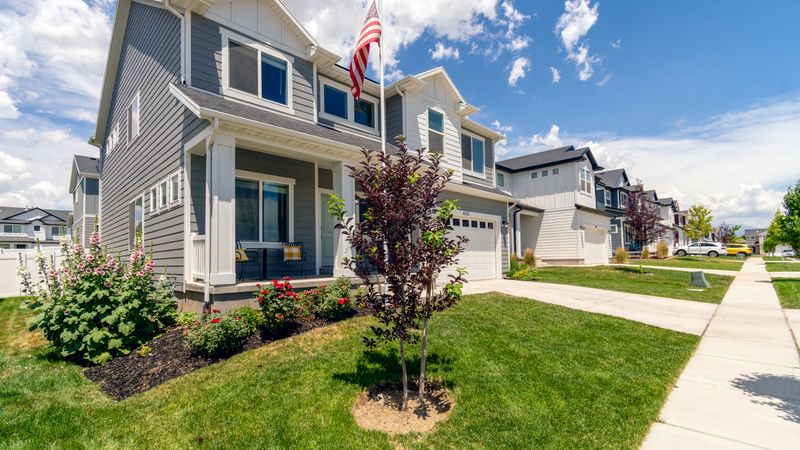
Major league baseball brings something that football alone does not: a long home schedule. The Raiders play eight or nine home games per year. The A's will play 81 home games over six months. That is a fundamentally different volume of activity, and it sustains economic and social energy at a level that transforms a neighborhood rather than simply punctuating it. Restaurants, bars, shops, and services near the ballpark will benefit from that rhythm in ways that are meaningful for property values and community character.
For buyers and investors who are thinking about Las Vegas as a long-term bet, the A's ballpark is one more piece of evidence that this city is building the kind of infrastructure that supports sustained population and economic growth. The 200-ton truss installed on June 1, 2026, is a small piece of a much larger story, but it is a concrete sign that the story is moving forward on schedule.
If you have questions about how the ballpark's development is affecting specific neighborhoods, or if you want to talk through what the broader growth picture in Clark County means for your real estate goals, I am always glad to have that conversation. You can reach me at rosehomeslv.com or by phone at any time. Las Vegas real estate is a market I follow closely, and helping people find their place in it is work I genuinely enjoy.
You might also find it useful to explore some of the other development stories shaping the valley right now. The Hylo Park Phase 2 sports village in North Las Vegas is another major project that speaks to the region's appetite for sports-anchored development. In Henderson, the Centurion mixed-use project in Inspirada is bringing the kind of walkable community design that is increasingly in demand. And Clark County's work on the Serene Pines senior apartments reflects the full range of housing investment happening across the valley. All of these projects are part of the same larger story, and all of them matter for anyone thinking seriously about Las Vegas real estate in 2026 and beyond.
Sources
- Las Vegas Review-Journal, "Raise the Roof: First Steel Truss Installed on A's Ballpark in Latest Project Milestone," June 1, 2026. reviewjournal.com
Categories
- All Blogs (4278)
- Absentee Owner (4)
- Affordability (3)
- ALIANTE (53)
- Anthem (33)
- Ascension (50)
- Assumable Loan (1)
- Astra (50)
- BLACK MOUNTAIN (55)
- Buyers (22)
- Cadence (17)
- Calico Ridge (50)
- CANYONS OF SUMMERLIN (55)
- CENTENNIAL HILLS (81)
- Comparisons (46)
- CROSSINGS IN SUMMERLIN (55)
- DESERT SHORES (47)
- Divorce (3)
- Downsizing (13)
- EAGLE HILLS (55)
- Empty Nester (1)
- Enterprise (1)
- EXPIRED LISTINGS (134)
- First Time Homebuyer (4)
- Green Valley (137)
- Henderson (82)
- HORIZONS EDGE (50)
- Housing Market Trends (99)
- Informative (112)
- Inspirada (56)
- Lake Las Vegas (2)
- Lakes Las Vegas (3)
- Local News (410)
- Luxury (1)
- MacDonald Highlands (88)
- MacDonald Ranch (70)
- Madeira Canyon (91)
- MESQUITE NV (103)
- MOUNTAIN TRAILS (50)
- Mountains Edge (67)
- Naked City (35)
- New Construction (119)
- North Las Vegas (24)
- Northgate (23)
- PALISADES SUMMERLIN (50)
- Probate (28)
- Providence (2)
- Quail Ridge (35)
- QUEENSRIDGE (56)
- Red Rock (1)
- RED ROCK COUNTRY CLUB (60)
- Relocating to Summerlin (207)
- Relocation (45)
- Retired (1)
- Retirement (1)
- Reverence (1)
- RHODES RANCH (63)
- Ridgebrook (40)
- Sellers (253)
- Seven Hills (65)
- Silverado Ranch (1)
- Silverstone Ranch (39)
- SKYE CANYON (100)
- SKYE CANYONE (4)
- Southern Highlands (94)
- Southwest (19)
- SPANISH TRAILS (55)
- SPRING VALLEY (70)
- Summerlin (100)
- Sun City Summerlin (3)
- The Arbors (35)
- The Cliffs (49)
- THE HILLS (55)
- THE PASEOS (55)
- The Pueblos (27)
- THE PUEBLOS OF SUMMERLIN (42)
- THE RIDGES (65)
- THE VISTAS OF SUMMERLIN (48)
- The Willows (54)
- Thoughts on Home Tour (2)
- TOURNAMENT HILLS (50)
- Veterans (3)
- WHITNEY RANCH (52)
- Workers Advantage Program (100)
Recent Posts



GET MORE INFORMATION