
A Proposed Arts District Business Improvement District Splits Downtown Stakeholders
Related Stories
The Arts District's New 500-Space Parking Garage Is Open
Almond & Oat Opens Its Third Coffee Shop, Downtown in the Arts District
A group of property owners in the downtown Las Vegas Arts District wants to create a business improvement district, or BID, that would charge owners a yearly assessment to pay for extra security, cleanup, lighting, signage and marketing. The plan would raise about $1.9 million in its first year, but the board of the 18b Las Vegas Arts District Neighborhood Association has voted to oppose it, saying it could push up costs for the artists, renters and small businesses who already call the neighborhood home.
This is not a city program. It is a petition led by people who own property in the district. If enough owners sign, it goes to the Las Vegas City Council for a public hearing. If it passes, every property owner inside the lines would pay, whether they signed or not. That is why this fight matters to anyone who owns, rents or runs a business between Bonneville Avenue and Wyoming Avenue.
Here is a plain-English look at what is being proposed, what it would cost, who supports it, who is against it, and what happens next.

What Happened
On Tuesday, Sept. 1, 2026, a group of Arts District property owners and stakeholders launched a petition to form the Las Vegas Arts District Business Improvement District. They put their plan online at lvartsdistrictbid.com. Sam Cherry, a downtown developer and property owner who is helping form the BID, said in a news release that a BID would let people who have invested in the neighborhood pool their money, set shared priorities and be held accountable for results.
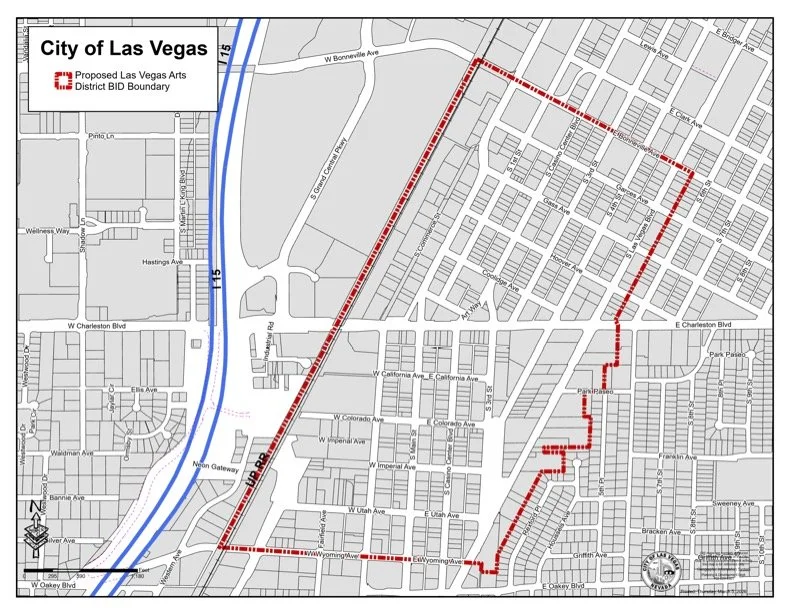
The proposed district would run from East Bonneville Avenue on the north to West Wyoming Avenue on the south. On the east, it would include parcels along Las Vegas Boulevard. On the west, it would stop at the Union Pacific Railroad tracks. That covers the heart of the Arts District, including Main Street, Casino Center Boulevard and the blocks around Charleston Boulevard.
According to the plan's proposed budget, about $1.9 million could be spent in the first year. The BID's own FAQ puts the figure at about $1.93 million, counting assessments and other contributions. Public safety would get the biggest share at 35 percent. Marketing and events would get 20 percent. The rest would go to cleaning, public space improvements and business support.
Here is what the money would pay for, based on the management plan as reported by the Las Vegas Sun and FOX5:
- Safety: security ambassadors and patrols, safety escorts, better lighting, cameras, incident reporting and coordination with Metro police and the Las Vegas city marshals.
- Cleaning: trash and bulk-item pickup, pressure washing, graffiti removal, weed removal and upkeep of sidewalks, alleys and public spaces.
- Public spaces: wayfinding and gateway signs, landscaping, pedestrian amenities and public art.
- Business support: outreach to businesses, plans to fill vacant spaces, parking strategies and programs for entrepreneurs and artists.
- Marketing: promotion, events and programming to bring in more locals and visitors.
Then, on Oct. 8, the Las Vegas Sun reported that the board of the 18b Las Vegas Arts District Neighborhood Association had voted to oppose the plan. The association is a nonprofit run by artists, business owners and community members. Its board includes President Josh Kellman and Vice President Brian "Paco" Álvarez. In a Facebook post, the board said it supports cleaner streets, safer spaces and stronger businesses, but that this plan "falls short on the artists, small businesses and residents who built this district."

Why It Matters to Las Vegas Residents
The biggest question for most people is simple: what would it cost? The BID's FAQ lays out the rates. Commercial, apartment, nonprofit and government property owners would pay up to $6.50 for every $1,000 of assessed value each year. Residential condo and home owners would pay up to $3.25 per $1,000 of assessed value.
Assessed value is not the same as what a home would sell for. In Nevada, assessed value is about 35 percent of taxable value. The BID's FAQ gives this example: a $1 million property has an assessed value of about $350,000. At the residential rate, that owner would pay $1,137.50 a year. A commercial owner with the same assessed value would pay twice that, about $2,275 a year. The plan says those rates are maximums for the life of the BID. The board can lower them, but it cannot raise them.
There are a few other details owners should know. Assessed value above $5 million on any single parcel would not be charged. Properties the plan calls "underutilized," such as vacant or lightly used lots, would pay a higher rate, but only on the value of the land. That rate would be 12.025 per $1,000 for commercial land and 4.875 per $1,000 for residential land. The idea is to push owners of empty lots to pay more toward the neighborhood.
Renters and business tenants should pay attention too. The BID's FAQ says that, depending on the lease, owners may be able to pass the assessment through to tenants as an operating expense. The neighborhood association's board made the same point. It said assessments can be passed on through leases, and that the plan "has no affordability or anti-displacement protections." If you rent a studio, a storefront or an apartment inside the lines, read your lease to see whether added property charges can be passed to you.
To put the residential rate in smaller terms, here is the same math on a lower-priced home. A condo with a taxable value of $300,000 would have an assessed value of about $105,000. At $3.25 per $1,000, that works out to about $341 a year, or roughly $28 a month. A commercial building with an assessed value of $1 million would pay up to $6,500 a year. These are examples built from the published rates, not bills for any real property. Your actual number depends on your parcel's assessed value in the engineer's report.
On the other side of the ledger, supporters say the area needs more care than it gets today. In a FOX5 report, Cherry pointed to vacant lots and trash blowing up against fences after windy days. He argued that steady cleaning and safety work would raise property values over time. The safety debate is also fresh. The neighborhood is still talking about a deadly shooting at First Friday earlier this month, which has many owners asking how to keep crowds safe.
Background and History
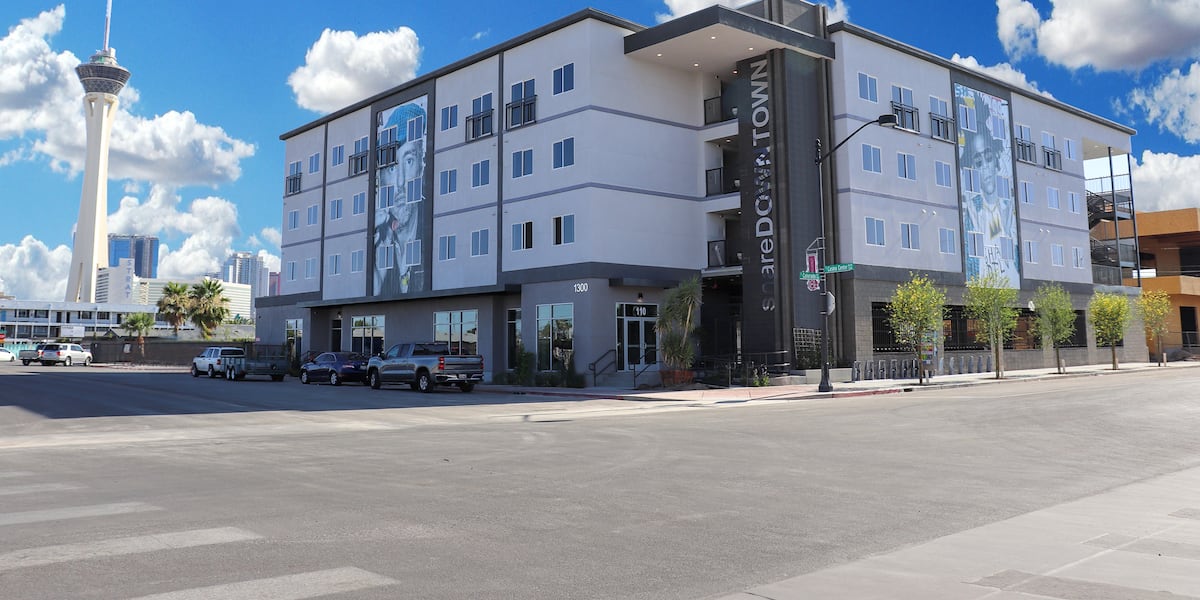
The Arts District started as an 18-block zone set up in 1998 to bring artists and art spaces to downtown Las Vegas. That is where the "18b" name comes from. The Arts Factory on Charleston Boulevard helped anchor the area, and First Friday began in 2002. Over time the district grew past its first 18 blocks, and today it is packed with galleries, vintage shops, bars, restaurants, coffee shops and new apartments.
That growth is the root of this debate. Developers have more projects going up, and new businesses keep opening. Supporters of the BID say the neighborhood has outgrown what the city alone can handle. Opponents say growth is already pushing up rents, and that a new assessment could speed that up.
A business improvement district is a common tool in American cities. Property owners in a set area agree to pay an extra yearly charge, and the money stays in that area to fund services on top of what the city already provides. In Nevada, the BID's FAQ says this one would be set up as a neighborhood improvement project under Nevada Revised Statutes Chapter 271.
Critics point to other cities as a warning. In the FOX5 report, community leader Tony Chavez, who is part of a group called "Don't BID Us Out," named Wynwood in Miami and Downtown Los Angeles as places where fast investment came with rising costs. Chavez also sits on the neighborhood association's board. Supporters answer that the money would stay local, and that the board would answer to the people who pay.
Governance is another sticking point. The neighborhood association's board said the proposed nonprofit would be led by nine directors, six of whom are property owners or developers, and that no seats are set aside for artists, residents or nonprofits. The BID's own FAQ describes a board meant to include commercial and apartment owners, business owners, residential owners and residents, nonprofit ratepayers and artists. Board members would serve three-year terms, with a limit of two terms in a row. Exactly how the first board is filled is something owners can check on the BID's governance page before they sign.
It helps to know what the city's role would be. Under the plan, City of Las Vegas staff and other public partners would sit on the board as non-voting members. The city would not run the BID day to day. Instead, BID staff and ambassadors would report problems like graffiti, broken lights or illegal dumping through a shared city and BID process. The FAQ also says the BID is not a homeless service provider. It could help coordinate outreach with the city, service groups, Metro and the marshals, and clean up camps after people have been moved into housing.
What Happens Next
Right now, the BID is in the petition stage. Organizers need signatures from owners whose property makes up more than 50 percent of the total assessed value in the district. That is a vote by value, not by headcount. A few large owners can carry a lot of weight. Business tenants do not count toward the threshold unless they also own property inside the lines.
If organizers reach that threshold, the plan goes to the Las Vegas City Council for review and a public hearing. The city has said a BID can only be created by a City Council ordinance, and that has not happened. According to the neighborhood association's board, if owners representing one-third of the assessment basis object in writing, the BID cannot move forward. KTNV reported that, if everything moves ahead, the BID could be in place as early as the second quarter of 2027.
If it is approved, the BID would run for an initial 10-year term. In year nine, the board would have to review its own results and ask the council to extend it, with another public hearing. Each year, the BID would have to give the council a budget, a work plan, financial reports and a list of what it got done. The city would also have to sign an agreement to keep its current services in place, which the FAQ puts at about $15 million a year inside the district. The BID money is meant to add to that, not replace it. And if things do not work out, owners representing more than 50 percent of the total assessed value could later petition the council to dissolve the BID. City-owned property would pay too, with an estimated first-year city contribution of about $22,533.
Ryan's Take
Assessments like this are one more line item on the cost of owning property, and they belong in any buyer's math. If you are thinking about buying a condo, a mixed-use building or a lot in the Arts District, ask early whether the parcel sits inside the proposed lines, and run the numbers at the maximum rate. On a residential condo, the charge is likely modest next to the mortgage and HOA dues. On a commercial building or an empty lot, it can be real money, especially at the higher underutilized rate.
The bigger question is what the money buys. Cleaner sidewalks, better lighting and steady safety patrols can make a neighborhood feel better to live in, and how a block feels does show up in what buyers will pay. But higher values also mean higher rents, and the Arts District's charm comes from its small, local, slightly scrappy businesses. Both sides here want a safer, cleaner district. They disagree on who pays and who decides. If you own or rent downtown, this is the time to read the plan and speak up, before a council hearing sets it for the next decade.

What You Can Do
If you own property in the district: Look up your parcel on the boundary map at lvartsdistrictbid.com. The BID points owners to its Assessment Engineer's Report, dated Aug. 5, 2026, which lists property-by-property amounts. Find your number before anyone asks you to sign. Read the governance section so you know who would sit on the board. You can send questions to the organizers at info@lvartsdistrictbid.com. You can also follow the neighborhood association's posts to hear the other side.
If you rent a home, studio or storefront: Pull out your lease and look for language about passing through property taxes, assessments or operating expenses. If it is unclear, ask your landlord now how a new assessment would be handled. Tenants do not count toward the petition threshold, but you can still speak at the City Council public hearing if the plan reaches that stage.
If you just love the Arts District: Watch the Las Vegas City Council agendas at lasvegasnevada.gov. Once a hearing is scheduled, anyone can comment in person or in writing. The date of that hearing is [NOT VERIFIED] because the petition is still collecting signatures.
Have questions about how this affects your home or neighborhood? Reach out to Ryan Rose or text/call 702-747-5921 anytime.
Sources
- Las Vegas Sun: Las Vegas Arts District neighborhood group opposes proposed business improvement district over affordability concerns
- FOX5 Vegas: Las Vegas Arts District launches petition to form business improvement district
- FOX5 Vegas: Las Vegas Arts District business improvement district proposal draws opposition
- KTNV 13: Arts District property owners push to create business improvement district in Las Vegas
- News 3 Las Vegas: Las Vegas Arts District property owners launch petition for new improvement district
- Las Vegas Arts District BID: Frequently Asked Questions
- Wikipedia: 18b The Las Vegas Arts District
Categories
- All Blogs (4979)
- Absentee Owner (4)
- Affordability (3)
- ALIANTE (53)
- Anthem (33)
- Ascension (50)
- Assumable Loan (1)
- Astra (50)
- BLACK MOUNTAIN (55)
- Buyers (22)
- Cadence (17)
- Calico Ridge (50)
- Canyon Fairways (50)
- CANYONS OF SUMMERLIN (55)
- CENTENNIAL HILLS (81)
- Comparisons (46)
- CROSSINGS IN SUMMERLIN (55)
- DESERT SHORES (47)
- Divorce (3)
- Downsizing (13)
- EAGLE HILLS (55)
- Empty Nester (1)
- Enterprise (1)
- EXPIRED LISTINGS (134)
- First Time Homebuyer (4)
- Green Valley (139)
- Henderson (82)
- HORIZONS EDGE (50)
- Housing Market Trends (100)
- Informative (112)
- Inspirada (58)
- Lake Las Vegas (2)
- Lakes Las Vegas (3)
- Las Vegas Real Estate (182)
- Local News (774)
- Luxury (1)
- MacDonald Highlands (88)
- MacDonald Ranch (100)
- Madeira Canyon (93)
- MESQUITE NV (103)
- MOUNTAIN TRAILS (50)
- Mountains Edge (79)
- Naked City (35)
- New Construction (131)
- North Las Vegas (24)
- Northgate (23)
- PALISADES SUMMERLIN (50)
- Probate (28)
- Providence (2)
- Quail Ridge (35)
- QUEENSRIDGE (56)
- Red Rock (1)
- RED ROCK COUNTRY CLUB (60)
- Relocating to Summerlin (207)
- Relocation (45)
- Retired (1)
- Retirement (1)
- Reverence (15)
- RHODES RANCH (64)
- Ridgebrook (40)
- Sellers (255)
- Seven Hills (83)
- Silverado Ranch (1)
- Silverstone Ranch (39)
- SKYE CANYON (100)
- SKYE CANYONE (4)
- Southern Highlands (94)
- Southwest (19)
- SPANISH TRAILS (55)
- SPRING VALLEY (70)
- Summerlin (104)
- Sun City Summerlin (3)
- The Arbors (37)
- The Cliffs (50)
- THE HILLS (55)
- THE PASEOS (55)
- The Pueblos (27)
- THE PUEBLOS OF SUMMERLIN (42)
- THE RIDGES (65)
- THE VISTAS OF SUMMERLIN (50)
- The Willows (60)
- Thoughts on Home Tour (2)
- TOURNAMENT HILLS (50)
- Veterans (3)
- WHITNEY RANCH (55)
- Workers Advantage Program (100)
Recent Posts








GET MORE INFORMATION