Fines for Watering Decorative Grass in Las Vegas Could Slip to 2028
Related Stories
Lake Mead's Water Bank and Its Limits
Boulder City Voters Reject Data Centers
Clark County Ends the Short-Term Rental Lottery
HOAs, businesses and apartment owners in the Las Vegas Valley Water District could get at least one more year before they face fines for watering banned "nonfunctional" grass. The district is weighing a plan that would hold off those fines until at least January 2028. It is only a proposal for now, and it is not final until the district's board approves it.
Here is the part that is easy to miss. The state law behind all of this still has a date of Jan. 1, 2027. Nothing in the reports we reviewed says that date moved. A delay on fines would change when the water district starts charging people. It would not make decorative grass legal to keep watering forever.
If you own a regular single-family home with grass in your own yard, this rule was never aimed at you. But if you pay HOA dues, rent out a property, or sit on a community board, you should pay attention. The grass along your HOA's streets and entry signs may be right in the middle of this.
There is also a lawsuit that could change the whole picture. A Clark County judge has been asked to pause enforcement of the grass rules. As of Nov. 8, we found no report of a ruling.

What Happened
The Las Vegas Review-Journal's Alan Halaly reported on Nov. 3 that the Las Vegas Valley Water District may push back its fines. Officials told the paper that state law requires Southern Nevada water providers to adopt enforcement terms by Jan. 1. They also said they believe the law lets them adjust deadlines. If the board signs off, any business, HOA or other group asked to remove its grass would have until at least January 2028 to comply.
FOX5 reported the same recommendation after a meeting where property owners gave feedback. District documents released Nov. 3 recommend that no fees or charges for nonfunctional turf be imposed until January 2028. A district spokesperson said the delay is meant to give everyone a chance to comply with the state law.
A public hearing on the proposed rule changes is set for Dec. 1. The exact date of a final board vote on the delay is NOT FOUND in the reports we reviewed. So for now, the right word is "could." Treat 2028 as a plan on the table and not as a done deal.
This is a real change from what the district laid out in September. Back then, the proposal said watering nonfunctional grass would count as "water waste" starting Jan. 1, 2027. Under the district's proposal, fines would climb with each violation and with the size of the water meter:
- Meters 1 inch and smaller: $80 for a first violation, up to $1,280 for a fifth or later violation.
- Meters over 1 inch and under 3 inches: $160, up to $2,560.
- Meters 3 inches and larger: $320, up to $5,120.
The fine schedule itself is the district's existing water waste fee schedule. The news here is about when it would start applying to this grass. The same proposal also treats running certain water features and installing new spray irrigation as water waste. Spray irrigation in areas where nonfunctional grass was already removed would count as a non-essential water use. So a property that has already converted should not put spray heads back in.
District documents say about 1,400 properties could still have nonfunctional turf. The Southern Nevada Water Authority estimates about 20 million square feet of grass it considers nonfunctional remains in the Las Vegas Valley. That works out to roughly 460 acres.

Why It Matters to Las Vegas Residents
The first question most people ask is simple: can I still water my grass? If your property is zoned only for a single-family home, the answer is yes. The water authority says the law does not include single-family homes that have grass in the front or back yard. The proposed fines also do not reach those properties.
HOA living is where it gets more complicated. The water authority's definitions include HOA-managed turf that gives the community no recreational benefit, no matter how the land is zoned. Grass along streets, sidewalks, driveways, medians and roundabouts counts as nonfunctional. So your own front lawn may be fine while the strip outside your gate is not.
That matters because HOAs pay for projects with money from owners. If your HOA was planning to pay for grass removal in 2027, a delay could give the board more time to plan, get bids and spread out the cost. It could also ease the pressure for a large special assessment. Whether any one HOA changes its plans is up to that HOA's board. A delay does not erase the bill. It may just move it.
Here is a simple way to think about the size of the job. The water authority uses a 15,000-square-foot conversion as its average example for a business property, and says it saves about 825,000 gallons of water a year. At today's listed rebate for HOAs and businesses, that same project would bring in $57,500. That is $5 per square foot on the first 10,000 square feet and $1.50 on the other 5,000. The rebate helps, but the actual cost depends on bids, trees and irrigation work. That cost is why an extra year could matter so much to a smaller HOA.
Landlords have a separate worry. The same package of proposed rules would make property owners responsible for unpaid balances on a tenant's account. KTNV reported the proposal also includes moving delinquent accounts from a tenant's name to the owner's name, with liens if needed. FOX5 reported that landlords raised this concern at the feedback meeting and in written comments. If you own a rental, read this part closely. You may want to review your lease terms.
Location matters too. The Las Vegas Valley Water District proposal does not set the rules for everyone. Henderson, North Las Vegas and Boulder City must each decide how they will enforce the law using their own water waste codes. Their final enforcement dates are NOT FOUND in the reports we reviewed. If you live in Green Valley, Inspirada, Aliante or Boulder City, do not assume the 2028 date applies to you. Check with your own city.
Background and History
Nevada lawmakers passed Assembly Bill 356 in 2021. The bill says that on and after Jan. 1, 2027, Colorado River water may not be used to irrigate nonfunctional turf on any property not zoned exclusively for a single-family home. It also told the water authority to define which grass is functional and to make a plan for removing the rest. A committee worked out those definitions.
In plain terms, functional grass is grass people actually use. It has to give a recreational benefit and sit at least 10 feet from a street. Sports fields, playgrounds, golf course play areas and active park space can qualify. The water authority's quick test is a good one: if the only person who ever walks on that grass is pushing a lawn mower, it is probably nonfunctional.
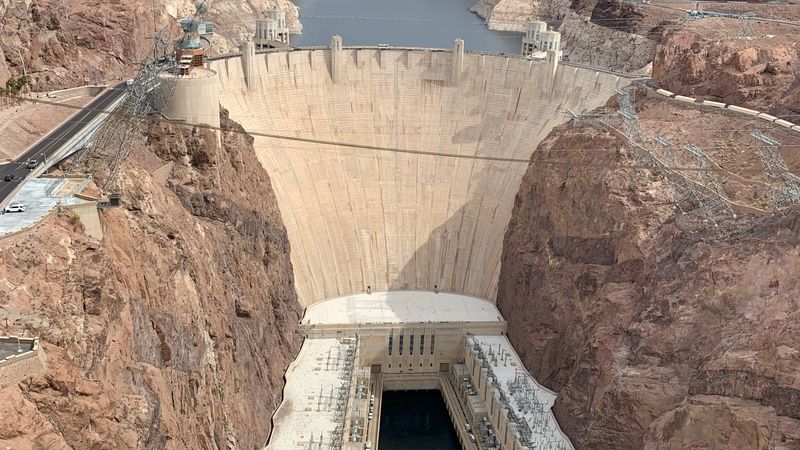
The reason for all this is the river. A 2021 water authority report estimated that removing about 3,900 acres of this type of grass would save about 29,150 acre-feet of water a year, or about 9.5 billion gallons. Nevada's Colorado River share is 300,000 acre-feet a year, so that is close to 10 percent of it. Those are older estimates, and the 2021 acreage may not be measured the same way as today's 20 million square feet. Still, the size of the savings explains why water managers have held this line.
The state law was not the only step. In December 2021, the water authority's board approved a resolution that bans irrigated grass in new commercial and residential developments, including the front and back yards of new homes. Schools, parks and cemeteries can still have grass. The authority expects that move to save about 27,000 acre-feet of water over the coming decades. That is why you rarely see a new home in the valley with a green lawn.
The rule has also drawn a real fight. In January 2026, a group of homeowners sued the water authority in Clark County District Court. Their complaint estimates that about 100,000 mature trees have died because of grass removal, with about $300 million in damage. The water authority disputes that. Spokesman Bronson Mack has said many dying trees are the result of mismanagement, such as people watering trees less after a conversion.
Judge Anna Albertson first issued a restraining order that paused enforcement across the valley. She later narrowed it to properties owned by the three plaintiffs. The water authority then asked the Nevada Supreme Court to step in and called the case "a true emergency." The Supreme Court denied that request, so the case went on. In late October, the judge heard arguments on whether to pause enforcement and whether to let the case become a class action. Plaintiffs have proposed classes that would cover individuals and groups such as HOAs and churches.
What Happens Next
There are three things to watch over the next several weeks.
The Dec. 1 public hearing. This is the next firm date. The Las Vegas Valley Water District will take up the proposed service rule changes at that hearing. Those changes go beyond grass. They also touch pool size limits, water features, spray irrigation, hydrant fees and how unpaid balances are handled. If the board approves the fine delay, HOAs and businesses in the district could have until at least January 2028. If the proposal changes, the timeline could change too. KTNV reported that the rules and rates would take effect Jan. 1 if approved, so other parts of the package could still start in January even if the grass fines wait.
The court ruling. Judge Albertson still has to decide on the request to pause enforcement and the class action question. We found no report of a decision as of Nov. 8. A pause could stop or slow enforcement while the case moves ahead. A denial would leave the rules in place. Either way, the case could take a long time to finish, and an appeal is possible.
The other cities. Henderson, North Las Vegas and Boulder City still have their own decisions to make. They may land on a different date or a different approach than the water district.
One more thing to keep in mind is the larger water picture. Nevada officials have said they fear federal cuts to the state's Colorado River share could be deep if river conditions keep getting worse. So a one-year delay on fines should not be read as a sign that the pressure to save water is going away. It is more likely a change in timing than a change in direction.
Ryan's Take
If I sat on an HOA board right now, I would not cancel my grass removal plan because of this headline. I would treat the extra year as time to do the job well. Get real bids. Ask an arborist about the trees before anyone touches the irrigation. Trees are the expensive part to lose, and shade is a big part of what makes a neighborhood feel good in July. A rushed conversion is how you end up with dead trees and angry neighbors.
For buyers and sellers, this is mostly an HOA homework item. If you are looking in a community with common-area grass in Summerlin, Spring Valley, Mountains Edge or Southern Highlands, I would ask about it before you remove your contingencies. Has the HOA been told it has nonfunctional turf? Is there a plan? Is there money set aside, or a special assessment coming? Those answers can affect your monthly cost, and they should be in writing. Sellers can get ahead of this by asking their HOA now, so a buyer's question does not slow down the sale.

What You Can Do
If you are in an HOA, ask your board or manager whether the water authority has flagged any of your community's grass, and what the plan and budget look like. Board meetings are a good place to raise this.
If you want to speak up, the Dec. 1 public hearing is the next chance to follow this at the water district. The written comment window for businesses closed on Oct. 26. Check the district's website for how to take part, or call 702-870-2011.
If you are thinking about taking out grass, look at the rebates first. The Water Smart Landscapes program currently lists these rates, and the rate paid is the one in effect when the project is finished:
- Single-family homes: $5 per square foot for the first 10,000 square feet, then $2.50.
- Las Vegas Valley Water District residential customers: an extra $2 per square foot, for $7 total on the first 10,000 square feet and $4.50 after that.
- Businesses, HOAs and multifamily properties: $5 per square foot for the first 10,000 square feet, then $1.50.
Do not start digging before you apply. The water authority requires a site visit before you remove any grass, and removing it early makes the project ineligible. You get 12 months to finish. There is also a $100 rebate for each new qualifying tree. Know that the program requires a conservation easement, signed and recorded with Clark County, before the check goes out. It is worth reading that paperwork before you sign.
HOAs and businesses have a few more steps. Any conversion over a quarter acre, or 10,890 square feet, needs written approval from local planning first. The new landscape must use drip irrigation and mulch, and plants must cover at least half of the area once they are grown. The rebate agreement also says that taking the rebate does not by itself mean a property has complied with AB 356. If your board is planning a project in phases, ask the water authority how each phase will be treated.
If you own a rental, read the proposed rules on unpaid balances and talk with your property manager about your lease.

Have questions about how this affects your home or neighborhood? Reach out to Ryan Rose or text/call 702-747-5921 anytime. Ryan Rose | Real Broker, LLC | ryan@rosehomeslv.com | rosehomeslv.com
Sources
Las Vegas Review-Journal: "Fines for watering ‘nonfunctional’ grass in Las Vegas could be pushed back to 2028" (Alan Halaly)
FOX5 Vegas: "Proposed 'non-functional turf' rules in Las Vegas ahead of January 1"
KTNV Channel 13: "Las Vegas Valley Water District outlines fines for watering nonfunctional turf"
Las Vegas Review-Journal: "Judge weighs pause on enforcement of 'nonfunctional' grass law"
Boulder City Review: "'A true emergency': Nevada agency asks court to toss 'useless grass' case"
Nevada Legislature: Assembly Bill 356 (2021), enrolled text
Southern Nevada Water Authority: "Understand Laws & Ordinances"
Southern Nevada Water Authority: Water Smart Landscapes rebate
Categories
- All Blogs (4844)
- Absentee Owner (1)
- Affordability (3)
- ALIANTE (53)
- Anthem (30)
- Ascension (49)
- Assumable Loan (1)
- Astra (47)
- BLACK MOUNTAIN (55)
- Buyers (20)
- Cadence (17)
- Calico Ridge (50)
- Canyon Fairways (50)
- CANYONS OF SUMMERLIN (48)
- CENTENNIAL HILLS (80)
- Comparisons (46)
- CROSSINGS IN SUMMERLIN (47)
- DESERT SHORES (47)
- Divorce (3)
- Downsizing (13)
- EAGLE HILLS (45)
- Empty Nester (1)
- Enterprise (1)
- EXPIRED LISTINGS (13)
- First Time Homebuyer (4)
- Green Valley (139)
- Henderson (76)
- HORIZONS EDGE (50)
- Housing Market Trends (98)
- Informative (101)
- Inspirada (57)
- Lake Las Vegas (2)
- Lakes Las Vegas (3)
- Las Vegas Real Estate (183)
- Local News (1016)
- Luxury (1)
- MacDonald Highlands (87)
- MacDonald Ranch (99)
- Madeira Canyon (93)
- MESQUITE NV (103)
- MOUNTAIN TRAILS (43)
- Mountains Edge (65)
- Naked City (35)
- New Construction (122)
- New Construction Las Vegas (20)
- North Las Vegas (24)
- Northgate (23)
- PALISADES SUMMERLIN (38)
- Probate (25)
- Providence (2)
- Quail Ridge (35)
- QUEENSRIDGE (53)
- Red Rock (1)
- RED ROCK COUNTRY CLUB (45)
- Relocating to Summerlin (198)
- Relocation (44)
- Retired (1)
- Retirement (1)
- Reverence (15)
- RHODES RANCH (50)
- Ridgebrook (30)
- Sellers (210)
- Seven Hills (83)
- Silverado Ranch (1)
- Silverstone Ranch (39)
- SKYE CANYON (100)
- SKYE CANYONE (4)
- Southern Highlands (78)
- Southwest (17)
- SPANISH TRAILS (47)
- SPRING VALLEY (60)
- Summerlin (101)
- Sun City Summerlin (3)
- The Arbors (36)
- The Cliffs (42)
- THE HILLS (44)
- THE PASEOS (52)
- The Pueblos (24)
- THE PUEBLOS OF SUMMERLIN (40)
- THE RIDGES (58)
- THE VISTAS OF SUMMERLIN (45)
- The Willows (59)
- Thoughts on Home Tour (2)
- TOURNAMENT HILLS (47)
- Veterans (3)
- WHITNEY RANCH (55)
- Workers Advantage Program (89)
Recent Posts







GET MORE INFORMATION