
New Homes Near Kyle Canyon Are Pushing Into Desert Tortoise Habitat
Related Stories
New-Home Sales Up Nationally, Vegas Down 31%
BLM Land Deals for Affordable Homes
New Las Vegas Home Communities in July
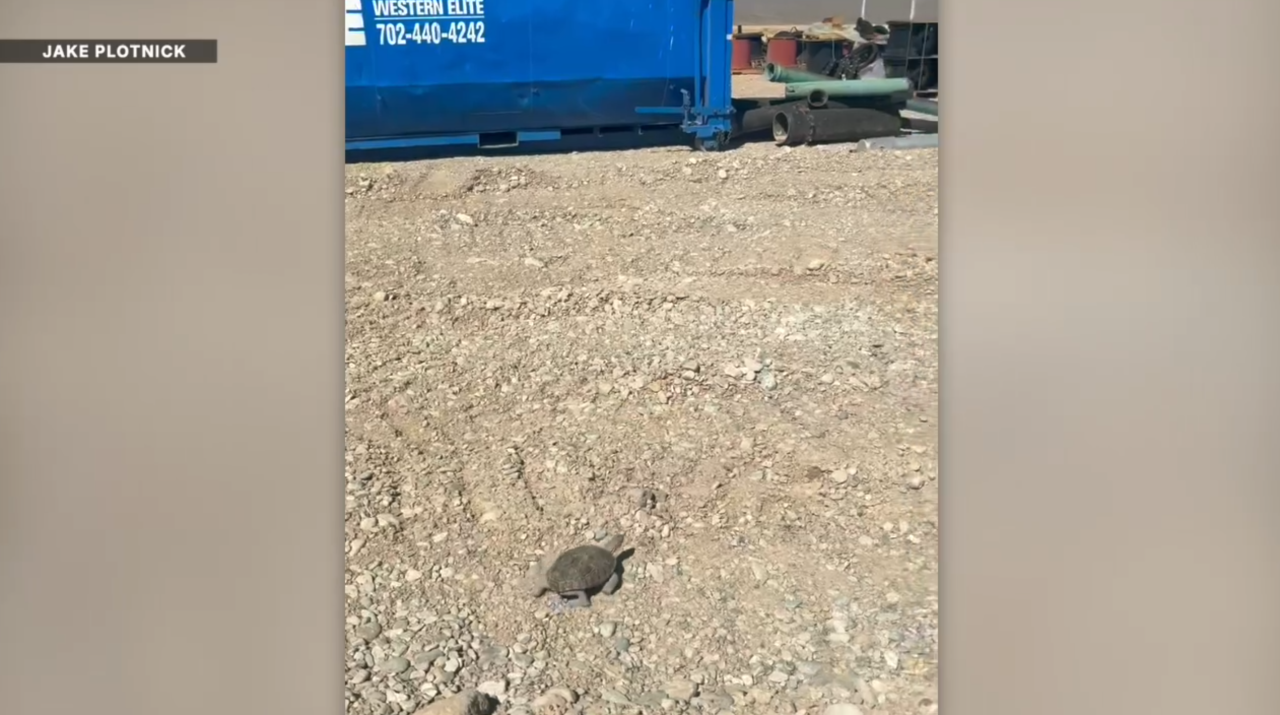
New home construction along Kyle Canyon Road in the northwest Las Vegas Valley is reaching into land where wild desert tortoises live, and a local wildlife biologist has video of tortoises wandering onto building sites. Builders pay a one-time fee of $550 per acre into Clark County's Desert Conservation Program to offset that loss, but the county told KTNV 13 that only six tortoises were picked up and relocated between July 1, 2025 and July 30, 2026.
That gap is the heart of the story. Clark County holds a federal permit that allows development to harm tortoises by accident, and those accidental losses do not have to be reported. So nobody knows the full count. If you live in Skye Canyon, Centennial Hills, or anywhere near the edge of the valley, this is what is happening in the open desert right next to your neighborhood.
It also explains a line item most buyers never see. Every acre of private land that gets graded for new homes in Clark County has already paid into a conservation fund. Here is how the whole system works, why it matters to people who live here, and what you can do if you spot a tortoise near a job site.
What Happened
On September 22, 2026, KTNV 13 reporter Geneva Zoltek aired a story on development pushing into desert tortoise habitat. It started with video from Jake Plotnick, a contractor and wildlife biologist. His footage shows desert tortoises walking onto construction sites for new homes near Kyle Canyon Road.
Plotnick told the station he worries that tortoise numbers will keep dropping as more land is approved for building. He also said he thinks some tortoises may be killed on job sites without anyone knowing. His concern is not that the rules are being broken. It is that the rules do not require anyone to count the losses.
Here is why. Clark County operates under what is called an "incidental take" permit. It was issued by the U.S. Fish and Wildlife Service. Under federal wildlife law, an incidental take is harm that happens by accident during an activity that is otherwise legal. On a building site, that can mean a tortoise crushed by heavy equipment. The permit lets development keep moving while the county funds conservation somewhere else.
KTNV spoke with Audrie Locke, public outreach coordinator for the county's Desert Conservation Program. She said the point of the permit is to let development continue at a reasonable pace instead of being delayed every time a protected species turns up on a piece of land. Developers pay the $550 per-acre fee. If a worker spots a tortoise on a site, the crew is supposed to call the county. A response team then comes out, picks up the tortoise, and moves it somewhere safe.
When the station asked how often that happens, Locke said it is "not a lot." Between July 1, 2025 and July 30, 2026, six tortoises were relocated. Because incidental takes do not have to be reported, the full impact of construction on the valley's tortoises is unknown. Plotnick added one more number that puts it in perspective. He said only about one in 20 tortoises survives from hatchling to adult, so every adult lost is one of the rare survivors.
Why It Matters to Las Vegas Residents
First, this is about where the valley is growing. The northwest is one of the last big stretches of the valley with open desert still next to new rooftops. Kyle Canyon Road runs from the valley floor up toward the Spring Mountains. Homes are going up along it now. That is exactly the kind of sandy flat and rocky foothill land that desert tortoises call home, according to the U.S. Fish and Wildlife Service.
Second, the fee is part of what it costs to build here. Clark County says the $550 mitigation fee is collected by the permitting office before a grading or building permit is issued on private land. It is paid once per acre. It goes into an endowment fund that pays for the county's conservation work. For a buyer, that cost is already baked into the land and the lot by the time a model home opens. It is small next to everything else in a new-home price. As a simple example, if a builder puts five homes on an acre, the fee works out to $110 per home. It is not a reason a house costs more. But it is a real piece of the system that lets new neighborhoods get built at all.
Third, this is the trade-off every edge-of-the-valley buyer lives with. People move to the northwest for the views, the quiet, and the open desert. That same open desert is habitat. When lots are graded, the wildlife that lived there has to go somewhere, or it does not survive. Knowing how the county handles it helps you understand why growth at the edge always gets extra scrutiny.
There is one more detail that surprises most people. According to Clark County, as long as developers follow the law and get the proper permits first, they are not required to survey a site for desert tortoises before they start moving dirt. Paying the fee covers that. Crews still must never harm a tortoise on purpose, and they are required to report any tortoise they find to the assistance line. But there is no sweep of the land ahead of the bulldozers. That is a big reason the relocation count depends on someone happening to notice a tortoise and making the call.
Fourth, timing matters right now. The Fish and Wildlife Service says desert tortoises are most active from March to June and again from September to October. We are in that fall window today. Clark County says tortoises usually go into brumation, the reptile version of hibernation, as temperatures drop in October and November. So if you are going to see a tortoise crossing a dirt lot in the northwest this year, the next few weeks are when it is most likely to happen.
Background and History
The Mojave desert tortoise was listed as a threatened species under the federal Endangered Species Act on April 2, 1990. It is also protected under Nevada law. Clark County says no one may touch, harm, harass, pick up, or disturb a wild desert tortoise or its burrow without a special permit. It is also illegal to take one out of the wild.
That listing created a real problem for a fast-growing county. Once a species is protected, harming it is illegal, even by accident, unless there is a permit. Clark County's answer came in two steps. In 1995, the county and Boulder City created the Boulder City Conservation Easement. Today it protects 87,331 acres of desert tortoise habitat south and west of Boulder City. The county says the easement serves as mitigation for tortoise impacts from private land development across the county.
The second step was bigger. Clark County wrote the Multiple Species Habitat Conservation Plan, known as the MSHCP. The county runs it on behalf of the cities of Las Vegas, Henderson, North Las Vegas, Boulder City, and Mesquite, plus the Nevada Department of Transportation. The permit took effect in February 2001 for a 30-year term. It allows up to 145,000 acres of non-federal land to be disturbed. It covers 78 species, including the threatened desert tortoise. The $550 per-acre fee is how the plan is paid for.
The FWS says the biggest threats to desert tortoises come from human land use. That includes urban growth, roads, off-road driving, invasive plants, wildfire, and ravens that feed on young tortoises. Tortoises also recover slowly. They take 13 to 20 years to reach breeding age and have low birth rates. The agency says even a small drop in adult survival can cause a fast population decline. That is why a biologist gets worried when adults turn up on graded dirt.
The fee money does real work. Clark County says the Desert Conservation Program uses it for research, buying sensitive habitat, restoring damaged land, public education, and the Wild Desert Tortoise Assistance Line. It also pays to put up and maintain fencing along roadways, which keeps tortoises from wandering into traffic. If you have ever driven past low mesh fencing along a desert highway in Southern Nevada, that is often what it is for.

What Happens Next
The biggest thing to watch is the county's plan update. Clark County is working on an amendment to the MSHCP. The county posted Volume I and Volume II of the draft amendment in July 2026, along with an updated funding analysis, a covered species analysis, and a report from a work group on ways to avoid and reduce harm to wildlife. The current permit runs 30 years from February 2001, so the rules that will govern the next era of valley growth are being written now.
The county has an online page where residents can read those documents, send in questions or feedback, and sign up for email updates and future information sessions. If you care about how growth at the edge of the valley is handled, this is where your voice counts. It is a quiet process, and not many people weigh in. That makes each comment more likely to be read.
On the ground, building will keep moving along Kyle Canyon Road and other northwest corridors. The KTNV report did not say whether the county plans to start tracking incidental takes. Whether reporting should be required is the open question Plotnick raised. Until that changes, the relocation count, six tortoises in about a year, is the only public number, and it only counts the tortoises someone spotted and called in.
Another thing to watch is the weather. As the valley cools off in October and November, tortoises head underground for the winter. That means fewer sightings on job sites until spring. It does not mean the tortoises are gone. A burrow on a lot that gets graded in December can hold a sleeping tortoise that nobody ever sees. When activity picks back up in March, expect more videos like the one Plotnick shared, and possibly more calls for better tracking.
Ryan's Take
I sell a lot of homes in the northwest, and buyers there almost always tell me the same thing. They love that the desert is right outside their back wall. This story is the other side of that view. The land that becomes your cul-de-sac was somebody's home first. I think most of my clients would be glad to know there is a system in place, that builders pay into it on every acre, and that there is a free hotline to rescue tortoises from job sites. I also think the biologist has a fair point. Six rescues in a year sounds low for how much dirt is being moved out there. Better counting would help everyone, including builders, because good data is how you prove a program works.
For buyers, none of this should scare you off new construction in the northwest. The fee is small and it is already built into the price. What it should do is make you a better neighbor. If you buy on the edge of the valley, learn what a desert tortoise looks like, keep your dog on a leash on the open desert trails, and save the hotline number in your phone. That is what living at the edge of the Mojave means.

What You Can Do
If you see a wild desert tortoise on a construction site, call the Wild Desert Tortoise Assistance Line at 702-593-9027. Clark County says the tortoise will be picked up free of charge. Do not pick it up yourself. A wild tortoise is protected by law, and handling one can stress it badly. If you see one in open desert, the county asks you to enjoy it from a safe distance and leave it alone. Never take a tortoise home from the wild, and never release a pet tortoise into the desert.
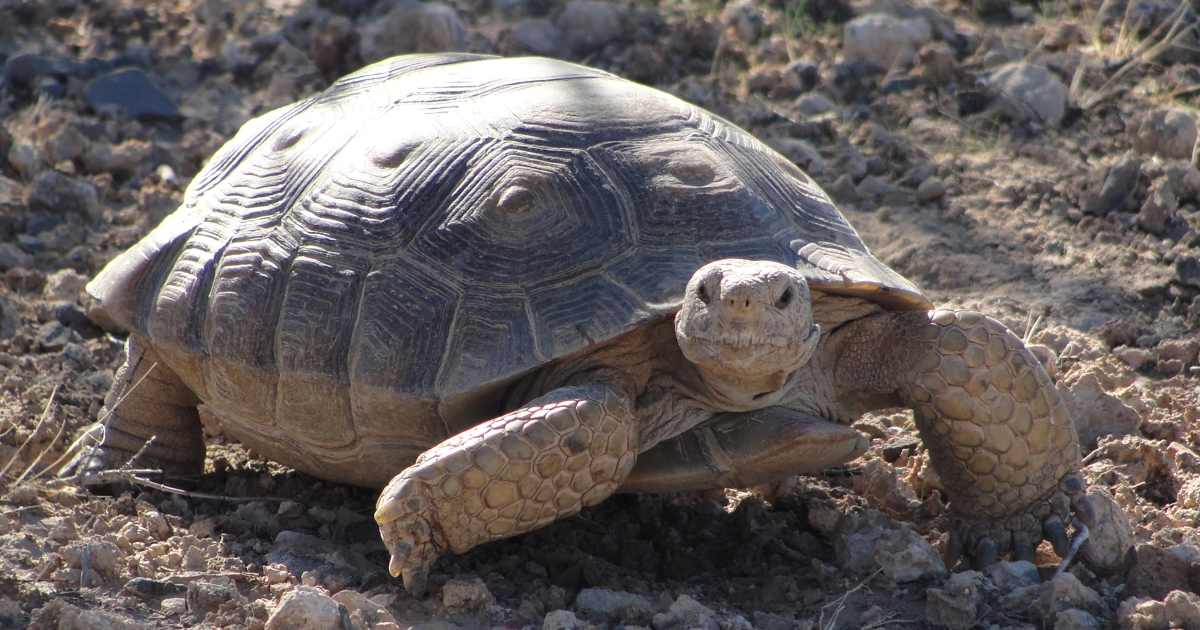
It helps to know what you are looking for. The FWS says adult desert tortoises have a high-domed shell that is brown, gray, or black on top, and they weigh 8 to 15 pounds. Their front legs are flat for digging and their back legs look a bit like an elephant's. Their burrows have a half-moon shaped opening, just like the outline of the shell. You will often find them under creosote bushes or in the banks of dry washes. If you walk the open desert near your home and see a half-moon hole, give it room.
If you work in construction or run a crew in the northwest, the county's Desert Conservation Program offers free desert tortoise training for construction staff. Call the program at 702-455-3536 to set one up. It covers exactly what to do when a tortoise shows up on your site.
If you want a say in the bigger picture, go to the county's MSHCP Permit Amendment page. You can read the July 2026 draft volumes, send questions or feedback, and sign up for updates. If you want a desert tortoise in your life, the county says you can legally adopt a captive one through its pet tortoise program or through the Tortoise Group. And if you are shopping for a home near Kyle Canyon, Skye Canyon, or anywhere on the valley's edge, ask the builder how they handle wildlife on their sites. A good builder will have an answer.

Have questions about how this affects your home or neighborhood? Reach out to Ryan Rose or text/call 702-747-5921 anytime.
Sources
Clark County Desert Conservation Program: Desert Conservation and MSHCP
Clark County Desert Conservation Program: Wild Tortoise Info
Clark County Desert Conservation Program: Boulder City Conservation Easement
Clark County Desert Conservation Program: MSHCP Permit Amendment
Clark County Desert Conservation Program
U.S. Fish and Wildlife Service: Desert Tortoise (Gopherus agassizii)
Categories
- All Blogs (4796)
- Absentee Owner (4)
- Affordability (3)
- ALIANTE (53)
- Anthem (33)
- Ascension (50)
- Assumable Loan (1)
- Astra (50)
- BLACK MOUNTAIN (55)
- Buyers (22)
- Cadence (17)
- Calico Ridge (50)
- Canyon Fairways (50)
- CANYONS OF SUMMERLIN (55)
- CENTENNIAL HILLS (81)
- Comparisons (46)
- CROSSINGS IN SUMMERLIN (55)
- DESERT SHORES (47)
- Divorce (3)
- Downsizing (13)
- EAGLE HILLS (55)
- Empty Nester (1)
- Enterprise (1)
- EXPIRED LISTINGS (134)
- First Time Homebuyer (4)
- Green Valley (139)
- Henderson (82)
- HORIZONS EDGE (50)
- Housing Market Trends (100)
- Informative (112)
- Inspirada (58)
- Lake Las Vegas (2)
- Lakes Las Vegas (3)
- Las Vegas Real Estate (182)
- Local News (591)
- Luxury (1)
- MacDonald Highlands (88)
- MacDonald Ranch (100)
- Madeira Canyon (93)
- MESQUITE NV (103)
- MOUNTAIN TRAILS (50)
- Mountains Edge (79)
- Naked City (35)
- New Construction (131)
- North Las Vegas (24)
- Northgate (23)
- PALISADES SUMMERLIN (50)
- Probate (28)
- Providence (2)
- Quail Ridge (35)
- QUEENSRIDGE (56)
- Red Rock (1)
- RED ROCK COUNTRY CLUB (60)
- Relocating to Summerlin (207)
- Relocation (45)
- Retired (1)
- Retirement (1)
- Reverence (15)
- RHODES RANCH (64)
- Ridgebrook (40)
- Sellers (255)
- Seven Hills (83)
- Silverado Ranch (1)
- Silverstone Ranch (39)
- SKYE CANYON (100)
- SKYE CANYONE (4)
- Southern Highlands (94)
- Southwest (19)
- SPANISH TRAILS (55)
- SPRING VALLEY (70)
- Summerlin (104)
- Sun City Summerlin (3)
- The Arbors (37)
- The Cliffs (50)
- THE HILLS (55)
- THE PASEOS (55)
- The Pueblos (27)
- THE PUEBLOS OF SUMMERLIN (42)
- THE RIDGES (65)
- THE VISTAS OF SUMMERLIN (50)
- The Willows (60)
- Thoughts on Home Tour (2)
- TOURNAMENT HILLS (50)
- Veterans (3)
- WHITNEY RANCH (55)
- Workers Advantage Program (100)
Recent Posts





GET MORE INFORMATION