
Hoover Dam Turbine Upgrade Lake Mead 2026 | Ryan Rose
On May 21, 2026, federal officials announced they would release $52 million to fund critical upgrades and repairs at Hoover Dam. The money will pay for the replacement of up to three aging turbines with new "wide-head" turbines built to generate power even when Lake Mead's water level is very low. The Bureau of Reclamation says the upgrades could restore at least 160 megawatts of hydropower capacity to the grid. The announcement came alongside a sobering new projection: Lake Mead could drop to 1,021 feet above sea level by the summer of 2027, which would shatter the 2022 record low and cut Hoover Dam's total power output by up to 40 percent.
 Hoover Dam sits on the Colorado River between Nevada and Arizona. Photo: Pexels
What Happened
The Bureau of Reclamation manages Hoover Dam under the U.S. Department of the Interior. On May 21, 2026, the agency confirmed that $52 million in federal funding had been approved and would be directed toward turbine replacements and other structural repairs at the dam.
The key piece of the plan involves replacing up to three of the dam's existing turbines with a newer design called wide-head turbines. Traditional turbines at Hoover Dam were built to run efficiently when Lake Mead is full, or close to full. As water levels have fallen over the past two decades, those older turbines lose efficiency and eventually cannot run at all. Wide-head turbines are designed to work across a much wider range of water levels, which makes them far better suited to the lower lake conditions that are becoming the norm.
The Bureau says the new turbines could bring back at least 160 megawatts of capacity that the dam has lost as water levels have fallen. For scale, one megawatt can power roughly 400 to 900 homes depending on usage. Restoring 160 or more megawatts is a meaningful addition to regional power supply.
The announcement also came with an updated Lake Mead forecast. The Bureau of Reclamation projected that Lake Mead could fall to 1,021 feet above sea level by summer 2027. The previous record low was set in 2022 at approximately 1,040 feet. If the new projection holds, the lake would drop nearly 20 feet below that 2022 low. At 1,021 feet, Hoover Dam's power generation would be reduced by up to 40 percent compared to its output at higher lake levels.
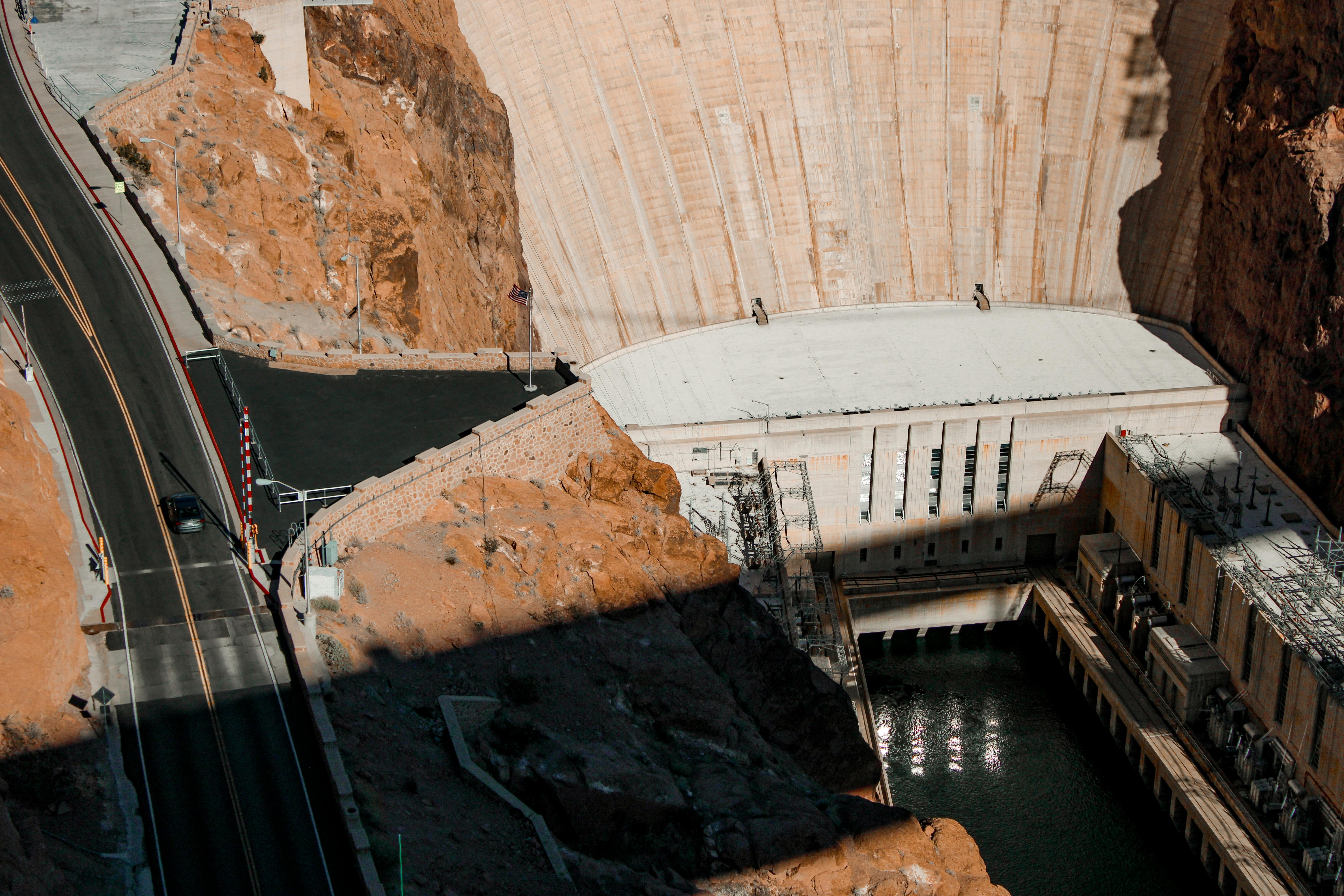 An aerial view captures the scale of Hoover Dam and the surrounding canyon. Photo: Pexels
Why It Matters to Las Vegas Residents
Most people in Las Vegas and the surrounding area do not think about Hoover Dam on a daily basis. But this news touches two things that affect nearly every household in Southern Nevada: electricity and water.
Hoover Dam produces hydropower that flows to Nevada, Arizona, and California. Nevada and Arizona each receive a share of that electricity under long-standing federal agreements. When the dam produces less power, the region must buy replacement electricity from other sources, often at higher cost. Lower power output at Hoover Dam can contribute to higher utility bills for homeowners and businesses throughout Clark County.
The water connection is just as important. About 90 percent of Las Vegas's drinking water comes from the Colorado River, and Lake Mead is the storage reservoir that holds that water. While the $52 million upgrade is focused on power generation rather than water delivery, the same declining lake levels that threaten Hoover Dam's turbines also threaten the water intake structures that supply the valley. The Southern Nevada Water Authority has built low-lake-level intake tunnels to address this risk, but the overall trend is a clear warning signal for the region.
For homebuyers and homeowners in Henderson, Boulder City, and Las Vegas, these infrastructure challenges are part of the long-term story of living in the desert Southwest. The dam upgrades show that federal agencies are actively working to address the problem rather than waiting for a crisis, which is good news. But the projections also make clear that Lake Mead's decline is not slowing down fast enough on its own.
Property values in Southern Nevada are closely tied to the region's ability to support continued growth. A reliable power grid and a dependable water supply are essential to that growth. Investments like this $52 million upgrade help protect both, which matters to anyone buying or selling a home in Clark County.
Background and History
Hoover Dam was built between 1931 and 1936. It sits on the Colorado River at the border of Nevada and Arizona, near Boulder City. At the time it was completed, it was the largest hydroelectric facility in the world. It remains one of the largest in the United States today.
The dam creates Lake Mead, the largest reservoir in the United States by volume when full. Lake Mead stretches across parts of Nevada and Arizona and has been the primary water storage system for Southern Nevada for nearly a century.
The Colorado River itself is the lifeblood of the American Southwest. It supplies water to seven states: Wyoming, Colorado, Utah, New Mexico, Nevada, Arizona, and California. It also supplies water to parts of Mexico under a treaty agreement. The river is managed under a series of compacts and agreements, the most important of which was signed in 1922. Those agreements allocated water based on historical river flow estimates that turned out to be too optimistic. The river simply does not carry as much water as planners assumed in 1922, and decades of drought have made the situation worse.
Lake Mead began declining noticeably in the early 2000s. By 2022, the lake had fallen to its lowest level since it was first filled in the 1930s. The Bureau of Reclamation has declared water shortage conditions, which trigger mandatory cuts to the water allocations that Arizona, Nevada, and Mexico receive each year. Those cuts have been in effect and have been deepening as the lake continues to fall.
The turbines at Hoover Dam are aging alongside the dam itself. Some of the turbine generators date back to the dam's original construction in the 1930s. Others were upgraded in the mid-20th century but were still designed for lake elevations that no longer reflect current conditions. The wide-head turbine technology that the Bureau of Reclamation plans to install is a relatively recent engineering advancement. These turbines are already in use at other Bureau of Reclamation facilities and have proven capable of running efficiently at lower head heights, meaning lower water pressure from a lower lake level.
 Hoover Dam has been generating power for Nevada, Arizona, and California since 1936. Photo: Pexels
What Happens Next
The $52 million in federal funding was released in May 2026. The Bureau of Reclamation has not yet published a detailed public timeline for when turbine replacement work will begin or how long the project will take. Large infrastructure projects at dams and hydroelectric facilities typically require careful scheduling to avoid reducing power output during the work itself. Specific construction start dates and completion targets were NOT FOUND in the available reporting at the time of publication.
The wide-head turbine replacements are not a quick fix. Installing new turbines at a facility as large and complex as Hoover Dam is a multi-year undertaking. Units must be taken offline one at a time, removed, rebuilt or replaced, and tested before the next unit is taken down. This means the full benefit of the 160-plus megawatt restoration will take time to materialize.
On the water level side, the Bureau of Reclamation's projection of Lake Mead reaching 1,021 feet by summer 2027 is a forecast, not a certainty. A wet winter with heavy snowpack in the Rocky Mountains could improve conditions. A dry winter could make them worse. The agency updates its projections monthly as new data comes in. Anyone who wants to track Lake Mead's level can do so through the Bureau of Reclamation's public data dashboards.
Federal policymakers are also working on broader Colorado River management agreements. The current operating guidelines expire in 2026, and negotiations among the seven basin states are ongoing. How those negotiations conclude will have a major impact on how water is allocated from the river going forward, and on how quickly Lake Mead can recover if wet years return.
In the meantime, projects like the $52 million turbine upgrade signal that federal agencies are taking the energy side of the water-level problem seriously. Additional turbine upgrades or replacements at Hoover Dam could follow depending on how the current project goes and what future funding looks like.
Ryan's Take
I have lived and worked in the Las Vegas area long enough to see how deeply water and power infrastructure shape this community. The $52 million Hoover Dam upgrade is one of those stories that does not always get the attention it deserves in a market full of new listings and interest rate news, but it matters to every buyer and seller I work with.
Southern Nevada continues to grow. People move here from all over the country, drawn by the job market, the lifestyle, and the affordability relative to other Sun Belt cities. That growth depends on the infrastructure holding up. When federal agencies put real money into the dam that powers and waters this valley, that is a sign of long-term investment in the region's future.
At the same time, the Lake Mead projections are a reminder that the challenges are real. Buyers who are serious about putting down roots here should understand the water situation and how the region is responding to it. The Southern Nevada Water Authority, the Bureau of Reclamation, and state and federal officials are all actively working on solutions. The turbine upgrade is one piece of a larger puzzle.
For real estate purposes, this kind of news reinforces the importance of being in well-established communities with good infrastructure. Henderson, Boulder City, and the established neighborhoods of Las Vegas are places where utilities are stable and the planning is solid. As you look at where to buy, keep infrastructure resilience in mind as part of your long-term thinking.
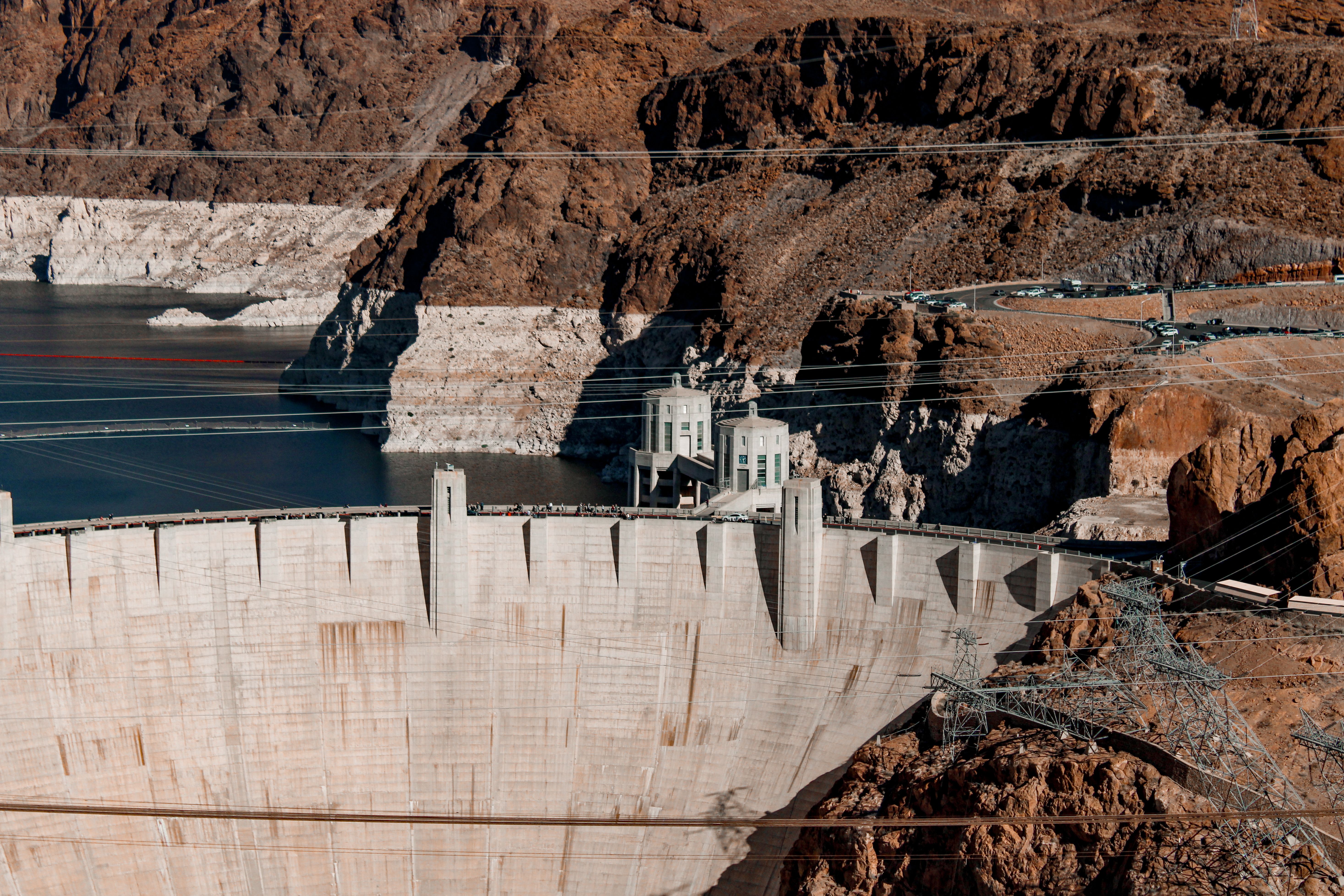 The Colorado River feeds Lake Mead, Southern Nevada's primary water source. Photo: Pexels
What You Can Do
If you live in Southern Nevada, there are a few practical steps you can take in response to this news.
First, stay informed. The Bureau of Reclamation updates Lake Mead water levels and 24-month projections on a monthly basis. The Southern Nevada Water Authority publishes regular updates on water supply and conservation programs. Knowing the current status helps you make better decisions for your household.
Second, conserve water. This is not just good civic behavior, it is financially smart. The Southern Nevada Water Authority offers rebates for removing grass, installing water-efficient appliances, and making other conservation improvements to your home. Less water used today helps keep the reservoir level higher and keeps water costs lower for everyone.
Third, if you are buying or selling a home, factor infrastructure into your decision-making. Ask about utility costs. Ask about the age of systems in the home. Look for homes in communities with modern infrastructure and good long-term planning. These things matter more than ever in a desert environment.
Fourth, pay attention to what your elected officials are doing about water and energy policy. The decisions being made right now about the Colorado River, Lake Mead operations, and renewable energy development will shape Southern Nevada for the next several decades. Engaged residents who stay informed and speak up have real influence on those outcomes.
Finally, if you are on the fence about buying in Southern Nevada, the combination of active federal investment in Hoover Dam and serious regional water planning is a positive signal. No region in the country is without infrastructure challenges. What matters is whether those challenges are being addressed, and in Southern Nevada, they are.
Thinking About Buying or Selling in Southern Nevada?
Whether you are looking at homes near Henderson, Boulder City, or anywhere in the Las Vegas valley, Ryan Rose can help you navigate the market with the context that matters, including what regional infrastructure news means for your investment.
Ryan Rose
Real Broker, LLC
Phone: 702-747-5921
Email: ryan@rosehomeslv.com
Website: rosehomeslv.com
Categories
- All Blogs (4979)
- Absentee Owner (4)
- Affordability (3)
- ALIANTE (53)
- Anthem (33)
- Ascension (50)
- Assumable Loan (1)
- Astra (50)
- BLACK MOUNTAIN (55)
- Buyers (22)
- Cadence (17)
- Calico Ridge (50)
- Canyon Fairways (50)
- CANYONS OF SUMMERLIN (55)
- CENTENNIAL HILLS (81)
- Comparisons (46)
- CROSSINGS IN SUMMERLIN (55)
- DESERT SHORES (47)
- Divorce (3)
- Downsizing (13)
- EAGLE HILLS (55)
- Empty Nester (1)
- Enterprise (1)
- EXPIRED LISTINGS (134)
- First Time Homebuyer (4)
- Green Valley (139)
- Henderson (82)
- HORIZONS EDGE (50)
- Housing Market Trends (100)
- Informative (112)
- Inspirada (58)
- Lake Las Vegas (2)
- Lakes Las Vegas (3)
- Las Vegas Real Estate (182)
- Local News (774)
- Luxury (1)
- MacDonald Highlands (88)
- MacDonald Ranch (100)
- Madeira Canyon (93)
- MESQUITE NV (103)
- MOUNTAIN TRAILS (50)
- Mountains Edge (79)
- Naked City (35)
- New Construction (131)
- North Las Vegas (24)
- Northgate (23)
- PALISADES SUMMERLIN (50)
- Probate (28)
- Providence (2)
- Quail Ridge (35)
- QUEENSRIDGE (56)
- Red Rock (1)
- RED ROCK COUNTRY CLUB (60)
- Relocating to Summerlin (207)
- Relocation (45)
- Retired (1)
- Retirement (1)
- Reverence (15)
- RHODES RANCH (64)
- Ridgebrook (40)
- Sellers (255)
- Seven Hills (83)
- Silverado Ranch (1)
- Silverstone Ranch (39)
- SKYE CANYON (100)
- SKYE CANYONE (4)
- Southern Highlands (94)
- Southwest (19)
- SPANISH TRAILS (55)
- SPRING VALLEY (70)
- Summerlin (104)
- Sun City Summerlin (3)
- The Arbors (37)
- The Cliffs (50)
- THE HILLS (55)
- THE PASEOS (55)
- The Pueblos (27)
- THE PUEBLOS OF SUMMERLIN (42)
- THE RIDGES (65)
- THE VISTAS OF SUMMERLIN (50)
- The Willows (60)
- Thoughts on Home Tour (2)
- TOURNAMENT HILLS (50)
- Veterans (3)
- WHITNEY RANCH (55)
- Workers Advantage Program (100)
Recent Posts









GET MORE INFORMATION