A Judge Says Nevada Unconstitutionally Took Coyote Springs Water Rights, and Taxpayers Could Owe $600 Million-Plus
Related Stories
Las Vegas Grass Fines Now Start January 2028
Nevada Ranks 49th for New Housing Supply
Wayne Newton Ranch Gets 77 Homes Approved
A Clark County District Court judge has ruled that the State of Nevada unconstitutionally took water rights tied to Coyote Springs, a planned city north of Las Vegas that was never built. Now a jury will decide how much the state owes, and the developer is asking for more than $600 million, plus interest and attorney fees.
That money would come from the state, which means it would come from Nevada taxpayers. The ruling could also change how Nevada manages groundwater for years to come. If you live in Las Vegas, Henderson, or anywhere in Clark County, this is a case worth following. It touches two things every Southern Nevada resident cares about: water and growth.
The Las Vegas Review-Journal first reported the ruling on Nov. 19, 2026. Here is what happened, why it matters, how we got here, and what comes next.

Photo: TheYearbookTeacher / Wikimedia Commons, CC BY 4.0

What Happened
Clark County District Judge Mark Denton ruled that the actions of the Nevada State Engineer caused an unconstitutional taking of water rights connected to the Coyote Springs development. In his ruling, the judge pointed to the State Engineer's "actions (and inactions)," according to the Review-Journal. The State Engineer is the official who manages water rights for the whole state. That office sits inside the Nevada Division of Water Resources.
A "taking" is a legal term. The U.S. Constitution and the Nevada Constitution both say the government cannot take private property without paying for it. Usually people think of a taking as the state grabbing land to build a road. But property can include more than land. In this case, the developer argued that its water rights were property, and that the state's decisions stripped away their value. The judge agreed that a taking happened.
The ruling does not set a dollar amount. That is the next step. A jury will now decide damages, meaning how much money the state must pay. The developer, Coyote Springs Investment, is seeking more than $600 million, plus interest and attorney fees, according to the Review-Journal. The next phase of the case is expected early next year.
The Nevada Attorney General's office, which represents the state in court, was reviewing the ruling when the Review-Journal reported the story. As of this writing, whether the state will appeal is NOT FOUND. We will update this post if the state announces its next move.
This decision came after a long trial. Public radio station KNPR reported in July 2026 that the trial had just started in a Las Vegas courtroom in front of Judge Denton, and that it was expected to last months. KNPR also reported that the developers who own Coyote Springs today, the Seenos, are from California. They are asking to be paid back for the money they put into the project.
Coyote Springs Investment has said in court filings that it spent more than $200 million on infrastructure for the project, often with state approval, according to an earlier report from The Nevada Independent. The developer described the state's actions as having a "massive" and "continuing economic impact."
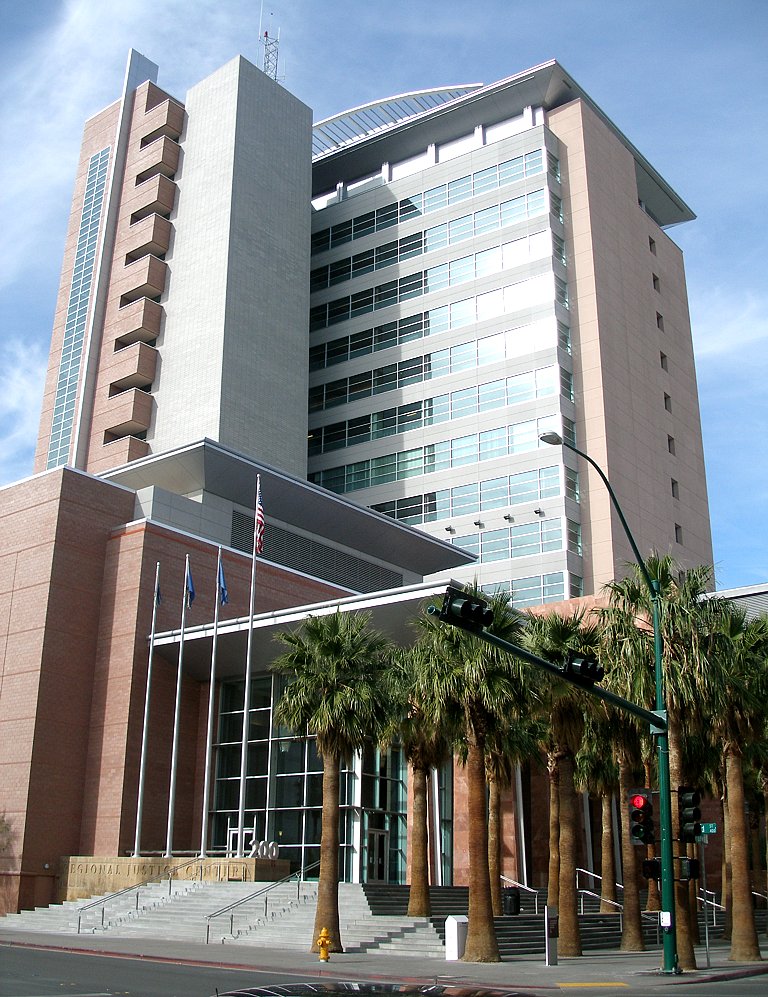
Photo: Coolcaesar / Wikimedia Commons, CC BY-SA 3.0

Why It Matters to Las Vegas Residents
The first reason is money. If a jury awards anything close to $600 million, the State of Nevada would have to pay it. The state's money is our money. It comes from sales tax, gaming tax, and other taxes and fees that Nevadans pay every day. How the state would pay a large judgment, and whether it would come out of one budget or spread over many years, is NOT FOUND. Reporter Alan Halaly, who covers water for the Review-Journal, told KNPR in July that "the state doesn't have a lot of extra money" to pay large sums to developers.
To put the number in plain terms, $600 million is more than the developer says it spent on infrastructure. It is a figure that would get the attention of every state lawmaker in Carson City. And interest and attorney fees could push the total higher.
The second reason is water. Southern Nevada lives in the desert. Most of the Las Vegas Valley's water comes from the Colorado River through Lake Mead. But a lot of rural Nevada, and many projects outside the valley, depend on groundwater, the water that sits under the ground in aquifers. The State Engineer decides who gets to pump that water and how much. If the state now has to pay when it limits someone's water rights, future State Engineers may think twice before saying no.
Halaly put it this way on KNPR: "The larger question is whether the state engineer will hesitate when doing things like this in the future." He said the case could have a chilling effect on how the State Engineer regulates water rights. That matters for every growing community in Nevada, because there is only so much water to go around.
The third reason is growth. Las Vegas has always grown outward. New master-planned communities need homes, roads, schools, and above all, water. Coyote Springs was supposed to be one of the biggest new communities in the state. Its story is a warning about what happens when growth plans run into hard water limits. For people who own homes in the valley today, this case is a reminder that water is the real limit on how far and how fast Southern Nevada can grow.
To be clear, this ruling does not change your water bill, your water supply, or any rule about your yard. The Las Vegas Valley Water District and the Southern Nevada Water Authority still run your water service the same way they did last week. This is a fight between a developer and the state over groundwater outside the valley.
What Is a Water Right, Anyway?
In Nevada, water belongs to the public. But the state can give a person or a company a right to use a set amount of it. That is called a water right. Water rights are usually measured in acre-feet. One acre-foot is the amount of water it takes to cover one acre of land one foot deep. Water rights can be bought and sold, and they are often worth a lot of money, especially in the desert.
Nevada also follows a "first in time, first in right" system. The oldest rights get served first when there is not enough water for everyone. Newer rights get cut first. The Nevada Independent reported that the State Engineer's approach of managing a whole region together could change how that priority works. That is part of why so many water users across the state have been watching this case.
So when the developer says the state "took" its water rights, it means the state left it holding rights it could not really use to build homes. The judge found that crossed a constitutional line. The jury will decide what that is worth in dollars.
Background and History
Coyote Springs sits about an hour northeast of Las Vegas, near the line between Clark County and Lincoln County. KNPR describes it as a development where no one lives. Drive up the Great Basin Highway today and you will see a sign and a lot of open desert. The plan was for a full master-planned city to rise there. That city never came. The total number of homes planned is NOT FOUND in the sources used for this post.
The trouble was always water. Coyote Springs sits on top of an underground water system that state officials call the Lower White River Flow System. Over many years, past officials handed out permits to pump far more water from that area than it could really supply. According to The Nevada Independent, the State Engineer later found that only about 8,000 acre-feet of water could be pumped from the system, far below the roughly 30,000 acre-feet in permitted rights that had already been issued. That decision is known as Order 1309.
Why so little? The groundwater in this system feeds springs that flow into the Muddy River, a tributary of the Colorado River. Those springs are the only home of a tiny endangered fish called the Moapa dace. Pumping too much groundwater could dry up the springs, hurt the river, and push the fish toward extinction. Many other water users also hold rights in the area, including the Southern Nevada Water Authority, NV Energy, the Moapa Valley Water District, and the City of North Las Vegas.

Photo: U.S. Fish and Wildlife Service / Wikimedia Commons, public domain
The fight between the developer and the state goes back decades, KNPR reported. In 2018, Coyote Springs sued the state after the State Engineer said he would not approve subdivision maps because of uncertainty about water. That case settled, and the maps got conditional approval, according to The Nevada Independent. Later, the state recommended denying those conditionally approved maps because of water quantity concerns, which led the developer to file the taking lawsuit.
Meanwhile, Order 1309 was challenged in court. A district court ruled in 2022 that the State Engineer had gone beyond his authority. But in January 2024, the Nevada Supreme Court unanimously reversed that ruling. The justices said the State Engineer does have the power to manage connected groundwater basins together. Justice Patricia Lee wrote that when the science shows water sources are connected, the State Engineer "should manage these rights together based on a shared source of supply."
That 2024 win for the state is what makes this new ruling so striking. The state won the right to limit the water. Now a judge has found that, in this case, the way the state did it amounted to a taking that the state must pay for.
What Happens Next
The next step is a jury trial on damages. The Review-Journal reported that this phase is expected early next year. The jury will hear arguments about what the water rights were worth and how much the developer lost. The developer will push for its $600 million-plus figure. The state will almost certainly argue for a much smaller number. The final amount could land anywhere, and no one knows yet where it will end up.
The state also has options. The Attorney General's office was reviewing the ruling. Big rulings like this one are often appealed to the Nevada Supreme Court, but whether and when the state will appeal is NOT FOUND as of Nov. 22, 2026. An appeal could add months or years to the case.
Keep in mind that a jury verdict is not the end of the road. Even after a dollar figure comes back, either side can ask the judge to adjust it or take the case up on appeal. Large judgments against a state often take years to settle and pay. So if you see a headline next year with a big number, read the fine print about appeals before assuming the money has changed hands.
Here is what to watch for in the coming months:
- A statement from the Nevada Attorney General's office on whether the state will appeal.
- A trial date for the damages phase in Clark County District Court.
- Any talk in the 2027 Nevada Legislature about how the state would pay a large judgment, or about changes to water law.
- Whether other water rights holders across Nevada file similar claims, now that a judge has found a taking in this case.
Ryan's Take
I sell homes in the southwest valley and Summerlin, and I get asked about water all the time. Buyers moving here from other states want to know if Las Vegas will run out of water. Here is how I explain it: the valley's water system is well run, and this case does not change your tap water. But this case shows the real cost of planning growth in places where the water is not there. Coyote Springs had land, more than $200 million in infrastructure spending, and big plans. It did not have enough water, and now taxpayers may get the bill.
For home values, my view is simple. Land inside the valley that already has water service, power, roads, and schools keeps its edge. That is one reason established areas like Mountain's Edge, Rhodes Ranch, and Summerlin hold their value. When far-out projects stall, demand stays focused on the places where people can actually build and live. I will keep watching this case, especially the damages trial, because a ruling this size can shape state budgets and water decisions for a long time.

Photo: Stan Shebs / Wikimedia Commons, CC BY-SA 3.0

What You Can Do
You do not need to be a water lawyer to keep up with this. Start by following the case in local news. The Review-Journal, KNPR, and The Nevada Independent have all covered Coyote Springs for years. When the damages trial starts, those outlets will report the arguments and the final number.
Next, let your state lawmakers know you are paying attention. A judgment this size could affect the state budget. You can find your Nevada Assembly member and state senator on the Nevada Legislature website, and you can share your view on how the state should handle water rights and large legal claims. The 2027 session is when budget choices get made.
Finally, if you are buying a home, ask good questions about water. In the Las Vegas Valley, most homes are served by the Las Vegas Valley Water District or a city water system, and the Southern Nevada Water Authority plans long term supply. If you are looking at rural land or a property on a private well, ask about the water rights tied to it, because those rights are what this whole case is about. And keep an eye on local water rules, like the decorative grass rules from the Water Authority, which affect what you can do with your yard.
Do you think the state should pay the developer, or should water limits come without a price tag? It is a fair question, and it is one Nevada will be answering in court next year.
Have questions about how this affects your home or neighborhood? Reach out to Ryan Rose or text/call 702-747-5921 anytime. Ryan Rose | Real Broker, LLC | 702-747-5921 | ryan@rosehomeslv.com | rosehomeslv.com

Photo: Coolcaesar / Wikimedia Commons, CC BY-SA 4.0

Sources
KNPR: "Lawsuit could determine Nevada regulators' ability to curtail water rights" (July 8, 2026)
Categories
- All Blogs (4922)
- Absentee Owner (1)
- Affordability (3)
- ALIANTE (53)
- Anthem (27)
- Ascension (47)
- Assumable Loan (1)
- Astra (47)
- BLACK MOUNTAIN (47)
- Buyers (20)
- Cadence (16)
- Calico Ridge (48)
- Canyon Fairways (50)
- CANYONS OF SUMMERLIN (48)
- CENTENNIAL HILLS (80)
- Comparisons (46)
- CROSSINGS IN SUMMERLIN (47)
- DESERT SHORES (47)
- Divorce (3)
- Downsizing (13)
- EAGLE HILLS (44)
- Empty Nester (1)
- Enterprise (1)
- EXPIRED LISTINGS (13)
- First Time Homebuyer (4)
- Green Valley (136)
- Henderson (70)
- HORIZONS EDGE (48)
- Housing Market Trends (98)
- Informative (101)
- Inspirada (53)
- Lake Las Vegas (2)
- Lakes Las Vegas (2)
- Las Vegas Real Estate (183)
- Local News (1143)
- Luxury (1)
- MacDonald Highlands (87)
- MacDonald Ranch (98)
- Madeira Canyon (93)
- MESQUITE NV (103)
- MOUNTAIN TRAILS (43)
- Mountains Edge (64)
- Naked City (35)
- New Construction (118)
- New Construction Las Vegas (20)
- North Las Vegas (24)
- Northgate (23)
- PALISADES SUMMERLIN (38)
- Probate (25)
- Providence (2)
- Quail Ridge (35)
- QUEENSRIDGE (53)
- Red Rock (1)
- RED ROCK COUNTRY CLUB (45)
- Relocating to Summerlin (197)
- Relocation (43)
- Retired (1)
- Retirement (1)
- Reverence (15)
- RHODES RANCH (49)
- Ridgebrook (29)
- Sellers (210)
- Seven Hills (77)
- Silverado Ranch (1)
- Silverstone Ranch (39)
- SKYE CANYON (100)
- SKYE CANYONE (4)
- Southern Highlands (78)
- Southwest (17)
- SPANISH TRAILS (47)
- SPRING VALLEY (59)
- Summerlin (100)
- Sun City Summerlin (3)
- The Arbors (36)
- The Cliffs (41)
- THE HILLS (44)
- THE PASEOS (52)
- The Pueblos (24)
- THE PUEBLOS OF SUMMERLIN (40)
- THE RIDGES (57)
- THE VISTAS OF SUMMERLIN (45)
- The Willows (59)
- Thoughts on Home Tour (2)
- TOURNAMENT HILLS (47)
- Veterans (3)
- WHITNEY RANCH (55)
- Workers Advantage Program (88)
Recent Posts




GET MORE INFORMATION