
Nevada Ranks 49th in the Country for New Housing Supply, and Permits Fell 29 Percent
Related Stories
Las Vegas Hits Record 11,447 Homes for Sale
U.S. Home Sales Lowest Since 2010 vs. Las Vegas
Wayne Newton Ranch Gets 77 Homes Approved
Nevada ranks 49th out of 51 for its new housing supply pipeline, according to a new study from UNLV's Lied Center for Real Estate. The state had the steepest one-year drop in the country, with housing permits per resident down 29 percent. Nevada permitted 8,986 housing units from January through August 2026, down from 12,662 in the same months a year earlier.
Even more telling, Nevada and North Dakota were the only two states permitting fewer new homes than the number of new households they are expected to add. Nevada is averaging about 1,123 permits a month against about 1,245 new households a month, per the study. Only Alaska and Connecticut ranked lower overall.
Here is the national picture, what it means for Las Vegas, and why a slowdown in building matters even when the resale market has plenty of homes for sale right now.

Photo: D Goug / Pexels (stock photo, not a specific Las Vegas community)
What Happened
On Nov. 3, 2026, UNLV released a special issue from its Lied Center for Real Estate called "The 2026 Housing Supply Pipeline Rankings." The report uses U.S. Census Bureau building permit data from January through August 2026. It ranks all 50 states plus Washington, D.C. on four things:
- Scale: how much housing a state is permitting compared with its population.
- Cost burden: how hard housing is to afford for people who live there.
- Household growth: how many new households a state is expected to add.
- Momentum: whether permitting is speeding up or slowing down.
The report was written by Shawn McCoy, director of the Lied Center, and Nicholas Irwin, its research director. "Alleviating challenges related to the housing crisis really comes down to a city's ability to actually build housing," McCoy said in UNLV's release.
The Las Vegas Review-Journal also covered the study on Nov. 18 under the headline "Nevada ranks 49th in housing supply as homebuilding falls behind population growth."
The Nevada Numbers
- Rank: 49th of 51 (the 50 states plus D.C.).
- Permits January through August 2026: 8,986 units.
- Same period in 2025: 12,662 units.
- One-year change in permits per resident: down 29 percent, the steepest drop of any state.
- Monthly permits vs. new households: about 1,123 permits a month vs. about 1,245 new households a month.
- Affordability gap: Irwin said Nevada households would need about a 34 percent jump in income to get back to 2018 affordability levels.
Why It Matters to Las Vegas Residents
The national story and the Nevada story are very different right now. Across the U.S., the report found that permits from January through August totaled 968,187 units, up just 0.05 percent from the year before. That is basically flat. Nevada, on the other hand, fell 29 percent. While most of the country held steady, Nevada pulled back hard.
Here is why that matters. Southern Nevada keeps adding people and households. When a state builds fewer homes than the number of new households it adds, the gap has to show up somewhere. Over time, that can mean higher prices, higher rents, or both. It can also mean people double up, stay in apartments longer, or move farther out to find something they can afford.
But Wait, Las Vegas Has Lots of Homes for Sale
That is true, and it is a fair question. As we covered in our story on Las Vegas hitting 11,447 homes for sale, the resale market has more listings now than it has had in years. Buyers have more choices and more room to negotiate today.
So how can there be a supply problem and lots of homes for sale at the same time? The answer is timing. Today's listings are about the short term: how many existing homes are on the market this month. Permits are about the long term: how many new homes will be finished one to two years from now. A slow year of permits does not show up right away. It shows up later, when those homes would have been ready but are not.
In other words, today's buyer-friendly market and tomorrow's possible shortage can both be true. If sales pick up again, for example because mortgage rates fall, the extra listings could get used up while new construction is still behind.
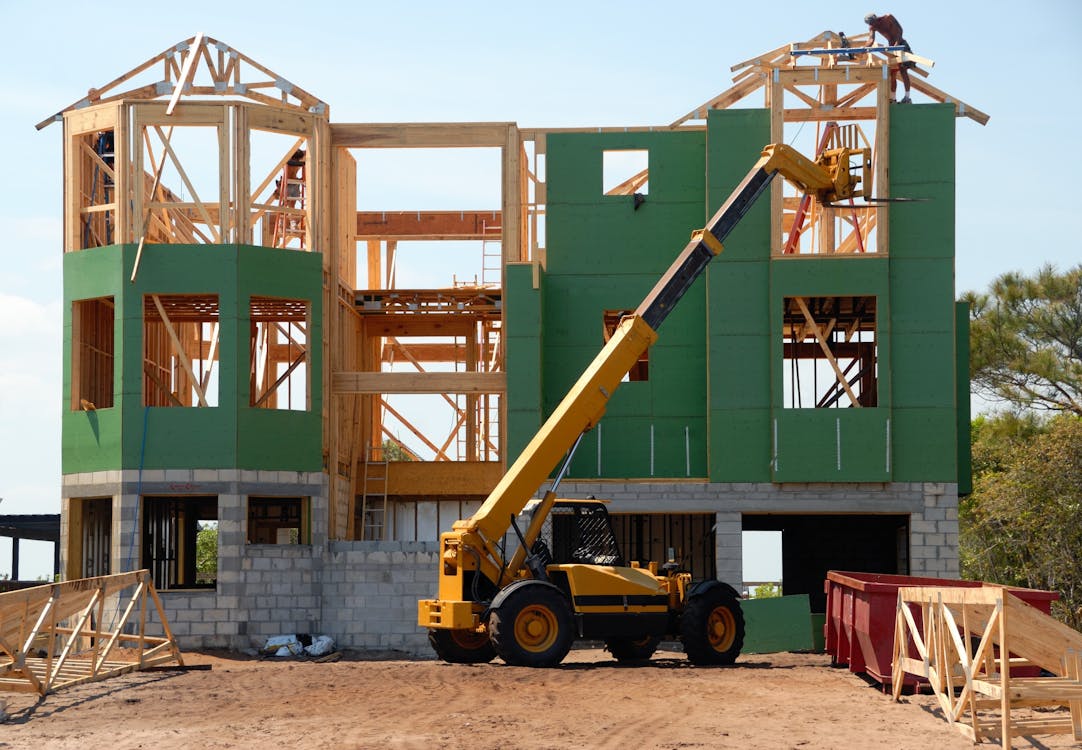
Photo: Pixabay / Pexels (stock photo)
Slow Sales and Slow Building at the Same Time
This report lands in a week of other slow-market news. As we covered in our story on U.S. home sales hitting their lowest pace since 2010, the National Association of REALTORS said existing-home sales fell 8.8 percent from a year ago in October 2026. Las Vegas REALTORS reported local single-family sales down 11.9 percent and condo and townhome sales down 23.6 percent.
Put those together and you get a clear picture. Fewer people are buying, so more homes sit on the market. Builders see slower sales, so they pull back on new projects. That makes sense in the short run. But it also sets up a possible problem later. When buyers return, there may not be enough new homes in the pipeline to meet demand. That is the pattern the UNLV report is warning about.
Why Permits Are a Good Early Signal
A building permit is one of the first official steps before a home is built. Builders usually pull permits shortly before they start work. That makes permit counts a useful early sign of how many homes will be finished in the next year or two. If permits fall today, finished homes usually fall later. That is why researchers like the Lied Center pay close attention to permits instead of just counting homes already for sale.
Permits are not perfect. Some permitted homes are delayed, and some are never built. But a 29 percent drop in a single year is a big enough change that it is hard to ignore.
The Affordability Gap
The report also looked at how far each state is from 2018 affordability. Irwin said Nevada households would need about a 34 percent increase in income to get back to where affordability was in 2018. That is close to the national middle. The median state would need about a 36 percent jump. Some states are much worse: Rhode Island would need about 55 percent, and Montana and Maine about 50 percent. Washington, D.C. was the only place in the study that is more affordable now than in 2018, per the research.
For Las Vegas families, that number puts a size on something many already feel. Homes cost more than they did a few years ago, and paychecks have not kept up. Building more homes is one of the main ways to close that gap over time. Building fewer makes it harder.
Background and History
To understand why Nevada's drop matters so much, it helps to look at how other states did.
Kansas ranked 5th overall. Its permits rose 31 percent in a year and 56 percent since 2023, according to the report. Kansas is permitting about 4.2 new homes for every new household it adds, and it leads the nation in "missing middle" housing. That term means homes between a single-family house and a big apartment complex, such as duplexes, townhomes, and small multi-unit buildings.
Florida, Texas, and Arizona tell a different story. They still rank in the top 10 for permits per resident. But together they permitted 28,538 fewer units than in 2025, and they ranked between 43rd and 48th for momentum. In plain terms, they are still building a lot, but less than before.
New York went the other way. It added 9,616 more units than the year before, an increase of 46 percent.

Photo: Ken Lund / Wikimedia Commons, CC BY-SA 2.0

Nevada's situation is shaped by a few things that make it different from many states. Most of the land around Las Vegas is federal land, so the valley cannot simply spread out in every direction. New land for homes often has to be released through federal programs or approved through long planning processes. That is one reason local land deals, like the recent approval of 77 homes at the Wayne Newton ranch, draw so much attention.
The study itself does not explain why Nevada's permits fell so sharply. The specific causes behind the 29 percent drop are NOT FOUND in UNLV's release. Builders and analysts often point to things like mortgage rates, construction costs, and land prices when permitting slows, but the report did not pin Nevada's drop on any one cause.
What Missing Middle Housing Could Look Like Here
Kansas's lead in missing middle housing is worth a closer look for Las Vegas. Much of the valley was built as single-family homes on one side and large apartment complexes on the other. Townhomes, duplexes, and small multi-unit buildings fill the space in between. They can fit on smaller lots, they often cost less to build per home, and they can give first-time buyers and downsizers more options. Whether Nevada builders and local governments lean more into this kind of housing could be one way to close part of the gap the report found.
The report does not say which policies Nevada should change. Specific policy recommendations for Nevada are NOT FOUND in UNLV's release. But it does make clear that states growing their pipeline, like Kansas, are doing it with more than one type of home.
What Happens Next
Here is what to watch in the months ahead.
- Rest-of-year permit data. The study covers January through August. Census data for the rest of 2026 will show whether Nevada's slowdown got better or worse.
- Mortgage rates. If rates fall, more buyers come back. That can soak up today's extra resale listings faster, which is when a building gap starts to bite.
- Local land and planning decisions. Clark County, Las Vegas, Henderson, and North Las Vegas approvals for new communities and smaller projects will shape how much gets built in 2027 and beyond.
- Missing middle housing. States like Kansas are growing permits with townhomes and small multi-unit buildings. Whether Nevada moves more in that direction is a question to watch.
No one can say for sure what prices or rents will do next. But the trend in this report points in one direction: if Southern Nevada keeps adding households faster than it adds homes, pressure on prices and rents is likely to build over time.
What This Could Mean for Prices and Rents
The study does not predict home prices or rents for Las Vegas. Any specific forecast is NOT FOUND in the report. What it does show is the setup: fewer homes being permitted than households being added. In most markets, that kind of gap tends to support prices and rents over time, especially once buyer demand picks up. How fast that happens here will depend on rates, jobs, and how quickly builders ramp back up.
Ryan's Take
This is the story behind the story. Right now, buyers in Las Vegas have more choices than they have had in years. That is real, and I tell my buyer clients to use it. You can negotiate. You can ask for help with closing costs. You can take your time.
But this UNLV report is a reminder that today's market will not last forever. Builders pulled back hard this year. Those homes that did not get permitted in 2026 are homes that will not be finished in 2027 or 2028. If rates drop and buyers come back, we could swing from a buyer-friendly market to a tight one faster than people expect. I am not trying to rush anyone. I just want people to see the full picture. If you have been waiting for the right time and you have found a home that fits your life and budget, this is a good moment to be in a strong position.
For sellers, the message is different. Today, you are competing with a lot of other listings, so pricing and presentation matter more than ever. Longer term, limited new building tends to support home values. That is good news if you plan to stay put for a while.

Photo: Ken Lund / Wikimedia Commons, CC BY-SA 2.0

What You Can Do
If you are buying: Use today's choices to your advantage. More listings means more room to negotiate on price, repairs, or closing costs. Get pre-approved so you can move when the right home shows up. Watch mortgage rates, because a drop could bring more buyers back quickly.
If you are thinking about new construction: Fewer permits can mean fewer new homes to choose from down the road. If a new community fits your needs now, ask the builder about incentives and timelines. Always have your own agent with you on the first visit so you have someone on your side.
If you are selling: Price to today's market, not last year's. With more homes listed, the best-prepared homes sell first. Clean, repaired, well-priced homes still get attention.
If you rent: A gap between new households and new homes can push rents up over time. If you have been thinking about buying, it may be worth a conversation about what you could afford today and what programs might help.
If you own and plan to stay: Slower building tends to support long-term home values. It may also be a good time to check your home's value and your equity so you know where you stand.
Do you think Las Vegas is building enough homes for the people moving here, or is the valley falling behind?
Have questions about how this affects your home or neighborhood? Reach out to Ryan Rose or text/call 702-747-5921 anytime. Ryan Rose | Real Broker, LLC | 702-747-5921 | ryan@rosehomeslv.com | rosehomeslv.com

Photo: Ken Lund / Wikimedia Commons, CC BY-SA 2.0

Sources
UNLV Lied Center for Real Estate: "The 2026 Housing Supply Pipeline Rankings" (special issue, October 2026), based on U.S. Census Bureau building permit data, January through August 2026
Categories
- All Blogs (4922)
- Absentee Owner (1)
- Affordability (3)
- ALIANTE (53)
- Anthem (27)
- Ascension (47)
- Assumable Loan (1)
- Astra (47)
- BLACK MOUNTAIN (47)
- Buyers (20)
- Cadence (16)
- Calico Ridge (48)
- Canyon Fairways (50)
- CANYONS OF SUMMERLIN (48)
- CENTENNIAL HILLS (80)
- Comparisons (46)
- CROSSINGS IN SUMMERLIN (47)
- DESERT SHORES (47)
- Divorce (3)
- Downsizing (13)
- EAGLE HILLS (44)
- Empty Nester (1)
- Enterprise (1)
- EXPIRED LISTINGS (13)
- First Time Homebuyer (4)
- Green Valley (136)
- Henderson (70)
- HORIZONS EDGE (48)
- Housing Market Trends (98)
- Informative (101)
- Inspirada (53)
- Lake Las Vegas (2)
- Lakes Las Vegas (2)
- Las Vegas Real Estate (183)
- Local News (1143)
- Luxury (1)
- MacDonald Highlands (87)
- MacDonald Ranch (98)
- Madeira Canyon (93)
- MESQUITE NV (103)
- MOUNTAIN TRAILS (43)
- Mountains Edge (64)
- Naked City (35)
- New Construction (118)
- New Construction Las Vegas (20)
- North Las Vegas (24)
- Northgate (23)
- PALISADES SUMMERLIN (38)
- Probate (25)
- Providence (2)
- Quail Ridge (35)
- QUEENSRIDGE (53)
- Red Rock (1)
- RED ROCK COUNTRY CLUB (45)
- Relocating to Summerlin (197)
- Relocation (43)
- Retired (1)
- Retirement (1)
- Reverence (15)
- RHODES RANCH (49)
- Ridgebrook (29)
- Sellers (210)
- Seven Hills (77)
- Silverado Ranch (1)
- Silverstone Ranch (39)
- SKYE CANYON (100)
- SKYE CANYONE (4)
- Southern Highlands (78)
- Southwest (17)
- SPANISH TRAILS (47)
- SPRING VALLEY (59)
- Summerlin (100)
- Sun City Summerlin (3)
- The Arbors (36)
- The Cliffs (41)
- THE HILLS (44)
- THE PASEOS (52)
- The Pueblos (24)
- THE PUEBLOS OF SUMMERLIN (40)
- THE RIDGES (57)
- THE VISTAS OF SUMMERLIN (45)
- The Willows (59)
- Thoughts on Home Tour (2)
- TOURNAMENT HILLS (47)
- Veterans (3)
- WHITNEY RANCH (55)
- Workers Advantage Program (88)
Recent Posts




GET MORE INFORMATION