
Maryland Parkway Red Line BRT Launches Las Vegas | Ryan Rose
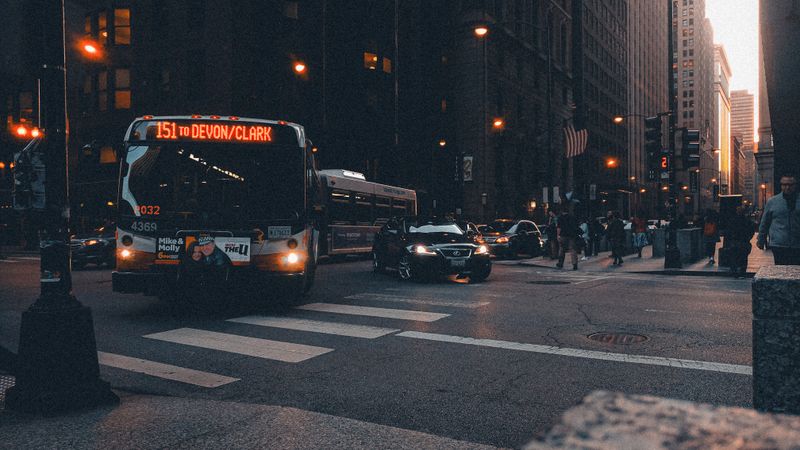
Las Vegas is on the verge of a meaningful shift in how residents travel through one of its most heavily used corridors. The Regional Transportation Commission of Southern Nevada, known as the RTC, confirmed in early June 2026 that its Maryland Parkway Red Line bus rapid transit project is on track to launch by the end of August 2026. After years of planning, design, and construction, the $373 million project is entering its final stretch, and it promises to reshape daily life for thousands of commuters, students, workers, and residents along nearly 12 miles of Maryland Parkway.
For anyone living near, working along, or thinking about buying a home near Maryland Parkway, this is the kind of infrastructure news that deserves close attention. Transit investment at this scale does not happen in a vacuum. It changes how neighborhoods function, how long commutes take, and over time, how property values move. Here is everything you need to know about the Red Line, what it will look like in practice, and what it could mean for the Las Vegas real estate market.
What the Red Line Is and When It Launches
The Maryland Parkway Red Line is a bus rapid transit system, commonly referred to as BRT. Unlike a standard city bus route that shares lanes with regular traffic, a true BRT line operates with its own dedicated infrastructure, making it faster, more reliable, and more predictable than conventional bus service. The RTC's Red Line follows that model, using dedicated bus and bike lanes built directly into the Maryland Parkway corridor.
The fleet powering the Red Line will consist of 15 sixty-foot electric buses. These are articulated, low-floor vehicles designed to carry more passengers per trip than a standard bus, which matters on a corridor as busy as Maryland Parkway. The electric format also means quieter operation and zero direct emissions at street level, a notable improvement for neighborhoods that have dealt with diesel bus traffic for decades.
The RTC's June 2026 confirmation places the launch target firmly at the end of August 2026. That said, not every element of the project will be finished on opening day. Some repaving work and the installation of the distinctive red lane striping that gives the line its name will continue into 2027. The core service, including the buses, dedicated lanes, and stations along the route, is expected to be operational and serving riders well before those final finish-out items are completed.
How the Red Line Will Change Commuting on Maryland Parkway

Anyone who has driven or ridden a bus down Maryland Parkway during peak hours understands the frustration. The corridor connects major destinations across Las Vegas, but traffic congestion has long made it unpredictable. Buses that share lanes with cars get stuck in the same jams, eliminating much of the time advantage that transit is supposed to offer. The dedicated lanes on the Red Line change that equation significantly.
With buses running in lanes that are physically or operationally separated from general traffic, travel times along the corridor become far more consistent. A rider can look at a schedule and expect the bus to arrive within a narrow window rather than guessing whether traffic will add ten or twenty minutes to the trip. That reliability is one of the most critical factors in whether people actually choose to use public transit instead of driving.
The sixty-foot electric buses also offer a more comfortable ride than many older transit vehicles. Larger interiors, smoother acceleration, and quieter operation make a meaningful difference for riders who use transit daily for work or school. For students commuting to UNLV, workers traveling to the medical district, or residents making trips to commercial areas along the corridor, the improvement in day-to-day experience could be significant.
Beyond individual trips, the Red Line is designed to integrate with the broader RTC network. Riders who need to connect to other bus lines or transfer to destinations off Maryland Parkway will find that the enhanced frequency and reliability of the Red Line makes those connections more practical. When a transit network improves at one of its core arteries, the benefits extend outward to the entire system.
What the Route Covers and Who Benefits
The Red Line runs along nearly 12 miles of Maryland Parkway. That stretch of roadway is one of the most densely traveled in Southern Nevada and passes through a wide range of neighborhoods, commercial districts, and institutional destinations. Understanding who the route serves helps illustrate why this project carries so much significance for Clark County.
Maryland Parkway is home to or within close proximity to several major employers and institutions. The University of Nevada Las Vegas campus draws tens of thousands of students and staff. The university medical center and associated health facilities represent a major employment hub. Sunrise Hospital, the Boulevard Mall corridor, and numerous retail and service businesses line the route, creating travel demand throughout the day and into the evening.
The corridor also runs through established residential neighborhoods, including areas that are home to working families who depend on public transit. For households without a car, or households trying to reduce their transportation costs, a faster and more reliable bus line along this corridor represents a genuine quality-of-life improvement. When transit becomes a practical option rather than a last resort, residents gain flexibility that has real economic value.
The inclusion of dedicated bike lanes alongside the bus lanes is also worth noting. The Red Line project does not just improve the bus network. It adds protected cycling infrastructure to one of the city's primary arterials, connecting neighborhoods to destinations in a way that supports multiple modes of travel. For residents who prefer to cycle or who want to combine biking with transit, the new lane configuration opens up options that simply did not exist before.

What the Project Cost and Timeline Look Like
The Maryland Parkway Red Line carries a total project cost of $373 million. That is a substantial investment in Southern Nevada's public infrastructure, and it reflects the scope of what the RTC is building. Dedicated lanes require significant roadway reconstruction, not just paint. Stations need to be designed, built, and equipped. The electric buses themselves represent a major capital expenditure. The charging infrastructure to support a fleet of fifteen sixty-foot electric vehicles requires its own planning and installation.
The $373 million figure also reflects the long-term nature of transit investment. Unlike a single road repair project, bus rapid transit infrastructure is built to last and to serve growing ridership over decades. When evaluated on a per-year or per-trip basis across the life of the system, the cost looks quite different than the headline number suggests. Transit agencies and municipalities fund these projects with a generational horizon in mind.
As for the timeline, the RTC's June 2026 update was clear that the core system will be running by end of August 2026. The remaining work, specifically some repaving and the completion of the red lane striping, is scheduled to wrap up in 2027. That phased approach is not unusual for large infrastructure projects, where certain finishing elements can be completed while the primary service is already operational. Riders should be able to board the Red Line in late summer 2026 even as contractors finish final work elsewhere along the route.
Ryan's Take
As someone who works with buyers and sellers across the Las Vegas Valley every day, I pay close attention to infrastructure projects like this one. The Maryland Parkway Red Line is not just a transit story. It is a neighborhood story, and neighborhoods along well-connected transit corridors tend to evolve in ways that matter to homeowners and investors alike.
The $373 million investment signals something important: Southern Nevada's government and planning agencies are serious about building a transit network that works. That kind of commitment draws attention from developers, businesses, and buyers who want to live in areas with genuine connectivity. It also reflects a broader shift in how younger buyers and urban residents think about transportation. Proximity to reliable transit is increasingly viewed as an amenity, not just a footnote.
I am not suggesting that every property near Maryland Parkway will automatically see dramatic value increases. Real estate is always more complicated than a single variable. But I do think that buyers who are thoughtful about where they purchase, and who pay attention to where infrastructure investment is flowing, put themselves in a stronger position over time. The Red Line is a meaningful signal about the future direction of this corridor.
If you are considering a purchase near Maryland Parkway, or if you own a home in the area and are thinking about what your options look like, this is a good time to have a conversation. Understanding how infrastructure changes affect your specific situation is part of what I am here for.
How This Affects Property Values Near Maryland Parkway

The relationship between transit investment and property values is well-documented across American cities. When a new transit line opens in a corridor, properties within walking distance of stations and along the route typically see increased interest from buyers. The reasons are straightforward. Households gain access to a travel option that reduces their dependence on a second or third vehicle, lowers transportation costs, and gives commuters back time they would otherwise spend in traffic.
In Las Vegas, the dynamic is somewhat different than in older, denser cities with well-established rail systems. The Valley has historically been designed around the car, and transit has played a secondary role in most residents' daily lives. The Red Line has the potential to begin changing that pattern along Maryland Parkway, which could over time make the corridor more attractive to a different type of buyer, including young professionals, students, and households who prioritize walkability and access over lot size and garage space.
The addition of protected bike lanes alongside the bus lanes reinforces this shift. Corridors with multimodal infrastructure, meaning streets where you can safely walk, bike, and take transit as alternatives to driving, tend to see stronger commercial activity at street level. More foot traffic supports more retail, dining, and service businesses, which in turn makes neighborhoods more vibrant and desirable.
For current homeowners near Maryland Parkway, the launch of the Red Line is likely to increase the pool of buyers who view their neighborhood favorably. More interested buyers generally translate to stronger demand, and stronger demand supports pricing. The effect will vary by specific location, property type, and the overall market conditions in late 2026 and beyond, but the directional impact of a major transit investment is typically positive for nearby residential values.
For buyers who are actively looking, the months just before a major transit line opens can represent a window of opportunity. Interest in transit-adjacent properties often increases after service begins, as buyers and renters begin to experience the practical benefits firsthand. Buyers who get in ahead of that shift can sometimes capture value before it is fully priced into the market. That is not a guarantee, and every purchase decision should be evaluated on its own merits, but it is worth factoring into your thinking.
Clark County's continued investment in public transportation infrastructure, from the Red Line on Maryland Parkway to other regional projects underway across the Valley, reflects a longer-term vision of a more connected Southern Nevada. For residents and property owners, that vision has tangible implications. Communities that are well-served by transit attract a broader range of residents, support more diverse businesses, and tend to maintain their appeal even as demographics and preferences shift over time.
The Red Line is one piece of that larger picture, but it is a significant one. Nearly 12 miles of upgraded corridor, 15 electric buses, dedicated lanes for buses and cyclists, and $373 million in committed public investment. That is not a small project. For Las Vegas, it represents a real step toward the kind of connected, multi-option urban environment that residents have been asking for, and that serious transit advocates and urban planners have been working toward for years.
If you are curious about what the Red Line launch could mean for a property you own near Maryland Parkway, or if you are thinking about buying in this part of Las Vegas, I would be glad to talk through it with you. Transit projects like this one are exactly the kind of factor that shapes neighborhoods over the next five to ten years, and it helps to have someone in your corner who is paying attention to the full picture.
Reach out anytime at rosehomeslv.com or send a message directly to ryan@rosehomeslv.com. There is no pressure and no obligation. Just a conversation about Las Vegas real estate and what matters in your situation.
Categories
- All Blogs (4792)
- Absentee Owner (1)
- Affordability (3)
- ALIANTE (53)
- Anthem (32)
- Ascension (49)
- Assumable Loan (1)
- Astra (47)
- BLACK MOUNTAIN (55)
- Buyers (20)
- Cadence (17)
- Calico Ridge (50)
- Canyon Fairways (50)
- CANYONS OF SUMMERLIN (50)
- CENTENNIAL HILLS (81)
- Comparisons (47)
- CROSSINGS IN SUMMERLIN (47)
- DESERT SHORES (47)
- Divorce (3)
- Downsizing (13)
- EAGLE HILLS (46)
- Empty Nester (1)
- Enterprise (1)
- EXPIRED LISTINGS (13)
- First Time Homebuyer (4)
- Green Valley (139)
- Henderson (81)
- HORIZONS EDGE (50)
- Housing Market Trends (98)
- Informative (102)
- Inspirada (58)
- Lake Las Vegas (2)
- Lakes Las Vegas (3)
- Las Vegas Real Estate (183)
- Local News (842)
- Luxury (1)
- MacDonald Highlands (88)
- MacDonald Ranch (100)
- Madeira Canyon (93)
- MESQUITE NV (103)
- MOUNTAIN TRAILS (44)
- Mountains Edge (70)
- Naked City (35)
- New Construction (131)
- New Construction Las Vegas (20)
- North Las Vegas (24)
- Northgate (23)
- PALISADES SUMMERLIN (38)
- Probate (25)
- Providence (2)
- Quail Ridge (35)
- QUEENSRIDGE (56)
- Red Rock (1)
- RED ROCK COUNTRY CLUB (60)
- Relocating to Summerlin (204)
- Relocation (44)
- Retired (1)
- Retirement (1)
- Reverence (15)
- RHODES RANCH (64)
- Ridgebrook (40)
- Sellers (210)
- Seven Hills (83)
- Silverado Ranch (1)
- Silverstone Ranch (39)
- SKYE CANYON (100)
- SKYE CANYONE (4)
- Southern Highlands (94)
- Southwest (19)
- SPANISH TRAILS (55)
- SPRING VALLEY (70)
- Summerlin (103)
- Sun City Summerlin (3)
- The Arbors (36)
- The Cliffs (42)
- THE HILLS (45)
- THE PASEOS (52)
- The Pueblos (24)
- THE PUEBLOS OF SUMMERLIN (40)
- THE RIDGES (58)
- THE VISTAS OF SUMMERLIN (45)
- The Willows (59)
- Thoughts on Home Tour (2)
- TOURNAMENT HILLS (47)
- Veterans (3)
- WHITNEY RANCH (55)
- Workers Advantage Program (100)
Recent Posts




GET MORE INFORMATION
