
Nevada $20K Down Payment Help for Workers | Ryan Rose
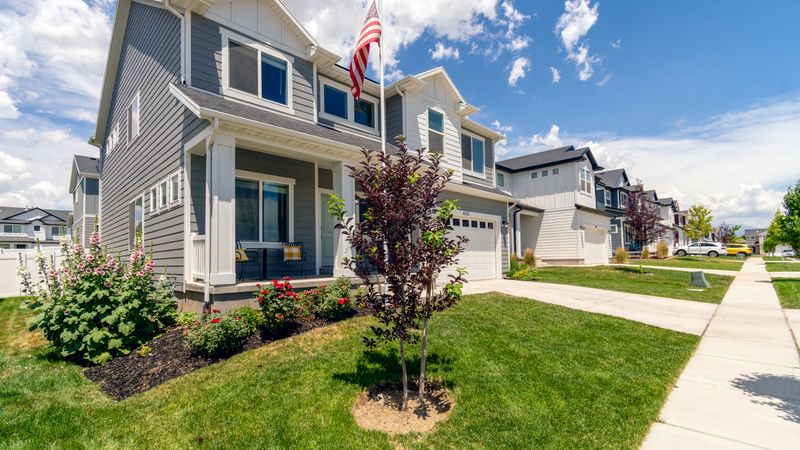
If you work in healthcare, education, public safety, or construction anywhere in Nevada, there is a program right now that will give you $20,000 toward the purchase of a home. No interest. No monthly payments. No catch buried in the fine print. Nevada's Worker Advantage Program is one of the most straightforward down payment assistance offerings in the state, and as of January 2026 the vast majority of its funding remains unclaimed.
That last point is the one that keeps coming up in conversations I have with clients across Clark County. A program this generous, with this much money still available, should have a waiting list. Instead, it has a participation rate that tells a different story about awareness. Only 81 of the 900 available spots have been claimed. That leaves more than 800 households worth of funding sitting on the table, waiting for the nurses, teachers, firefighters, and tradespeople who qualify and simply do not know the program exists.
This post lays out everything you need to understand about the Nevada Worker Advantage Program: what it is, who it is for, how the money actually works, why so few people have used it, and what the application process looks like. If you or someone you care about works in an essential field and has been putting off buying a home because of the down payment, this is worth reading all the way through.
What the Nevada Worker Advantage Program Is
The Nevada Worker Advantage Program is a state-level homebuyer assistance initiative administered by the Nevada Housing Division. Its core purpose is simple: help essential workers cover the upfront cost of buying a home by providing $20,000 in down payment assistance.
That $20,000 is structured as a second mortgage, meaning it attaches to the property alongside your primary home loan rather than arriving as an outright gift. However, the terms on this second mortgage are designed to be as low-pressure as possible. The loan carries no interest and requires no monthly payments for the life of the loan. You carry it for 30 years, and if you sell or refinance, you repay the original $20,000 at that time.
The program is funded through the Nevada Housing Division, the state agency responsible for expanding affordable homeownership across Nevada. It is part of a broader recognition that essential workers, the people communities depend on for their daily functioning, often earn wages that make saving a traditional 20 percent down payment feel impossible in a housing market that has appreciated significantly over the past several years.
Clark County, which encompasses Las Vegas, Henderson, North Las Vegas, and the surrounding unincorporated areas, is fully included in this program. A buyer purchasing a home in Summerlin, the east side of Las Vegas, Henderson, or any other part of the valley can use Worker Advantage funds as long as they meet the eligibility requirements.

Who Qualifies and What the Limits Are
The Worker Advantage Program targets workers in four broad categories: healthcare, education, public safety, and construction. Within those categories, a wide range of occupations qualify. Think registered nurses, medical assistants, emergency medical technicians, and hospital support staff. Think teachers at all grade levels, school counselors, and educational aides. Think police officers, firefighters, and corrections officers. Think licensed contractors, electricians, plumbers, carpenters, and other skilled tradespeople in construction.
If your work falls into one of those fields, the next set of questions involves income and purchase price.
The income limit is set at or below 150 percent of the Area Median Income, known as AMI. In Clark County, that threshold comes out to $142,350. This is a meaningful ceiling. It is high enough to include most working professionals in the covered occupations, including experienced nurses and veteran teachers who earn salaries toward the upper end of their pay scales. It is not restricted only to low-income buyers.
The home price limit is $832,750. In practical terms, this covers the vast majority of homes available in the greater Las Vegas area. The median home price in Clark County sits well below that ceiling, which means the program is accessible at the typical price points where most buyers in Southern Nevada are actually shopping. Whether you are looking at a starter home in the $350,000 to $450,000 range or a mid-tier property pushing $600,000, the price limit is not likely to be a disqualifying factor.
The program also has the standard first mortgage requirements that accompany most down payment assistance programs. You will need to obtain a primary loan that is compatible with the Nevada Housing Division's guidelines, complete a homebuyer education course, and work with a participating lender who is approved to originate loans paired with Worker Advantage funds.
Citizenship or residency status requirements, and any restrictions around primary residence use, are part of the standard eligibility framework. The home must be your primary residence. This is not a program for investment properties or vacation homes.
How the $20,000 Works as a Second Mortgage
The second mortgage structure is worth understanding in detail because it is what separates the Worker Advantage Program from a forgiven grant and also from a conventional second mortgage you might get from a bank.
When you close on your home using this program, the $20,000 is recorded as a lien against the property alongside your primary mortgage. It is a real loan in the legal sense. But it is a silent second mortgage. It sits behind your first mortgage, charges no interest, and asks nothing of you on a monthly basis. There is no payment due in January, no payment due in July, no statement arriving in your mailbox.
The balance stays at $20,000 for the entire 30-year term because there is no interest accruing and no amortization schedule. If you live in the home for 30 years and then sell it, you repay $20,000 at closing, the same amount you received. The time value of money will have worked entirely in your favor over those three decades.
If you sell the home before 30 years are up, you repay the $20,000 from the proceeds of the sale at that time. If you refinance your primary mortgage, the second mortgage will need to be addressed as part of that transaction. In most refinance scenarios, the $20,000 can either be repaid at that point or re-subordinated, depending on the new lender's requirements.
The practical effect of this structure is significant. For a buyer purchasing a home at $425,000, a $20,000 down payment contribution represents nearly 5 percent down before they bring a single dollar of their own savings. Combined with a modest personal contribution, many buyers can reach the 5 to 10 percent down threshold that opens up better loan terms without depleting emergency funds or retirement accounts.

Why So Few People Have Used It
The numbers on program utilization are striking. As of January 2026, only 81 of the 900 available spots had been claimed. That means roughly 91 percent of the available funding was still sitting unused. This is not a program that ran out of money quickly. It is a program that most eligible workers simply have not heard about.
There are a few reasons this kind of awareness gap tends to develop with state housing programs.
First, housing assistance programs are often communicated through channels that do not reach working adults in the middle of a busy professional life. Information posted on a state agency website, or shared through lender training materials, does not automatically find its way to a teacher grading papers at 9 p.m. or a nurse finishing a double shift.
Second, many people in essential worker roles have absorbed the cultural message that homeownership is out of reach. After years of watching home prices rise and interest rates adjust, some have stopped actively researching what programs might be available. They have moved on to other financial goals without knowing that $20,000 in no-interest help was waiting for them.
Third, the mortgage process itself can feel daunting even without a second mortgage layered in. The idea of navigating a down payment assistance program on top of a standard home loan application makes some buyers hesitant to try, especially without a real estate agent or lender who is familiar with how these programs work.
The result is 819 unused spots in a program designed to make homeownership possible for the people who keep our schools running, our hospitals functioning, and our neighborhoods safe. That gap is an opportunity. If you are reading this and you work in one of the covered fields, you are exactly the person this program was built for.
Ryan's Take
I work with buyers across Clark County every week, and the down payment conversation comes up in almost every initial consultation. For many essential workers, it is the single biggest obstacle between where they are right now and a home they own. Saving $30,000 or $40,000 while paying rent in Las Vegas is genuinely difficult. When I tell clients that a program exists which provides $20,000 at zero interest with no monthly payments, the reaction is almost always the same: disbelief followed by real interest.
What I want people to understand is that $20,000 is meaningful money in this market. It can be the difference between a 3 percent down payment and a 7 or 8 percent down payment. It can mean avoiding private mortgage insurance, which adds to your monthly cost. It can mean keeping your savings account intact so that you have a cushion for the first few months of homeownership instead of arriving at closing with your accounts emptied.
The no-interest, no-payment structure also matters more than people initially realize. With a conventional second mortgage, even a small loan at a reasonable interest rate adds meaningfully to your monthly obligations and your total cost over time. A 30-year second mortgage at zero interest and zero monthly payments is a fundamentally different instrument. You are not borrowing money in any painful sense. You are accessing a benefit that the state has made available to support the workers it depends on.
Clark County has seen significant home price appreciation over the past several years. That appreciation has made it harder for first-time buyers to save their way into the market at the same pace prices are moving. Programs like Worker Advantage exist to close that gap. With 819 spots still available as of January 2026, the window is real and the opportunity is real.
If you work in healthcare, education, public safety, or construction and you have been thinking about buying in the Las Vegas area, I would encourage you to take the eligibility question seriously rather than assuming you do not qualify. The income ceiling at 150 percent of AMI is not restrictive. The home price limit at $832,750 covers almost everything buyers are looking at in this market. The obstacle is awareness, not access.

How to Apply and What to Expect
Accessing the Nevada Worker Advantage Program starts with finding a participating lender. The Nevada Housing Division maintains a list of approved lenders who are trained to originate loans that include Worker Advantage down payment assistance. Not every lender in Las Vegas is on that list, so this is the first practical step: identifying a lender who knows how to structure the transaction correctly.
Your real estate agent is a useful starting point here. An agent who has worked with state down payment assistance programs will typically have a list of lenders who are approved and experienced with this specific program. If your agent is unfamiliar with Worker Advantage, that itself is useful information, because it tells you that you may want to broaden your team before you get deep into a home search.
Once you have identified a participating lender, the process follows the standard home loan application framework. You will provide documentation of your income, employment, assets, and credit history. Because the income limit is based on AMI, you will need to document that your household income falls at or below 150 percent of the Clark County AMI figure.
You will also need to provide documentation of your employment in a qualifying essential worker occupation. For most people in healthcare, education, public safety, or construction, this means providing a letter from your employer, a pay stub showing your job title, or a professional license that confirms your occupation.
Most programs administered through the Nevada Housing Division also require completion of a homebuyer education course. These courses are available online and typically take between four and eight hours to complete. They cover the basics of the home purchase process, how to read a loan estimate, what to expect at closing, and how to manage homeownership costs after you move in. They are not onerous, and for first-time buyers they are genuinely useful.
Once you are pre-approved and have completed the required education component, the home shopping process proceeds much like any other purchase. You make an offer, negotiate terms, go through inspection and appraisal, and proceed to closing. The $20,000 from the Worker Advantage Program is applied at closing, reducing the cash you need to bring to the table.
The timeline from application to closing varies depending on how quickly you find a home and how smoothly the loan underwriting goes. Working with a lender and agent who are experienced with the program can reduce delays and prevent surprises in the final weeks before closing.
One thing worth flagging: program funding can change. The Nevada Housing Division allocated a specific number of spots, and while 819 remained as of January 2026, that number will decrease as more buyers take advantage of the program. If you are interested in Worker Advantage, acting sooner rather than later is the practical approach. Programs with this kind of generous, flexible structure do not typically sit unused indefinitely once word spreads.
Contact Ryan Rose
If you are an essential worker in Clark County and you want to understand how the Worker Advantage Program fits into your home purchase plan, I am happy to talk it through with you. I work with buyers across the Las Vegas valley and I am familiar with the state assistance programs currently available to Southern Nevada homebuyers.
Whether you are just starting to think about homeownership or you are ready to get pre-approved and start shopping, a conversation costs nothing and can clarify a lot. You can reach me through rosehomeslv.com or by reaching out directly. I would be glad to connect you with a participating lender and help you figure out whether this program is the right tool for your situation.
You might also find these related posts useful as you research the Las Vegas housing market:
- First-Time Buyers Face Record Hurdles in Las Vegas
- Las Vegas April Home Prices Dip 1.3 Percent
- Las Vegas Homebuilder Sales Recover April 2026
Sources
- Fox5 Vegas / Nevada Housing Division: Nevada's Worker Advantage Program Still Has Funding Available for Essential Workers (January 8, 2026)
- Nevada Housing Division: housing.nv.gov
Categories
- All Blogs (4337)
- Absentee Owner (4)
- Affordability (3)
- ALIANTE (53)
- Anthem (33)
- Ascension (50)
- Assumable Loan (1)
- Astra (50)
- BLACK MOUNTAIN (55)
- Buyers (22)
- Cadence (17)
- Calico Ridge (50)
- CANYONS OF SUMMERLIN (55)
- CENTENNIAL HILLS (81)
- Comparisons (46)
- CROSSINGS IN SUMMERLIN (55)
- DESERT SHORES (47)
- Divorce (3)
- Downsizing (13)
- EAGLE HILLS (55)
- Empty Nester (1)
- Enterprise (1)
- EXPIRED LISTINGS (134)
- First Time Homebuyer (4)
- Green Valley (137)
- Henderson (82)
- HORIZONS EDGE (50)
- Housing Market Trends (99)
- Informative (112)
- Inspirada (56)
- Lake Las Vegas (2)
- Lakes Las Vegas (3)
- Local News (469)
- Luxury (1)
- MacDonald Highlands (88)
- MacDonald Ranch (70)
- Madeira Canyon (91)
- MESQUITE NV (103)
- MOUNTAIN TRAILS (50)
- Mountains Edge (67)
- Naked City (35)
- New Construction (119)
- North Las Vegas (24)
- Northgate (23)
- PALISADES SUMMERLIN (50)
- Probate (28)
- Providence (2)
- Quail Ridge (35)
- QUEENSRIDGE (56)
- Red Rock (1)
- RED ROCK COUNTRY CLUB (60)
- Relocating to Summerlin (207)
- Relocation (45)
- Retired (1)
- Retirement (1)
- Reverence (1)
- RHODES RANCH (63)
- Ridgebrook (40)
- Sellers (253)
- Seven Hills (65)
- Silverado Ranch (1)
- Silverstone Ranch (39)
- SKYE CANYON (100)
- SKYE CANYONE (4)
- Southern Highlands (94)
- Southwest (19)
- SPANISH TRAILS (55)
- SPRING VALLEY (70)
- Summerlin (100)
- Sun City Summerlin (3)
- The Arbors (35)
- The Cliffs (49)
- THE HILLS (55)
- THE PASEOS (55)
- The Pueblos (27)
- THE PUEBLOS OF SUMMERLIN (42)
- THE RIDGES (65)
- THE VISTAS OF SUMMERLIN (48)
- The Willows (54)
- Thoughts on Home Tour (2)
- TOURNAMENT HILLS (50)
- Veterans (3)
- WHITNEY RANCH (52)
- Workers Advantage Program (100)
Recent Posts







GET MORE INFORMATION