
What a Las Vegas Starter Home Costs Now | Ryan Rose
Related Stories
Las Vegas Home Prices Have Doubled Since 2016
Best Time to Buy in Las Vegas: September
The median starter home in the Las Vegas Valley sold for $312,141 in July, according to a Zillow report covered by the Las Vegas Review-Journal on August 26, 2026. That is the number a first-time buyer in Clark County is really shopping against, and it is down 3.2 percent from $322,577 a year earlier.
We covered the ten-year price history in Las Vegas Home Prices Have Doubled Since 2016. This piece is different. This one is about the entry price itself, what it takes to qualify for it, and what the bottom third of the Las Vegas market actually looks like when you go out and tour it.
Here is the short version. The price is high compared to a decade ago, when the same median sat at $140,630. But the price is also softer than it was last summer, supply has loosened, and the type of home you get at that price has quietly changed. All three of those facts matter to a buyer, and they matter in different directions.
What the Starter Home Number Actually Measures
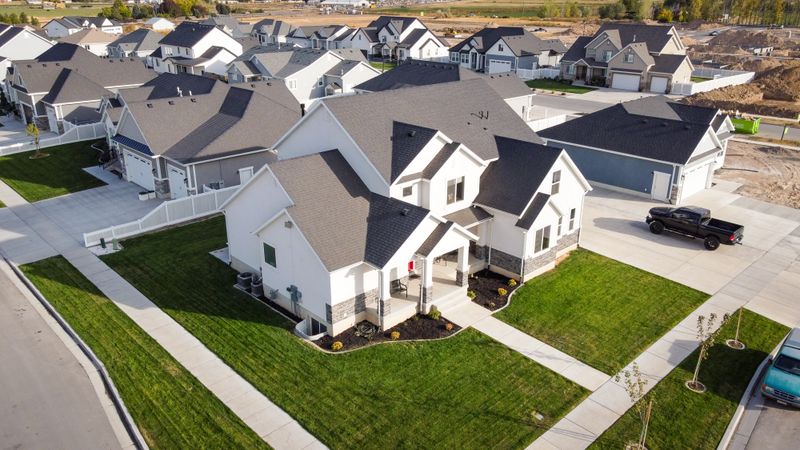
Zillow does not pick a house size or a bedroom count and call that a starter home. It defines starter homes as the bottom third of the market by value. That is an important detail, because it means the starter home price is not a fixed product. It is a slice. Whatever the cheapest third of homes happens to be in a given month, that is what the number describes.
In the Las Vegas Valley, that slice has been shifting. The Review-Journal report noted that the bottom third is increasingly made up of condos and townhomes rather than detached single family houses. Ten years ago, a buyer at the entry price was often getting a small detached house with a yard and a two-car garage. Today a growing share of buyers at that price point are getting an attached home, a shared wall, and an HOA.
So when you compare $312,141 today to $140,630 in July 2016, you are comparing two different baskets of housing. The price more than doubled. The product also changed. Both things are true at once, and if you only look at the price line you will misread what happened to the entry level of this market.
The year-over-year move is the other half of the story. The July 2025 median for the same slice was $322,577. Falling to $312,141 is a decline of 3.2 percent, or roughly $10,400. That is not a crash and nobody should describe it that way. It is a modest step down after a long run up, and for a buyer who has been sitting on the sidelines it is the first year in a while where the entry price moved in their favor.

Why It Matters to Las Vegas Residents
For anyone renting in Clark County and trying to figure out when to buy, this is the number that decides whether the math works. Not the overall valley median, not the luxury sales that make headlines, and not the national average. The bottom third is where a first purchase happens, and $312,141 is the marker in the middle of it.
Local mortgage adviser Matt Hennessy told the Review-Journal that elevated interest rates have cut buying power by roughly 30 percent. That single sentence explains more about the last few years than any price chart does. A household earning the same income today qualifies for meaningfully less house than that household would have qualified for when rates were low. Price alone did not push buyers out. Price plus the cost of money did.
Run the arithmetic on a $312,141 purchase and you can see what a buyer is committing to. A 5 percent down payment is about $15,607. A 10 percent down payment is about $31,214. A full 20 percent is about $62,428. Closing costs are on top of that, and while they vary by lender and by loan type, buyers should plan on a few thousand dollars more rather than assuming the down payment is the whole cash requirement. [NOT VERIFIED: specific closing cost totals vary by transaction and are not in the source report.]
The monthly payment is the part that surprises people. Principal and interest is only one line. Clark County property taxes, homeowners insurance, and mortgage insurance if the down payment is under 20 percent all stack on top. If the home is a condo or townhome, and increasingly at this price point it is, the HOA dues are a real monthly number that does not build equity. Two homes at the exact same purchase price can carry very different monthly costs once dues are included.
There is one more piece of good news buried in the report. Hennessy said inventory now sits at a balanced three to four months of supply. In housing, roughly six months is considered the line between a buyer's market and a seller's market, and Las Vegas spent years well below three. Three to four months means a buyer today can usually see more than one option, take a second look, and negotiate without being told there are eleven other offers. That is a different shopping experience than 2021.
It also matters to people who already own an entry level home here. If you bought in the bottom third five or six years ago, the value of your home is the floor under your next move. A softer entry price cuts both ways. It makes your next purchase a little easier and your sale a little slower. Anyone planning to move up in the next year should look at both sides of that trade rather than just the one they like.

Background and History
To understand why $140,630 was ever the entry price here, you have to remember what Las Vegas went through. The valley was one of the hardest hit housing markets in the country after the 2008 crash. Prices fell dramatically, foreclosures piled up, and by the mid 2010s the bottom third of the market was still working through the wreckage. The 2016 number was not normal. It was a recovery-in-progress number.
What followed was a decade of population growth, job growth, and construction that never fully caught up with demand. Buyers moved in from higher cost states, investors bought entry level product in volume, and the cheapest third of the market got squeezed hardest because that is where the most buyers compete. Every group looking for an affordable home was looking at the same narrow band of inventory.
Then rates moved. The low-rate stretch pulled purchases forward and pushed prices up quickly. The higher-rate stretch that followed did the opposite, and it did it to buying power rather than to price. That is why the 30 percent figure Hennessy cited lands so hard. Payments went up even in months when prices went sideways, and a lot of households discovered that the house they could afford in one year was out of reach the next without any listing price changing at all.
The shift toward condos and townhomes in the bottom third is the market adjusting to that pressure. When detached homes get expensive, attached homes become the affordable entry. Builders respond, buyers adapt, and over time the definition of a starter home changes. Las Vegas is not unusual in this. It is just visible here because the change happened fast.

One more piece of history is worth naming, because it shapes what a starter home looks like today. A lot of the affordable inventory in this valley was built during boom cycles, which means much of the bottom third is not new construction. It is homes from earlier decades with older roofs, older HVAC systems, and older water heaters. That does not make them bad buys. It does mean the inspection matters more at this price point than at any other, and it means a buyer should budget for maintenance in year one rather than assuming everything is fresh.
What Happens Next
Watch three numbers over the next several months. The first is the starter home median itself. One 3.2 percent annual decline is a data point, not a trend. If the next two or three monthly reports show the same softening, the entry level of this market is genuinely cooling. If it flattens or turns back up, July was a pause rather than a turn.
The second is months of supply. Three to four months is balanced. If it climbs toward five or six, buyers gain more room to negotiate on price, on repairs, and on seller-paid closing costs. If it slides back under three, that window narrows quickly. Supply usually tells you where price is heading before price does.
The third is the rate environment, because that is what controls buying power. Any meaningful move in mortgage rates changes what a fixed income can qualify for, and it changes it faster than home prices move. A buyer who is priced out today can become qualified without the price of a single house changing. The reverse is also true. [NOT VERIFIED: no specific rate forecast appears in the source report and none should be assumed here.]
Season matters too. Las Vegas typically gets quieter in the fall, and quieter markets tend to produce more motivated sellers. A home that sat through the summer is a different negotiation in October than it was in June. If you are shopping the bottom third, the back half of the year is often when the conversation gets more flexible.
Keep an eye on the condo and townhome side specifically. Because attached homes are becoming a larger share of the bottom third, what happens to condo financing, HOA dues, and association insurance costs will shape the entry price as much as anything else. A community with rising dues can price a buyer out of a home whose listing price never moved. Ask for the HOA documents early, not at the last minute.
Ryan's Take
I talk to first-time buyers every week who think they missed their window. What I tell them is that the window they think they missed was mostly a low-rate window, not a low-price window, and comparing today to 2016 is not a useful exercise. Nobody gets to buy at 2016 prices. The real question is whether today works for your income, your savings, and how long you plan to stay.
Here is what has genuinely changed in the buyer's favor. Three to four months of supply means you can be picky again. You can tour a property twice. You can ask for a repair credit. You can walk away from one house and know another is coming. For several years that was not the experience in the bottom third of this market, and it is the single most underrated part of the current setup.
The part I would push back on is the assumption that a condo or townhome is a consolation prize. In this valley, at this price, an attached home is often the cleaner path to ownership. You start building equity, you get a fixed housing payment instead of a rent that resets every year, and you keep the option to move up later. What matters is running the full monthly number including HOA dues before you fall in love with the listing price.

What You Can Do
Start with a full monthly payment estimate, not a price range. Ask a local lender to break out principal, interest, property taxes, insurance, mortgage insurance, and HOA dues on a home around $312,141. Then compare that total to your current rent. That one comparison tells you more than any market headline, and it tells you specifically about your situation rather than the average buyer's.
Next, get pre-approved before you tour anything. In a three to four month supply market you are not racing anyone to the offer, but you still want to know your true ceiling before you look at homes above it. A pre-approval also surfaces credit or documentation issues while you still have time to fix them, which is a lot better than finding them under contract.
Then look into down payment assistance. Nevada has programs aimed at first-time buyers, and we walk through one of them in Nevada $20,000 Down Payment Help. Eligibility rules, income limits, and funding availability change, so confirm current terms directly with the program administrator or your lender before you plan around it. [NOT VERIFIED: current program terms and funding status are not covered in the source report.]
Finally, widen your search area before you widen your budget. The bottom third of the valley is not spread evenly. Entry prices differ from the northeast valley to the southwest to the older core neighborhoods near the center, and the same money buys different things depending on where you point it. Tour more than one part of Clark County before you decide what your budget can and cannot do.
One habit that pays off in a balanced market is tracking a handful of specific homes instead of watching the market in general. Pick five or six listings in your range, save them, and watch what happens over four to six weeks. You will learn quickly which ones cut price, which ones sit, and which ones go under contract fast. That is real local information about your price band, and it is far more useful than any valley-wide average, including the one this article is built around.
If timing is part of your question, seasonality is worth understanding before you commit to a month. We break down how the fall stretch tends to play out for Las Vegas buyers in Best Time to Buy in Las Vegas: September. Pair that with your own payment math and you will have a much clearer picture of whether to move now or keep saving.
Have questions about how this affects your home or neighborhood? Reach out to Ryan Rose or text/call 702-747-5921 anytime.
Sources
Categories
- All Blogs (4792)
- Absentee Owner (1)
- Affordability (3)
- ALIANTE (53)
- Anthem (32)
- Ascension (49)
- Assumable Loan (1)
- Astra (47)
- BLACK MOUNTAIN (55)
- Buyers (20)
- Cadence (17)
- Calico Ridge (50)
- Canyon Fairways (50)
- CANYONS OF SUMMERLIN (50)
- CENTENNIAL HILLS (81)
- Comparisons (47)
- CROSSINGS IN SUMMERLIN (47)
- DESERT SHORES (47)
- Divorce (3)
- Downsizing (13)
- EAGLE HILLS (46)
- Empty Nester (1)
- Enterprise (1)
- EXPIRED LISTINGS (13)
- First Time Homebuyer (4)
- Green Valley (139)
- Henderson (81)
- HORIZONS EDGE (50)
- Housing Market Trends (98)
- Informative (102)
- Inspirada (58)
- Lake Las Vegas (2)
- Lakes Las Vegas (3)
- Las Vegas Real Estate (183)
- Local News (842)
- Luxury (1)
- MacDonald Highlands (88)
- MacDonald Ranch (100)
- Madeira Canyon (93)
- MESQUITE NV (103)
- MOUNTAIN TRAILS (44)
- Mountains Edge (70)
- Naked City (35)
- New Construction (131)
- New Construction Las Vegas (20)
- North Las Vegas (24)
- Northgate (23)
- PALISADES SUMMERLIN (38)
- Probate (25)
- Providence (2)
- Quail Ridge (35)
- QUEENSRIDGE (56)
- Red Rock (1)
- RED ROCK COUNTRY CLUB (60)
- Relocating to Summerlin (204)
- Relocation (44)
- Retired (1)
- Retirement (1)
- Reverence (15)
- RHODES RANCH (64)
- Ridgebrook (40)
- Sellers (210)
- Seven Hills (83)
- Silverado Ranch (1)
- Silverstone Ranch (39)
- SKYE CANYON (100)
- SKYE CANYONE (4)
- Southern Highlands (94)
- Southwest (19)
- SPANISH TRAILS (55)
- SPRING VALLEY (70)
- Summerlin (103)
- Sun City Summerlin (3)
- The Arbors (36)
- The Cliffs (42)
- THE HILLS (45)
- THE PASEOS (52)
- The Pueblos (24)
- THE PUEBLOS OF SUMMERLIN (40)
- THE RIDGES (58)
- THE VISTAS OF SUMMERLIN (45)
- The Willows (59)
- Thoughts on Home Tour (2)
- TOURNAMENT HILLS (47)
- Veterans (3)
- WHITNEY RANCH (55)
- Workers Advantage Program (100)
Recent Posts






GET MORE INFORMATION