
Ivan Sher and Vegas Luxury Sales | Ryan Rose
Related Stories
$1M New Home Sales Hold Steady
Soho Lofts Penthouses Hit Market
Builders Opened 14 New LV Projects
The Las Vegas Review-Journal published a profile on September 2, 2026 of Ivan Sher, founder of Ivan Sher Luxury and one of the most recognized names in high-end residential real estate in Southern Nevada. Sher credits relationships, authenticity, and a people-first approach for building the firm, which works in Summerlin's most exclusive enclaves including The Summit Club.
Profiles of individual agents are usually not news. This one is worth reading because the top of the Las Vegas market is opaque to almost everyone, and any honest look at how those deals get done is useful if you own or want to own a home above $1 million in Clark County.
A note up front, because it matters. This is a feature profile, not a market report. It contains very few hard numbers, and this article will not invent any. Where a figure would normally go and the source does not provide one, that gap is marked.
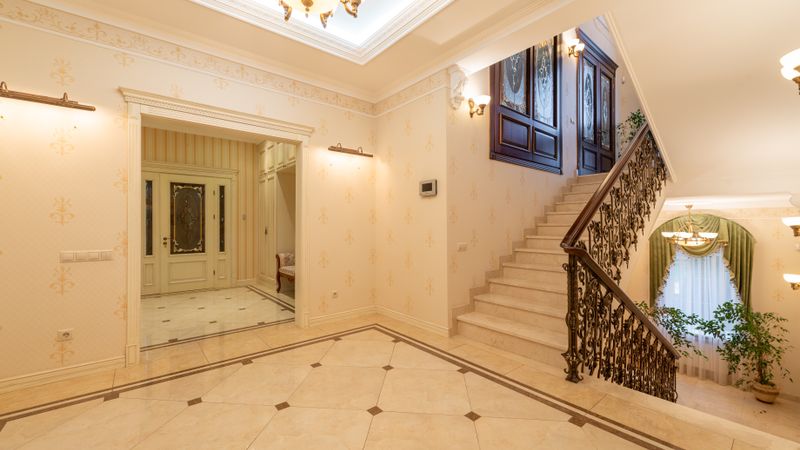
What the Profile Covers
The Review-Journal piece ran under a headline about how being the nice guy made Ivan Sher a Las Vegas luxury real estate powerhouse. That framing is the whole thesis of the article. Sher's stated explanation for his firm's position is not a marketing system or a technology edge. It is relationships, authenticity, and putting people ahead of transactions.
Ivan Sher Luxury is described as one of the top luxury real estate brokerages in Las Vegas. The firm operates at the highest end of the Summerlin market, including The Summit Club, which is one of the most exclusive residential communities in Southern Nevada.
Beyond that, specifics are thin by design. The article is a small business profile, published in the Review-Journal's business section, and it is built around the person and the philosophy rather than around production data.
The firm's annual sales volume, transaction count, agent headcount, market share of the Las Vegas luxury segment, and founding year are [NOT VERIFIED] here. Those numbers are not established in the source used for this article, and this piece will not estimate them.
It is worth being clear about what a profile like this is and is not. It is a narrative account of how one operator understands his own success, reported by a business journalist. It is not an audit. When any successful person explains their results, the explanation is sincere and also incomplete, because timing, market conditions, and luck rarely make the highlight reel. Reading it with that in mind does not diminish the story. It just keeps you from mistaking a philosophy for a formula.
What the profile does establish is a fact worth sitting with: at the top of the Las Vegas market, reputation is the product. In a segment where a handful of firms handle a large share of the trophy listings, who you are and who trusts you is not a soft factor. It is the entire competitive moat.

Why It Matters to Las Vegas Residents
Most people reading this are not shopping in The Summit Club. So why should you care how the luxury end of the valley works?
Because the top of a market sets the ceiling for everything under it. When high-end homes in Summerlin, MacDonald Highlands, and the Ridges trade briskly, that activity supports appraisals and expectations in the tier below, and the tier below that. When the top freezes, the effect works down through the price bands over a season or two. Watching who is transacting at the top is one way to read where the whole valley is heading.
There is also a practical lesson embedded in the profile for anyone selling a home at any price. The luxury business runs on relationships and reputation because the buyer pool is small and largely private. A $4 million house in Summerlin might have a few dozen realistic buyers in the world at any moment, and reaching them is not a matter of posting to a portal. It is a matter of knowing who they are and who they trust.
That principle scales down. If you are selling a $600,000 home in Green Valley, your buyer pool is enormously larger, but the agent's network still determines how fast the right buyer sees it and how seriously your listing gets taken by the agents on the other side. The luxury market just makes the effect visible because the numbers are big enough that you cannot miss it.
The luxury tier also affects the valley in ways that show up far from the guard gates. High-end homes carry high assessed values, and those values feed the property tax base that funds Clark County services. A growing luxury segment broadens that base without adding much demand on schools or roads, because these are typically smaller households on larger lots. That is not a reason to celebrate inequality. It is simply a fiscal fact about how the valley funds itself.
And the top of the market is where relocation shows up first. When people move to Southern Nevada from higher-cost states, the ones with the most flexibility arrive first and buy at the top. Sustained activity in Summerlin's premium enclaves is often an early indicator that a relocation wave is underway, and relocation waves eventually push demand down into the mid-market where most Clark County families actually shop.
For Clark County homeowners generally, the existence of a mature, professionalized luxury sector is also a sign of what Las Vegas has become. This valley used to be a place where wealth arrived and left. It is now a place where wealth settles, builds, and buys real property. That change shows up in your neighborhood's tax base, in the retail and restaurant landscape, and in the long-term stability of the market you own a piece of.
Background and History
The Las Vegas luxury market as it exists today is relatively young. For most of the city's history, the high end was thin and concentrated near the resort corridor. The buildout of master-planned communities in the west and southeast valley over the past few decades created something the city did not previously have, which is a deep supply of genuinely high-end residential product away from the Strip.
Summerlin is the clearest example. What began as a large master plan on the western edge of the valley now contains a hierarchy of neighborhoods running from entry-level attached homes up to guard-gated custom enclaves. The Summit Club sits at the very top of that hierarchy and is among the most restricted and expensive residential addresses in Nevada.
Henderson developed its own high-end pockets on a parallel track, with MacDonald Highlands and surrounding hillside communities drawing buyers who wanted elevation, views, and privacy on the southeast side. Downtown and the mid-valley added high-rise luxury, which is a different product with a different buyer entirely.
Nevada's tax structure has been a persistent tailwind for all of it. The absence of a state income tax has drawn relocating buyers from higher-tax states for years, and a meaningful share of the demand at the top of the Las Vegas market comes from people making a deliberate move rather than a local move-up. That dynamic rewards brokerages with out-of-state relationships and referral networks, which is exactly the kind of business the Review-Journal profile describes Sher building.
The brokerage business evolved alongside the product. In a market with a small number of very expensive homes, the winning firms are not the ones with the largest agent count. They are the ones with the deepest relationships among a narrow group of buyers, sellers, wealth advisors, attorneys, and relocation specialists. That structure rewards longevity and reputation over scale, which is precisely why a profile about being the nice guy is a business story rather than a feel-good story.
The marketing side changed too. High-end listings in Las Vegas now routinely involve architectural photography, cinematic video, drone footage, staging budgets that run into five figures, and targeted placement in front of a defined audience rather than broad advertising. That level of spend only makes sense at prices where a small percentage improvement in outcome covers the cost many times over, which is why the practices at the top rarely translate directly to the mid-market.
Alongside the resale luxury market, the new construction side has been active as well, with builders continuing to close homes above the $1 million mark in the valley and opening new product lines through 2026. The high end of Las Vegas is not a niche anymore. It is a functioning segment with its own specialists.


What Happens Next
The near-term question for the Las Vegas luxury segment is whether it holds up while the broader valley market runs at roughly four months of supply and a softening median price. High-end and mainstream housing often move on different clocks, because luxury buyers are less rate-sensitive and more sensitive to financial markets and relocation trends.
Watch the pace of $1 million-plus closings, both resale and new construction. That is the cleanest available read on whether the top is absorbing inventory or accumulating it. Las Vegas REALTORS and builder reporting both publish enough detail to track it month over month.
Also watch listing counts in the marquee communities. Summerlin's top enclaves and Henderson's hillside neighborhoods carry small enough inventories that a handful of additional listings changes the balance noticeably. A thin market cuts both ways, moving fast when demand is present and stalling hard when it is not.
One more variable worth tracking is how much of the luxury demand continues to come from outside Nevada. If relocation from higher-tax states slows, the top of the Las Vegas market loses a meaningful share of its buyer pool, because local move-up demand alone is not deep enough to absorb the inventory at that level. If it accelerates, the opposite happens and the marquee communities tighten quickly.
As for the firm at the center of the profile, whether Ivan Sher Luxury expands, adds agents, or shifts its footprint is [NOT VERIFIED] and not something the profile forecasts. It is a look backward at how a business was built, not an announcement about what comes next.
Ryan's Take
I do not work the same price band as Ivan Sher Luxury, and I am not going to pretend otherwise. But I think the point the profile makes is correct and underrated at every price point in this valley.
Real estate here still runs on relationships. Not on gimmicks, not on whoever spends the most on ads, and not on whoever posts the most video. The agents who last in Las Vegas are the ones whose past clients pick up the phone when they call, and whose fellow agents want to work with them on the other side of a deal. That is a slow way to build a business and it is the only way that survives a market cycle.
The other thing I take from it is a reminder about how much of what actually happens at the top of this market never appears in public data. Private listings, off-market introductions, and relationship-driven deals are a real part of high-end Southern Nevada. If you are buying above $1 million in Clark County, the search you can see on a website is not the whole search. Ask your agent directly what they have access to that is not on the portals, and expect a real answer.

What You Can Do
If you are considering a purchase above $1 million in Las Vegas or Henderson, interview more than one agent and ask specific questions about that price band. How many closings have they personally handled above your target number in the last two years? Which guard-gated communities do they actually work in? Can they get you into a home that is not publicly listed? Vague answers are answers.
If you are selling a high-end home, ask to see the marketing plan in writing before you sign anything. At the top of the market, presentation costs money and the good firms spend it. Photography, video, staging, print, and targeted outreach to a known buyer list are not extras up there. They are the job.
Buyers in guard-gated communities should also read the association documents early rather than late. Architectural review rules, membership requirements, resale restrictions, and transfer fees vary widely among Southern Nevada's premium enclaves, and they can meaningfully affect both your use of the property and your eventual exit. These are not boilerplate documents and they should not be skimmed the night before a contingency deadline.
If you are just curious about the valley's luxury tier, spend an hour looking at active listings above $2 million in Summerlin and Henderson. You will learn more about where Las Vegas is heading from that hour than from most market commentary, including mine.
One practical habit helps at every price point. Before you commit to an agent, ask them to walk you through a recent deal that went sideways and how they handled it. Anyone can describe a smooth closing. The answer to that question tells you whether the relationship-first philosophy in the Review-Journal profile is something they actually practice or something they put on a website. Deals in Southern Nevada run into appraisal gaps, inspection surprises, HOA document delays, and financing hiccups. Judgment under pressure is the service you are paying for.
And whatever your price point, apply the profile's core idea to your own agent selection. Pick someone who treats the relationship as the point rather than the transaction. That is not a soft preference. In a market with four months of supply and disciplined buyers, it is the difference between a smooth closing and a deal that falls apart in week three.
Have questions about how this affects your home or neighborhood? Reach out to Ryan Rose or text/call 702-747-5921 anytime.
Sources
Categories
- All Blogs (4792)
- Absentee Owner (1)
- Affordability (3)
- ALIANTE (53)
- Anthem (32)
- Ascension (49)
- Assumable Loan (1)
- Astra (47)
- BLACK MOUNTAIN (55)
- Buyers (20)
- Cadence (17)
- Calico Ridge (50)
- Canyon Fairways (50)
- CANYONS OF SUMMERLIN (50)
- CENTENNIAL HILLS (81)
- Comparisons (47)
- CROSSINGS IN SUMMERLIN (47)
- DESERT SHORES (47)
- Divorce (3)
- Downsizing (13)
- EAGLE HILLS (46)
- Empty Nester (1)
- Enterprise (1)
- EXPIRED LISTINGS (13)
- First Time Homebuyer (4)
- Green Valley (139)
- Henderson (81)
- HORIZONS EDGE (50)
- Housing Market Trends (98)
- Informative (102)
- Inspirada (58)
- Lake Las Vegas (2)
- Lakes Las Vegas (3)
- Las Vegas Real Estate (183)
- Local News (842)
- Luxury (1)
- MacDonald Highlands (88)
- MacDonald Ranch (100)
- Madeira Canyon (93)
- MESQUITE NV (103)
- MOUNTAIN TRAILS (44)
- Mountains Edge (70)
- Naked City (35)
- New Construction (131)
- New Construction Las Vegas (20)
- North Las Vegas (24)
- Northgate (23)
- PALISADES SUMMERLIN (38)
- Probate (25)
- Providence (2)
- Quail Ridge (35)
- QUEENSRIDGE (56)
- Red Rock (1)
- RED ROCK COUNTRY CLUB (60)
- Relocating to Summerlin (204)
- Relocation (44)
- Retired (1)
- Retirement (1)
- Reverence (15)
- RHODES RANCH (64)
- Ridgebrook (40)
- Sellers (210)
- Seven Hills (83)
- Silverado Ranch (1)
- Silverstone Ranch (39)
- SKYE CANYON (100)
- SKYE CANYONE (4)
- Southern Highlands (94)
- Southwest (19)
- SPANISH TRAILS (55)
- SPRING VALLEY (70)
- Summerlin (103)
- Sun City Summerlin (3)
- The Arbors (36)
- The Cliffs (42)
- THE HILLS (45)
- THE PASEOS (52)
- The Pueblos (24)
- THE PUEBLOS OF SUMMERLIN (40)
- THE RIDGES (58)
- THE VISTAS OF SUMMERLIN (45)
- The Willows (59)
- Thoughts on Home Tour (2)
- TOURNAMENT HILLS (47)
- Veterans (3)
- WHITNEY RANCH (55)
- Workers Advantage Program (100)
Recent Posts






GET MORE INFORMATION