
CCSD Has Until Nov. 17 to Fix What a State Audit Found. Here Are the 9 Recommendations, Explained.
Related Stories
A State Audit Says CCSD Sent 17 Staffers to Miami and Hired Nobody
CCSD Started the Year With 167 Teacher Vacancies
CCSD Lost 10,400 Students and $100M
The Clark County School District has until Nov. 17, 2026, to hand state auditors a written plan showing how it will fix the problems found in a new audit of its teacher recruiting and retention programs. The audit made nine recommendations for CCSD, and the district accepted all nine. Then, by May 17, 2027, CCSD has to report back on how much progress it has made.
We covered the trips that made headlines in A State Audit Says CCSD Sent 17 Staffers to Miami and Hired Nobody. This piece skips the travel receipts and looks at what comes next. What do the nine recommendations actually ask CCSD to do? Where did the much bigger $393 million in retention spending go? And how will anyone know if the fixes are real?
If you live in Clark County, this matters even if you never think about teacher hiring. CCSD is the biggest public agency most families deal with. How it spends money to find and keep teachers affects who is standing at the front of your child's classroom.
What Happened
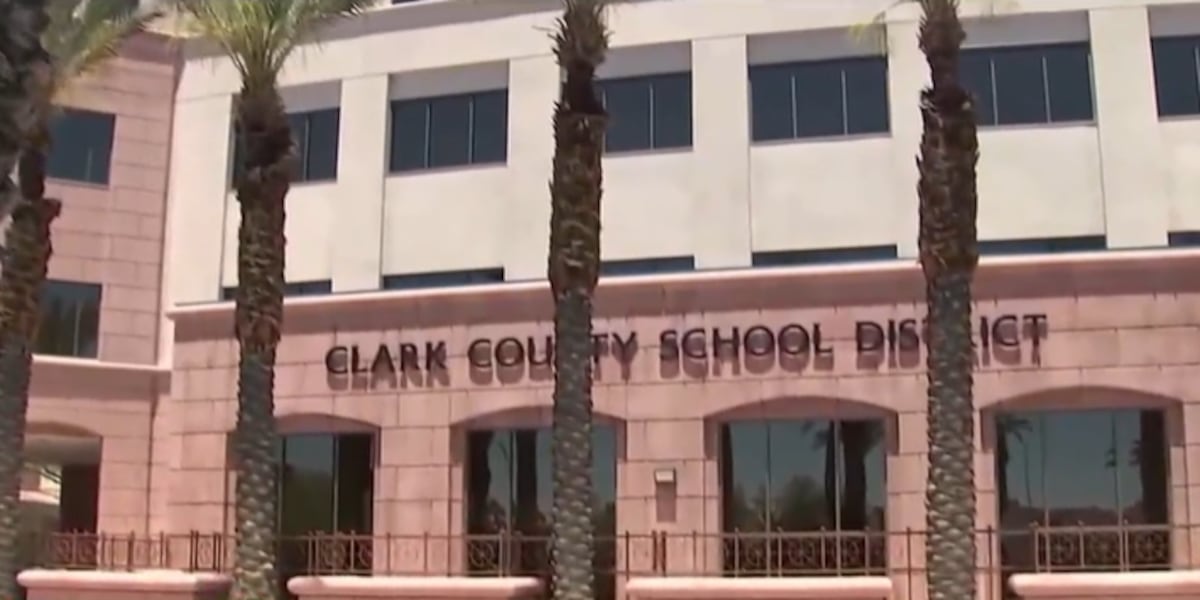
The audit is officially called "Recruitment and Retention Strategies, Clark County and Washoe County School Districts." It is report number LA26-14 from the Nevada Legislative Auditor, part of the Legislative Counsel Bureau's Audit Division. It was issued on Aug. 20, 2026. State lawmakers required it through Assembly Bill 517, passed in the 2023 session. The goal was to check whether the state's two largest school districts were spending recruiting and retention money in ways that actually got and kept qualified teachers.
Auditors looked at district records from July 2021 through June 2024. They met with CCSD officials on July 17, 2026, to go over the results. In total, the report made 15 recommendations: nine for CCSD and six for the Washoe County School District. Both districts accepted every one. CCSD publicly responded in late September, saying the spending happened under prior leadership and that it had accepted all the recommendations. In its statement to FOX5 Vegas, the district said it knows "the importance of building trust with Nevada taxpayers."
The money involved is large. Auditors found CCSD spent about $14.6 million on recruiting programs during the three years they reviewed. It spent about $393 million on retention programs, which the audit says was mostly salary increases. The problem auditors flagged was not that the district spent money on teachers. It was that CCSD often did not check whether the programs worked. Of 10 recruiting and retention strategies auditors tested, five had no analysis showing whether they were effective. Those five alone added up to more than $216 million in spending.
Deputy Legislative Auditor Jeff Mullen summed up that finding when the report was presented, News 3 Las Vegas reported. The audit itself notes that a large share of those dollars were one-time federal ESSER pandemic relief funds. Even so, auditors said, measuring results would help CCSD decide where to put limited money in the future.
CCSD was not the only district with gaps. Washoe County, which covers Reno, got six recommendations of its own. Auditors found that 3 of 8 of its recruiting and retention policies were last updated in 1998. Washoe staff also attended 135 recruiting events, and 105 of them had no sign-in sheet to show who came. So this is not a story about one district behaving badly. It is a story about two big districts that spent years recruiting without good records.

Why It Matters to Las Vegas Residents
Start with the $393 million. That is far bigger than the recruiting trips that grabbed attention. Most of it went to raises, which is the most direct way any district keeps teachers from leaving. Nobody in the audit says raises were a bad idea. The issue is that CCSD did not have a good system to measure which retention efforts were working and which were not. When you spend that much, you want to know what you are getting.
The audit gives two clear examples. First, CCSD ran a one-time employee satisfaction survey with six open-ended questions and got more than 1,000 responses. The district did not do any real analysis of what employees said. Second, CCSD collected more than 2,600 exit survey responses from people leaving the district. Some of those people asked to be contacted to talk about their concerns. CCSD could not show that anyone followed up. Auditors noted turnover in the Human Resources Unit, and current staff did not know if anything had been done with the survey data.
Think about that from a parent's view. Teachers who left told the district why they were leaving, and the answers sat unused. Those answers are exactly what a district needs to keep the next teacher from walking out the door. Every teacher who leaves mid-year means a substitute, a bigger class next door, or a new teacher learning the ropes in front of your kid.
The hiring side has the same kind of gap. The audit says CCSD did not track how long it took to move a candidate from application to offer. In a tight market for teachers, speed matters. A strong candidate who waits weeks to hear back may take a job in another district or another state. Recommendation 2 is aimed right at that. If CCSD starts measuring and shrinking its hiring time, more good teachers may land in Clark County classrooms before someone else hires them.
There is also the timing. CCSD is dealing with a big budget squeeze this fall after losing about 10,400 students. When a district is asking the state for help, how it handled past money matters. A clean follow-up on these nine recommendations would help CCSD make its case. A sloppy one would make it harder.

Background and History
One of the biggest findings is simple: CCSD's Human Resources Unit did not have a formal recruitment or retention plan during the audit period. The Board of Trustees did have a strategic plan called Focus 2024, created in 2021, with recruiting and retention goals. But auditors said the board wrote it on its own, separate from HR, and it did not have enough detail to guide day-to-day work. HR used it more for information than as a plan of action.
It is worth knowing how auditors define waste, because it is not the same as fraud. The audit describes waste as using resources carelessly, extravagantly, or to no purpose. Nobody is accused of stealing. The concern is money spent without a clear goal or a way to tell if it paid off. That is a management problem, and management problems can be fixed with better rules, better tracking, and people who follow them.
The audit also found that CCSD did not track key numbers. The district collected data for only 233 of 461 recruiting events it attended, in person and online, or about 51%. It did not track how long it took to process job applications. It did not keep a list of qualified candidates who were not hired, a list that could help fill openings later at other schools. It did not track how many student interns went on to become employees. And it did not complete reports that state law, NRS 391.135, requires about the Alternative Route to Licensure program.

Then there are the programs that came with strings that were never enforced. CCSD put $6 million of ESSER money into a tuition assistance program through a state university. The idea was that students would teach for CCSD after graduating. But there was no requirement to do so, and the deal had no data sharing, so CCSD cannot tell whether it got any teachers out of it. The district also spent $1 million on 250 scholarships for an Alternative Route to Licensure program, expecting recipients to work for CCSD for three years. Only 31% were still with the district after finishing. CCSD did not seek repayment and cited legal complications. And of 623 employees who got a $4,000 relocation bonus in 2022-23 with a three-year commitment, 88 left early.
The good news is that some of this was already moving before the report came out. The audit says HR is building a recruitment and retention plan through a committee of licensed teachers, support professionals, and administrators.
What Happens Next
Here are the nine recommendations CCSD accepted, in plain English.
1. Write a real recruitment and retention plan. It should include goals, objectives, strategies, performance measures, and outcomes, so the work continues even when staff turn over.
2. Track how fast applications move. Set key performance indicators so good candidates are not lost to slow hiring.
3. Check whether programs work. Evaluate each recruiting and retention program for effectiveness and whether it is worth keeping.
4. Use the survey data. Analyze exit and satisfaction surveys to find ways to make the job better and keep staff longer.
5. File the required state reports. Comply with the reporting rules in NRS 391.135(3).
6. Build outcomes into contracts. Write policies so recruiting and retention contracts include ways to measure results.
7. Enforce the deals. Create a process to make sure people who take incentives meet the terms.
8. Train recruiters on waste. Give recruiting staff training on fraud, waste, and abuse so money is spent the way CCSD policy says. The audit noted the district's policy does not clearly define waste or abuse.
9. Set travel rules for recruiting. Write policies that guide recruiting-related travel.
The timeline is set in the audit. CCSD's 60-day corrective action plan is due Nov. 17, 2026. That plan should explain how and when the district will carry out each recommendation. The six-month status report is due May 17, 2027. That report shows lawmakers how far the district has actually gotten.
One more thing to know: the recruiting audit was not the only one. The Legislative Auditor also issued a separate report, LA26-12, on compliance with procurement standards at CCSD, Washoe, and the State Public Charter School Authority. News 3 reported that the reviews also flagged problems with district purchasing cards, including a charge of more than $1,000 for a mobile massage service at a teacher appreciation event. That is a different audit with its own follow-up, but it adds to the same question about spending controls.
CCSD has already described some changes. News 3 Las Vegas reported on Oct. 2 that under current leadership, recruiting now focuses on special education needs, such as teachers for students with autism, school psychologists, and speech-language pathologists. Trips that include several career fairs need a verified reason. Recruiters must collect candidate contact information and document follow-up. And staff must complete training acknowledging the rules on spending oversight. Those steps line up most closely with recommendations 8 and 9. The bigger lifts, like a full plan and real program evaluation, are what the Nov. 17 plan needs to show.

Ryan's Take
The Miami trip is the part people remember, but the part I care about is the plan. Families moving to Las Vegas ask me about schools all the time, and the honest answer usually comes down to teachers. Good schools keep good teachers. This audit says CCSD spent hundreds of millions of dollars trying to do that without a clear way to tell what was working. Exit surveys from more than 2,600 departing employees went unread. That is the finding that would bother me most as a parent.
I also want to be fair. This audit covers 2021 to 2024, the district has new leadership, and it accepted every recommendation without a fight. That is how accountability is supposed to work. My advice is to watch the follow-through, not the headlines. If the Nov. 17 plan has real deadlines and real numbers, and the May report shows progress, that is a good sign for every neighborhood in the valley. Strong, stable schools help hold home values, and a district that keeps its teachers is a district families want to move into. If you are buying, look at the specific school tied to the address, ask about teacher turnover there, and do not let one district headline make the call for you.
What You Can Do
Read the source. The full audit, report LA26-14, and a one-page highlights sheet are posted on the Nevada Legislature's audit page. The highlights page takes about five minutes and lists the key findings with page numbers.
Ask questions in public. CCSD Board of Trustees meetings are open and include public comment. The board has a work session on Oct. 7 and a regular meeting on Oct. 8. Agendas are on the CCSD website. A fair question to ask: will the district post its Nov. 17 corrective action plan so families can see it? You can also contact the trustee for your area.
Contact your lawmakers. The Legislature ordered this audit, and lawmakers will see both the corrective plan and the May 2027 status report. If you want them to keep a close eye on it, let your state senator and Assembly member know. And if you work for CCSD and have filled out an exit or satisfaction survey, it is fair to ask how the district plans to use those answers going forward.
Have questions about how this affects your home or neighborhood? Reach out to Ryan Rose or text/call 702-747-5921 anytime.
Ryan Rose | Real Broker, LLC | 702-747-5921 | ryan@rosehomeslv.com | rosehomeslv.com
Sources
FOX5 Vegas: "CCSD responds after state audit reveals wasted travel funds, weak spending controls"
Nevada Legislative Auditor: LA26-14 Audit Highlights
News 3 Las Vegas: "CCSD outlines new procedures after audit flags recruitment trips"
News 3 Las Vegas: "State audit flags CCSD spending on recruitment, retention and district cards"
Categories
- All Blogs (4919)
- Absentee Owner (4)
- Affordability (3)
- ALIANTE (53)
- Anthem (33)
- Ascension (50)
- Assumable Loan (1)
- Astra (50)
- BLACK MOUNTAIN (55)
- Buyers (22)
- Cadence (17)
- Calico Ridge (50)
- Canyon Fairways (50)
- CANYONS OF SUMMERLIN (55)
- CENTENNIAL HILLS (81)
- Comparisons (46)
- CROSSINGS IN SUMMERLIN (55)
- DESERT SHORES (47)
- Divorce (3)
- Downsizing (13)
- EAGLE HILLS (55)
- Empty Nester (1)
- Enterprise (1)
- EXPIRED LISTINGS (134)
- First Time Homebuyer (4)
- Green Valley (139)
- Henderson (82)
- HORIZONS EDGE (50)
- Housing Market Trends (100)
- Informative (112)
- Inspirada (58)
- Lake Las Vegas (2)
- Lakes Las Vegas (3)
- Las Vegas Real Estate (182)
- Local News (714)
- Luxury (1)
- MacDonald Highlands (88)
- MacDonald Ranch (100)
- Madeira Canyon (93)
- MESQUITE NV (103)
- MOUNTAIN TRAILS (50)
- Mountains Edge (79)
- Naked City (35)
- New Construction (131)
- North Las Vegas (24)
- Northgate (23)
- PALISADES SUMMERLIN (50)
- Probate (28)
- Providence (2)
- Quail Ridge (35)
- QUEENSRIDGE (56)
- Red Rock (1)
- RED ROCK COUNTRY CLUB (60)
- Relocating to Summerlin (207)
- Relocation (45)
- Retired (1)
- Retirement (1)
- Reverence (15)
- RHODES RANCH (64)
- Ridgebrook (40)
- Sellers (255)
- Seven Hills (83)
- Silverado Ranch (1)
- Silverstone Ranch (39)
- SKYE CANYON (100)
- SKYE CANYONE (4)
- Southern Highlands (94)
- Southwest (19)
- SPANISH TRAILS (55)
- SPRING VALLEY (70)
- Summerlin (104)
- Sun City Summerlin (3)
- The Arbors (37)
- The Cliffs (50)
- THE HILLS (55)
- THE PASEOS (55)
- The Pueblos (27)
- THE PUEBLOS OF SUMMERLIN (42)
- THE RIDGES (65)
- THE VISTAS OF SUMMERLIN (50)
- The Willows (60)
- Thoughts on Home Tour (2)
- TOURNAMENT HILLS (50)
- Veterans (3)
- WHITNEY RANCH (55)
- Workers Advantage Program (100)
Recent Posts






GET MORE INFORMATION